10 Best Things to Do in Georgia

The 10 best things to do in Georgia include exploring the historic city of Tbilisi, visiting the Uplistsikhe Cave Town,...

add

The 10 best things to do in Georgia include exploring the historic city of Tbilisi, visiting the Uplistsikhe Cave Town, relaxing at Batumi Beach, discovering the Georgian National Museum, and taking a scenic drive on the Georgian Military Road. Other Georgia highlights include visiting the Svetitskhoveli Cathedral, experiencing the Vardzia Cave Monastery, hiking in the Caucasus Mountains, visiting the Stalin Museum in Gori, and enjoying the vibrant Tbilisi Flea Market.

Georgia is a country with ancient civilizations, dramatic landscapes, and a strong cultural identity shaped by its historic trade routes linking Europe and Asia. The range of things to do in Georgia includes walking through medieval districts, hiking high-altitude trails, swimming along the Black Sea coast, and exploring museums. Travelers researching places to visit in Georgia find cave towns, medieval cathedrals, alpine regions, and lively urban districts. Deciding which Georgia tourist places to visit depends on preference for culture, nature, historic towns, or urban attractions. Unique places to visit in Georgia include ancient monasteries, remote highland communities, and secluded valleys in the Caucasus Mountains.

  • Explore the Historic City of Tbilisi
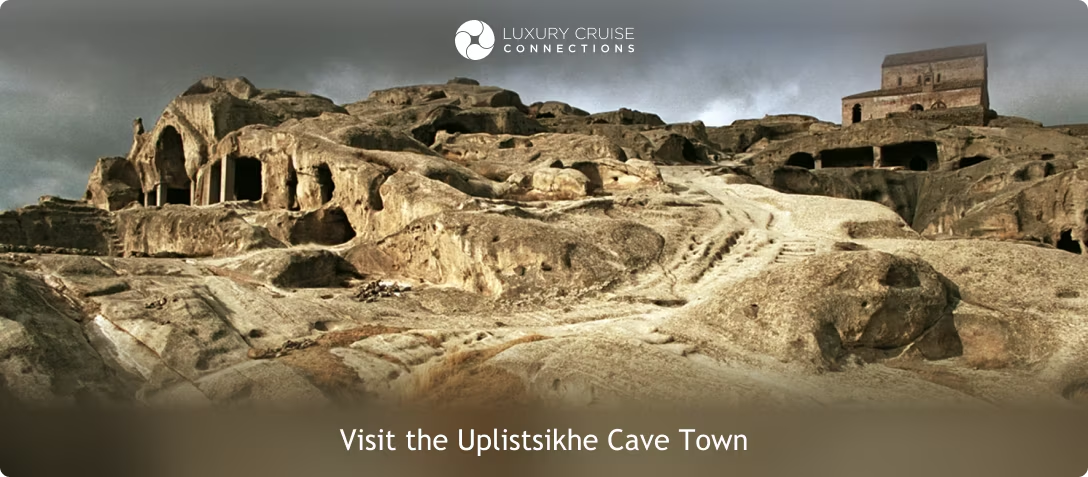
  • Visit the Uplistsikhe Cave Town
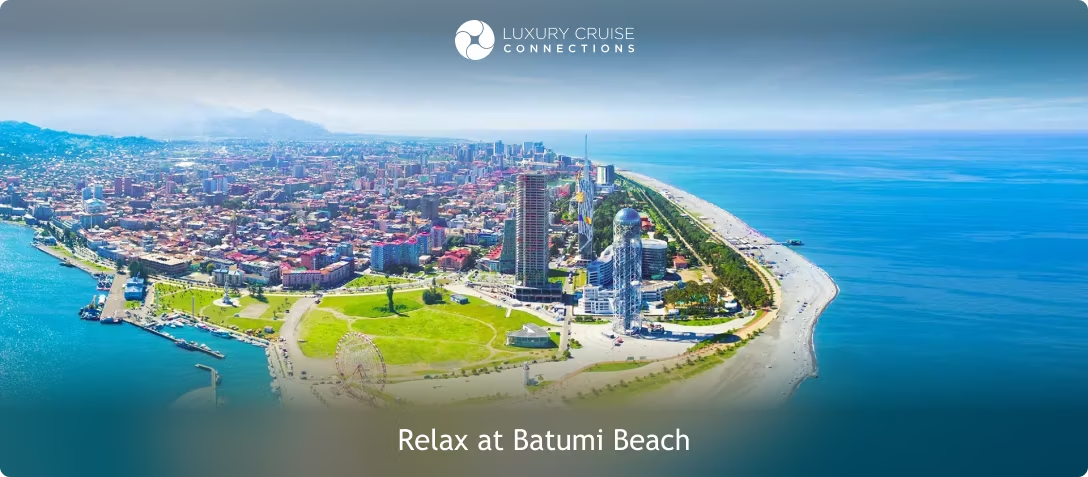
  • Relax at Batumi Beach
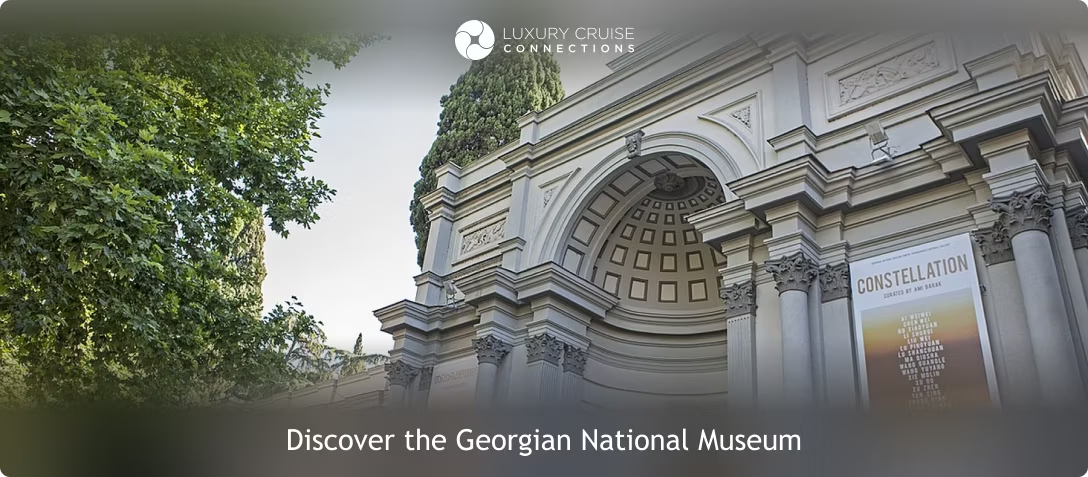
  • Discover the Georgian National Museum
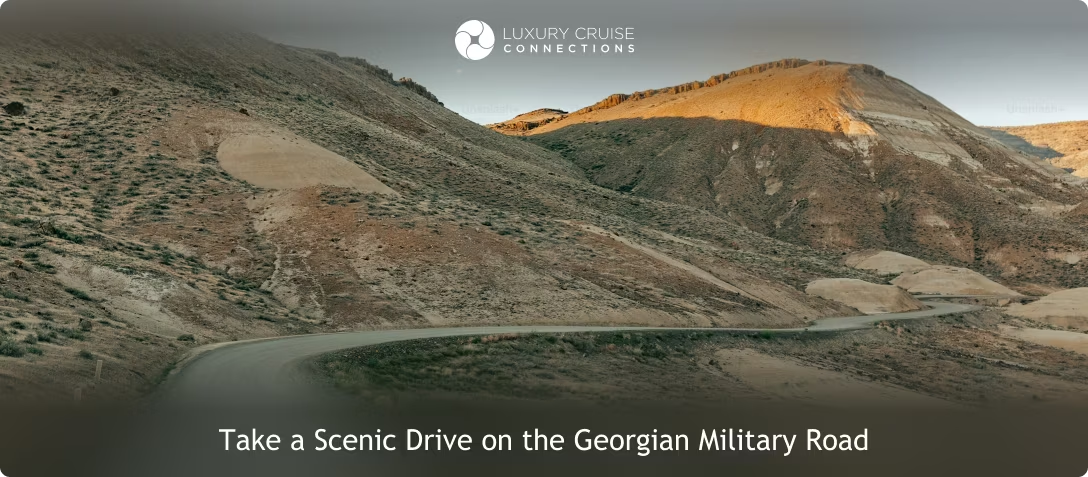
  • Take a Scenic Drive on the Georgian Military Road
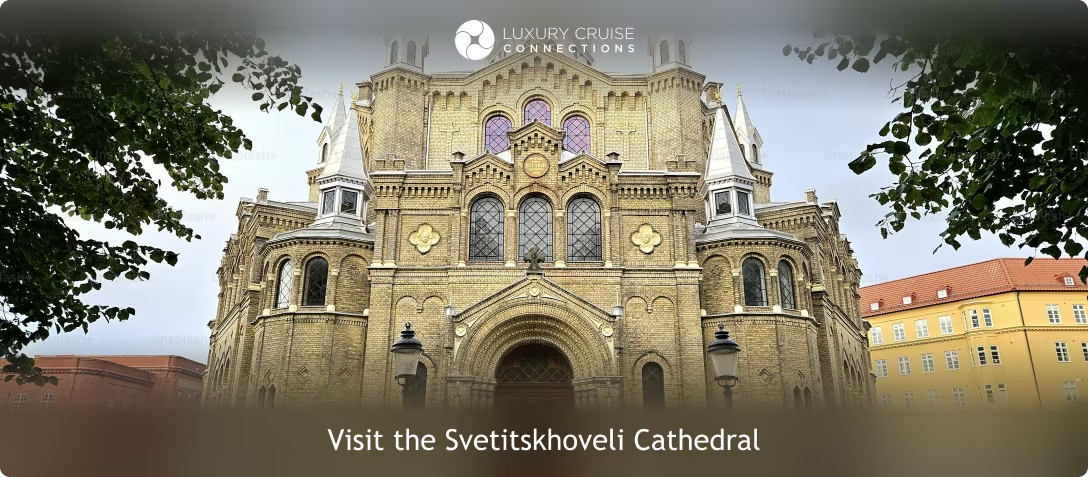
  • Visit the Svetitskhoveli Cathedral
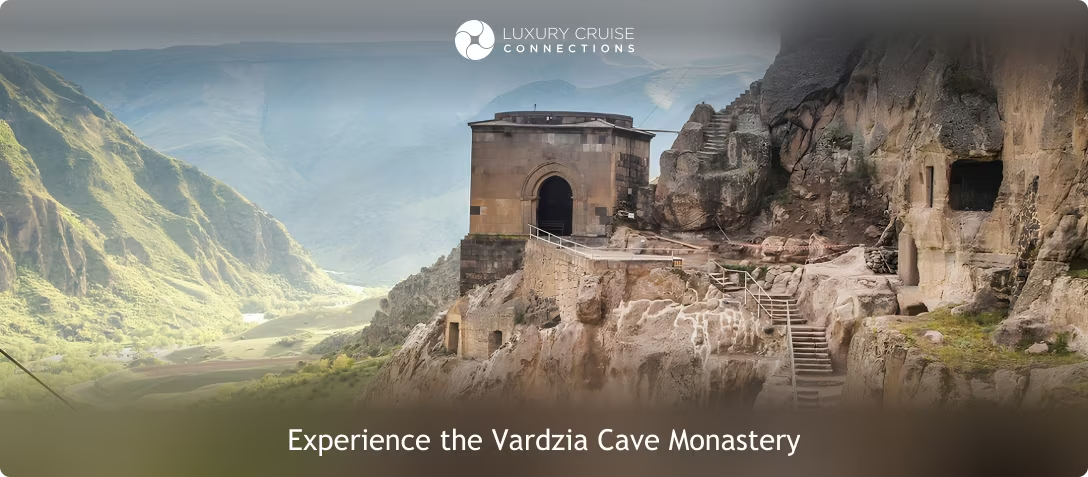
  • Experience the Vardzia Cave Monastery
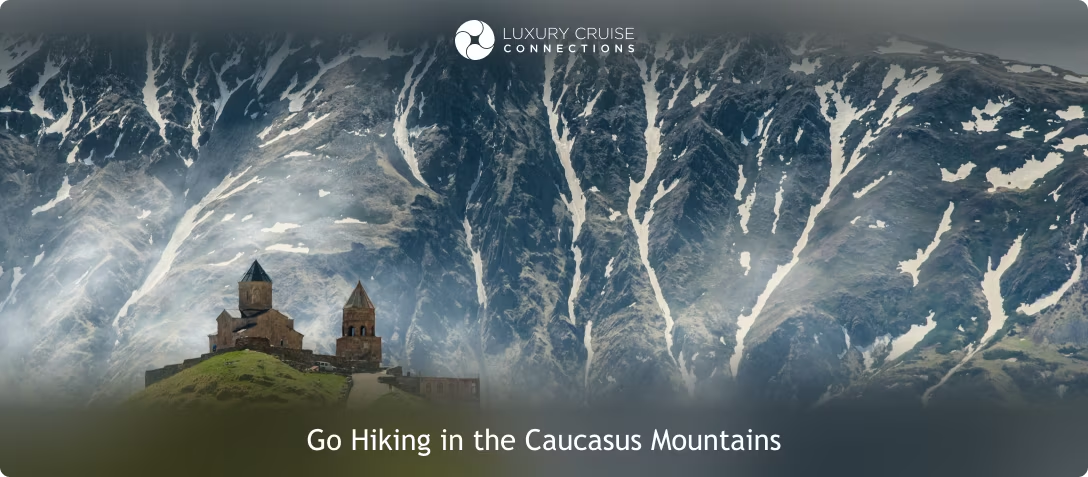
  • Go Hiking in the Caucasus Mountains
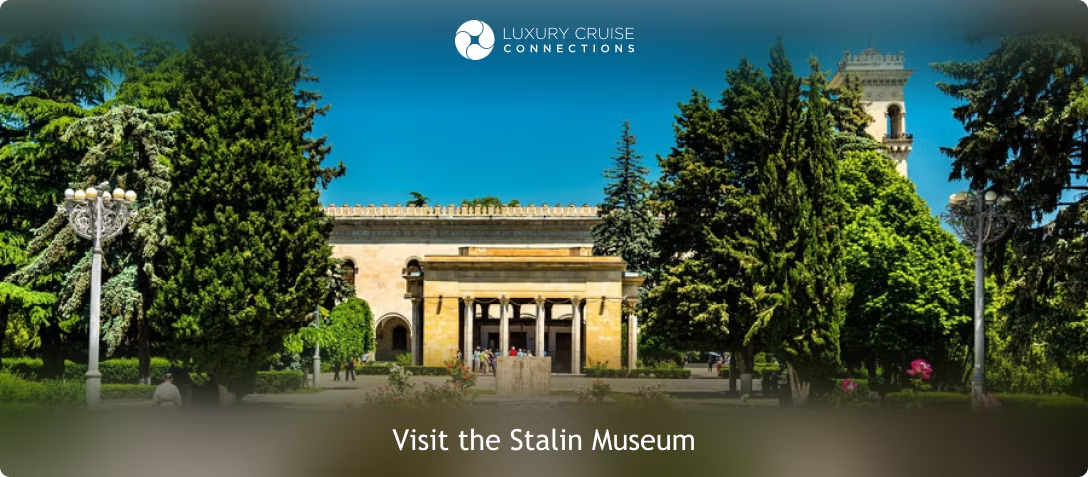
  • Visit the Stalin Museum
  • Enjoy the Vibrant Tbilisi Flea Market
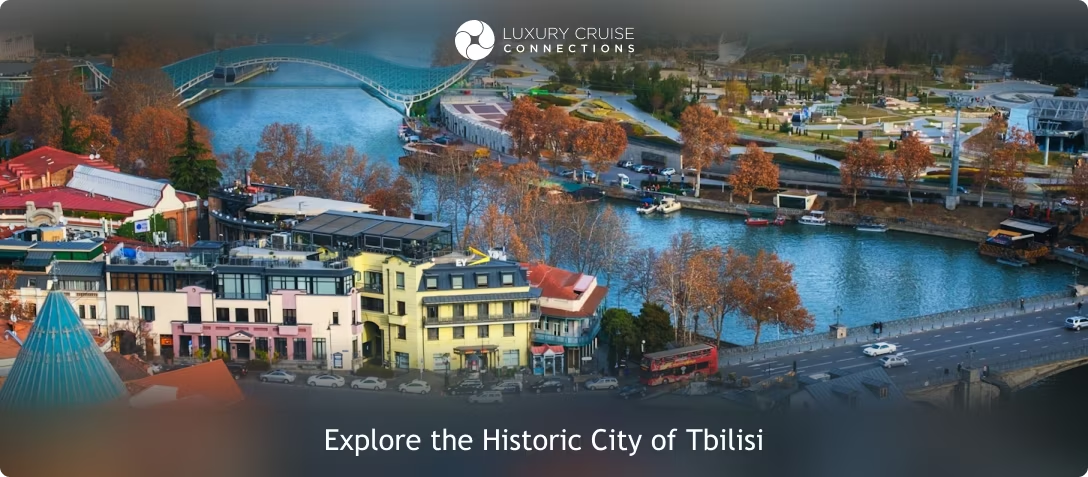
  • Explore the Historic City of Tbilisi

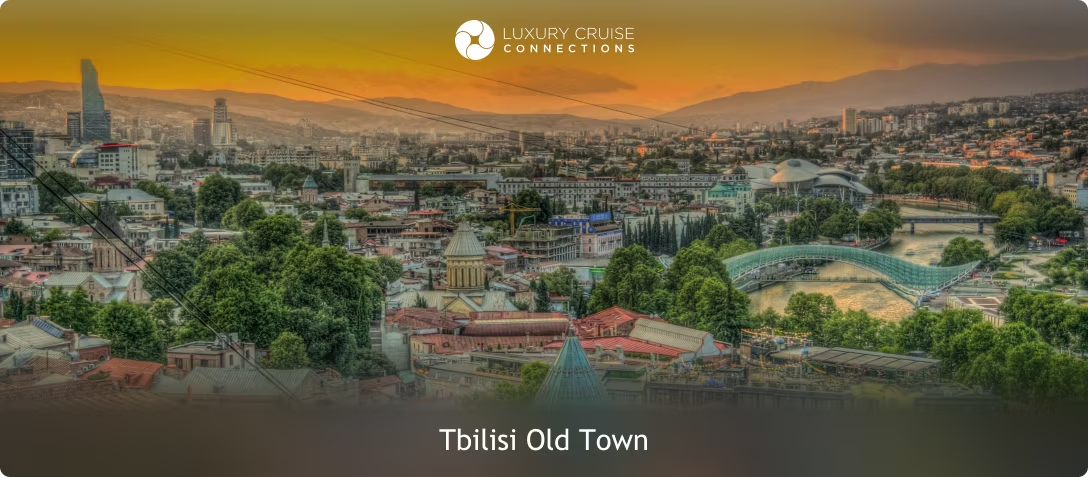
    Tbilisi is the capital city of Georgia and the country’s main historical and cultural center. Tbilisi is located in eastern Georgia along the Kura River. Tbilisi’s strategic position near ancient trade corridors makes it central to understanding Georgia’s history of trade, invasion and religious exchange. Exploring Tbilisi introduces visitors to a political hub and cultural crossroads between Europe and Asia. Tbilisi's urban landscape includes medieval churches, Persian influenced bathhouses, riverfront neighborhoods, and nineteenth century civic buildings.
    Explore the Historic City of Tbilisi

    Highlights of Tbilisi include the Old Town with narrow streets, wooden balconies, and preserved historic houses. Another highlight is Narikala Fortress, which overlooks the city and represents early defensive architecture. Another key attraction is Metekhi Church, which stands on a river cliff and marks early Christian history. Another highlight of Tbilisi is Abanotubani, which contains domed sulfur bathhouses fed by natural hot springs. Another highlight is Rustaveli Avenue, which features theaters, museums, and government buildings from the imperial era. Another highlight is Freedom Square, which connects the historic quarters with the modern city center.

    Exploring the historic city of Tbilisi reveals Georgia’s layered religious, political, and urban history. Visitors walk through Old Town cobblestone lanes and observe churches, synagogues, and mosques. Visitors ride the cable car to Narikala Fortress and survey the city from above before examining the ruins. Visitors browse Dezerter Bazaar and encounter spices, fresh produce, and everyday local trade. Visitors enter sulfur baths and observe long-standing bathing customs. Visitors taste khinkali, khachapuri, and churchkhela in traditional restaurants. Visitors watch daily life in courtyards, markets, and riverside promenades.

    The best time to explore the historic city of Tbilisi is spring (March to May) and autumn (September to October). Spring in Tbilisi brings mild temperatures that support walking and sightseeing. Autumn in Tbilisi provides cooler air and clear skies that improve city views from Narikala Fortress.

    Local guides lead walking routes through Tbilisi’s Old Town and historic districts. Guides interpret architecture, religion and Georgian traditions.

    Entry to Tbilisi’s historic streets and public squares is free. The cable car to Narikala Fortress costs $1 USD one-way. Entry to Tbilisi’s museums ranges from $3 - $10 USD each.

  • Visit the Uplistsikhe Cave Town

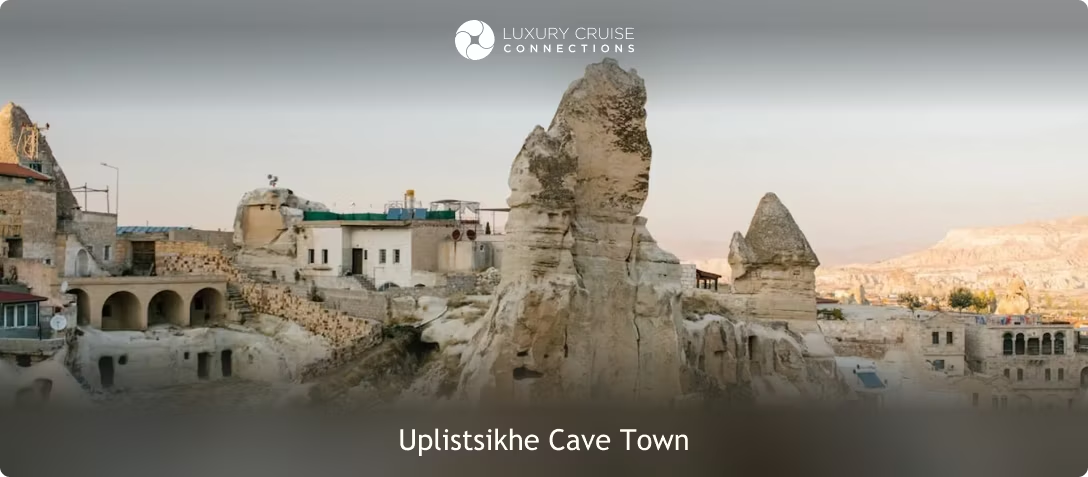
    Uplistsikhe Cave Town is an ancient rock cut settlement in eastern Georgia near the town of Gori. The Uplistsikhe site dates from the early Iron Age and functioned as a major political and religious center devoted to pagan worship. The archaeological complex is carved into sandstone cliffs above the Kura River and contains caves, tunnels, ceremonial halls and defensive structures. Visiting Uplistsikhe introduces visitors to Georgia’s pre Christian and early medieval history. Uplistsikhe stands as one of Georgia’s oldest cave towns and one of the oldest urban settlements in the Caucasus.
    Visit the Uplistsikhe Cave Town

    Highlights of Uplistsikhe include the combination of man-made and natural caves that are connected by narrow stone paths. Another highlight is the central ceremonial hall, which reflects Uplistsikhe’s former religious role for pagan religions. Another key attraction is Uplistsikhe’s ancient theater area with intricate patterns on the ceiling and a surviving row of seats. Another highlight of Uplistsikhe is the Red Temple, which features unique red stone and the legendary sculpted relief of a hand.

    Visiting the Uplistsikhe Cave Town is an experience that reveals a complete ancient city carved into sandstone cliffs. Visitors follow the Sacred Road from the main gates and walk through Lower, Central, and Upper districts. They walk through open courtyards that once served noble families and civic gatherings, enter shadowed chambers and observe ritual spaces used for pagan worship. Visitors examine rock cut shrines and storage rooms that show daily urban life. Visitors encounter later Christian structures that reuse earlier cave spaces.

    The best time to visit the Uplistsikhe Cave Town is spring (March to May) and autumn (September to October), when temperatures are most comfortable for walking around the complex.

    Local guides lead tours of Uplistsikhe and explain religious practices, construction methods and how the complex has evolved over time.

    Entry to Uplistsikhe Cave Town costs about $5 USD per person. Parking areas near the entrance are free.

  • Relax at Batumi Beach

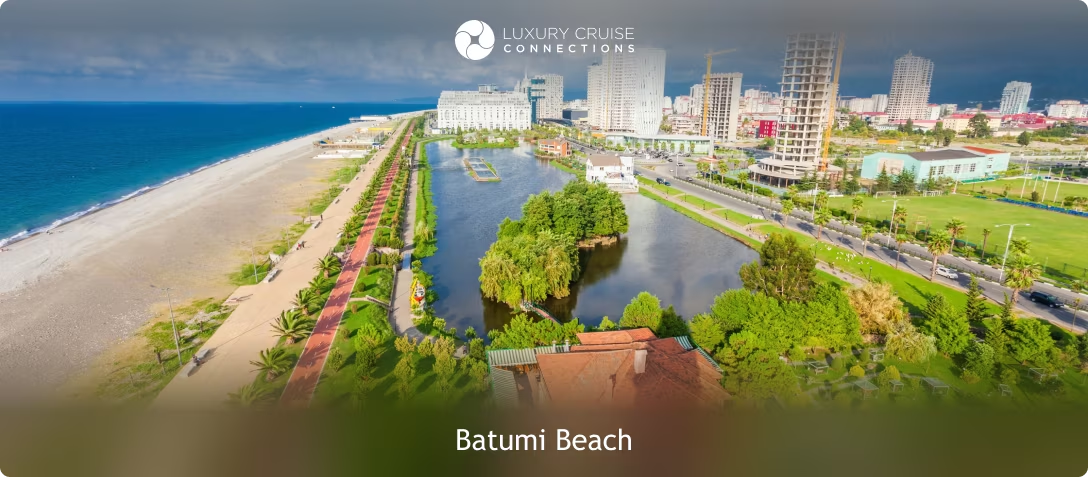
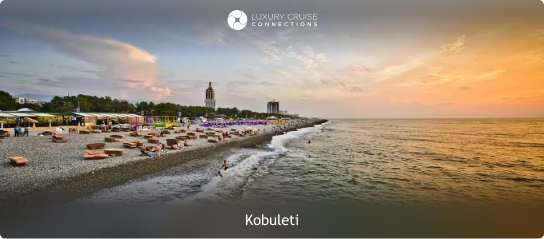
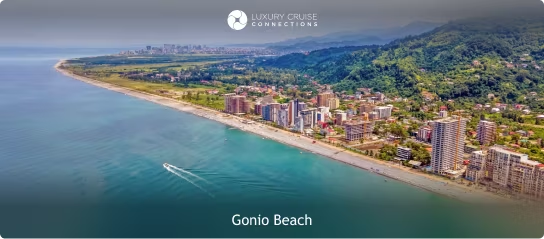
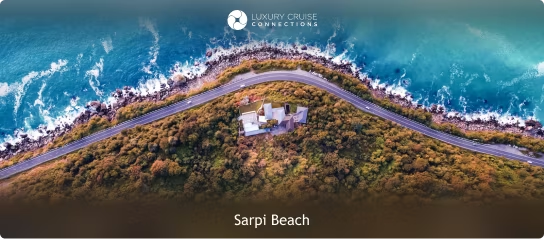
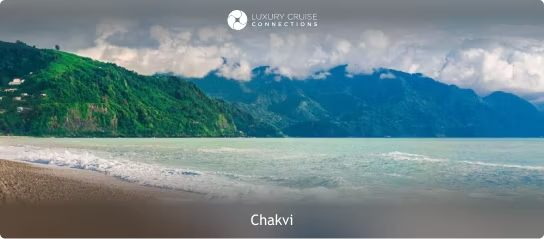
    Batumi Beach is a long seaside promenade and beach zone along the Black Sea coast in southwestern Georgia. Batumi Beach lies within the city of Batumi, the capital of the Adjara region. Batumi Beach is Georgia’s main coastal destination for leisure travel and its primary resort city. The shoreline combines pebble beaches with calm swimming areas and landscaped promenades. Cafes, parks, and shaded boulevards support relaxation and unhurried coastal activity.
    Relax at Batumi Beach

    Highlights of Batumi Beach include Batumi Boulevard, a long waterfront promenade that stretches 7 kilometers along the coast. Another highlight is Batumi’s pebble shoreline, which keeps the water clear and well suited for swimming. Another key attraction of Batumi are the multiple beach bars, cafes, restaurants and sculptures. Another highlight is the nearby Batumi Seaport, which reflects the city’s maritime identity.

    Relaxing at Batumi Beach is a popular coastal activity for visitors traveling through Western Georgia. Visitors walk along the promenade and choose spots on the pebble shoreline to relax. They rent sun loungers and umbrellas from beach operators and enjoy swimming in the Black Sea. Visitors buy cold drinks, ice cream, and local snacks from vendors along Batumi Boulevard, and dine at nearby beach restaurants and cafes. Adventurous visitors jet ski, paddleboard, and take boat rides from watersports operators along Batumi Beach.

    The best time to relax at Batumi Beach is summer from June to September, when warm air and sea temperatures support swimming, sunbathing, and walking along the promenade.

    Local guided tours in Batumi combine a visit to Batumi Beach with city sightseeing, nearby coastal viewpoints, and regional attractions in Adjara. Many travelers explore Batumi Beach independently by public transport or by car.

    Access to Batumi Beach itself is free.

  • Discover the Georgian National Museum

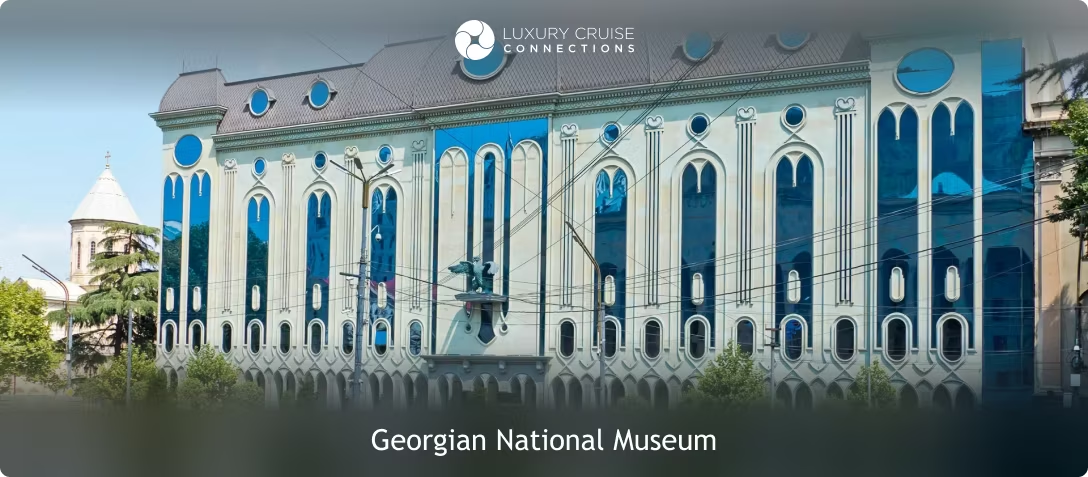
    The Georgian National Museum is Georgia’s main museum complex and the country’s leading institution for history and archaeology. The Georgian National Museum is not housed in a single building, but spread across 10 main museums located primarily in central Tbilisi. Museum collections cover Georgia’s archaeology, medieval art, ethnography, and modern history. Permanent exhibitions in the Georgian National Museum trace Georgia’s development from prehistoric settlements to the twentieth century. Visiting the museum provides visitors with essential context for understanding Georgia’s identity and historical continuity.
     Discover the Georgian National Museum

    Highlights of the Georgian National Museum include the Simon Janashia Museum of Georgia, which displays extensive archaeological and historical collections from prehistoric to medieval periods. Another highlight is the Art Museum of Georgia, which presents Georgian and international artworks across centuries. Another key attraction is the Museum of Soviet Occupation, which documents twentieth-century political repression in Georgia. Another highlight is the Open Air Museum of Ethnography, which showcases traditional Georgian dwellings and cultural artifacts. Another highlight is the Dmanisi Museum-Reserve of History and Archaeology, which interprets early human remains and Paleolithic finds in Georgia.

    Discovering the Georgian National Museum offers a fascinating cultural experience for visitors exploring Georgia’s history. Visitors begin their museum day in Tbilisi by selecting one or more branches that match their interests in Georgian history and culture. They move through galleries arranged by historical period and trace Georgia’s story from prehistory to modern times. Visitors examine archaeological finds, gold jewelry, manuscripts, and religious art. Visitors take breaks in museum cafés, rest areas, and gift shops.

    The Georgian National Museum is open and enjoyable year-round.

    Local guides provide focused museum tours that explain Georgia’s archaeology, medieval art, and modern political history. Guides help visitors interpret collections and connect exhibits across different museum branches. The Georgian National Museum also offers audio guides in multiple languages including Georgian, English, and Russian.

    General admission to the Georgian National Museum ranges from $5 - $10 USD depending on the branch and exhibitions. Temporary exhibitions in the Georgian National Museum require additional fees.

  • Take a Scenic Drive on the Georgian Military Road

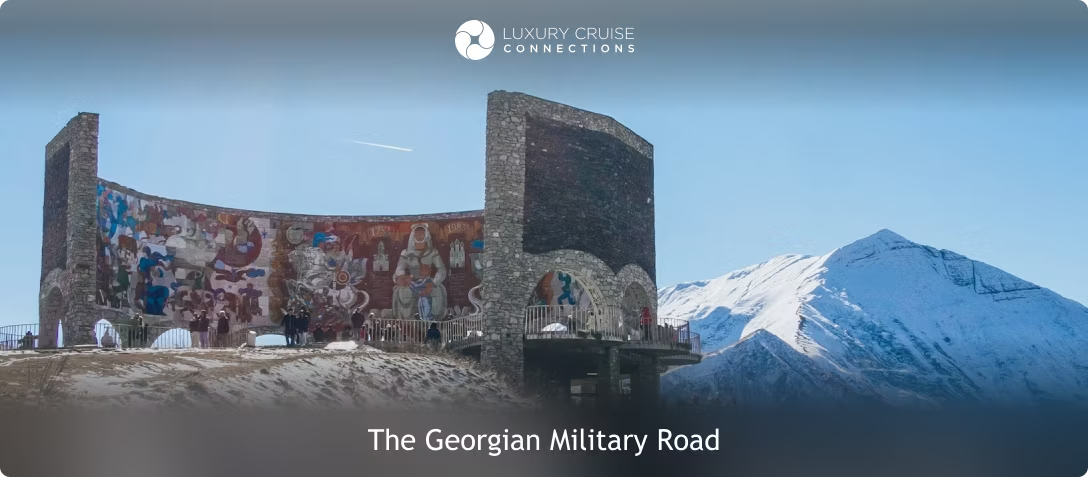
    The Georgian Military Road is a historic mountain highway that offers one of Georgia’s most scenic drives. The Georgian Military Road route connects Tbilisi with the Russian border through the Greater Caucasus. Driving this road introduces visitors to Georgia’s mountain geography and frontier history. The road runs north through beautiful alpine terrain and high mountain passes. Sights along the Georgian Military Road include deep gorges, river valleys, snow capped peaks, historic fortresses, churches, and mountain villages.
    Take a Scenic Drive on the Georgian Military Road

    Highlights of the Georgian Military Road include the changing scenery from forested valleys to open highland landscapes. Another highlight is Ananuri Fortress, a riverside complex overlooking the Aragvi River. Another highlight is the Jvari Pass, which rises above 2,300 meters and marks the highest point on the Georgian Military Road route. Another highlight is the Gudauri mountain resort, known for wide alpine views across the Caucasus Mountains. Another highlight is the Dariali Gorge near the northern end of the Georgian Military Road.

    Taking a scenic drive on the Georgian Military Road is a classic travel experience in Georgia for both tourists and locals. Visitors depart from Tbilisi and follow a steadily climbing route into the Caucasus Mountains. Visitors stop at viewpoints and landmarks like Ananuri Fortress to observe rivers, valleys, and fortified sites. Visitors continue through Gudauri and pause at roadside viewpoints for alpine panoramas. Visitors eat traditional Georgian dishes like khinkali and grilled meats at restaurants and roadside stops such as Pasanauri. Visitors pass through highland villages before reaching Stepantsminda (Kazbegi), where open valleys and peaks dominate the landscape.

    The best time to drive the Georgian Military Road is from May to October when weather conditions support safe driving, clear views, and green landscapes.

    Local guides offer day trips along the Georgian Military Road with planned stops at major landmarks. Guides explain regional geography, history, and cultural sites along the Georgian Military Road and ensure safe navigation.

    Driving the Georgian Military Road has no toll fees. Guided day tours along the Georgian Military Road range from $40 - $100 USD depending on vehicle type, group size, and tour duration.

  • Visit the Svetitskhoveli Cathedral

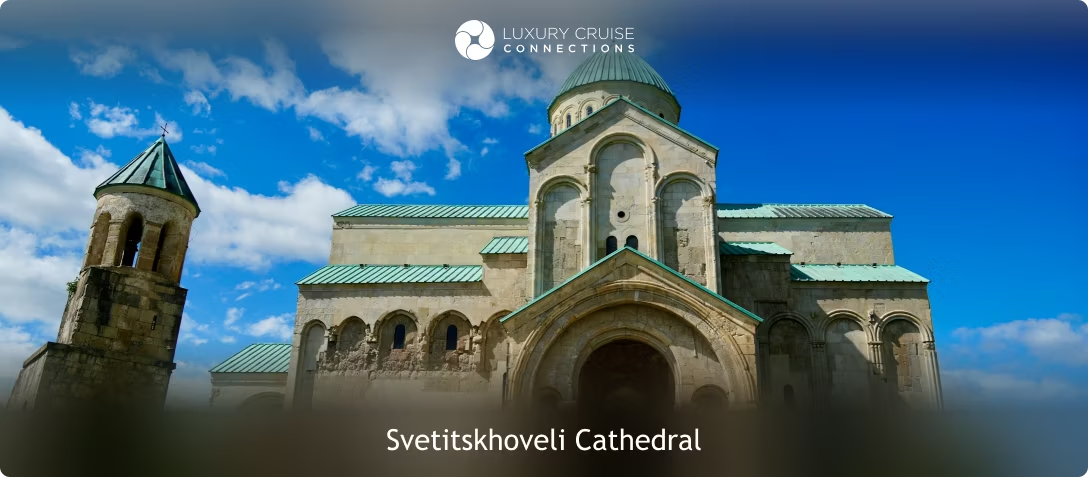
    Svetitskhoveli Cathedral is a medieval cathedral located in the historic town of Mtskheta in eastern Georgia. Visiting Svetitskhoveli Cathedral is one of the clearest ways for visitors to understand Georgia’s early statehood and Christian history. Svetitskhoveli holds national importance as Georgia’s spiritual center and a UNESCO World Heritage Site. Svetitskhoveli’s structure dates mainly to the eleventh century and represents classical Georgian church architecture. The cathedral served as the coronation and burial site of Georgian kings like Vakhtang Gorgasali, Bagrat III, and George V.
     Visit the Svetitskhoveli Cathedral

    Highlights of Svetitskhoveli Cathedral include its sacred status as the traditional burial place of Christ’s robe, symbolically marked by the Life-Giving Pillar beneath the cathedral. Another highlight is the intricate stone carvings that decorate Svetitskhoveli Cathedral’s exterior and interior walls. Another key attraction is the collection of medieval frescoes that reflect Georgian religious art and symbolism. Another highlight is Svetitskhoveli’s monumental scale and cross-dome design, which reflects classical Georgian church architecture.

    Visiting Svetitskhoveli Cathedral places visitors inside Georgia’s most important medieval church and former royal coronation site. Visitors enter the cathedral complex through the main courtyard and admire its cross dome structure, classical Georgian architecture, and intricate stone carvings. Visitors study medieval frescoes that depict biblical scenes and moments from Georgian history. They experience a solemn atmosphere as Orthodox services and quiet prayer take place. They later wander the surrounding streets of Mtskheta and stop at local shops and cafés.

    The best time to visit Svetitskhoveli Cathedral is from April to October when mild weather supports walking around Mtskheta.

    Local guides lead cultural tours that explain the history and symbolism of Svetitskhoveli Cathedral in Georgia. Many Svetitskhoveli Cathedral tours combine the visit with nearby Jvari Monastery as part of a day trip from Tbilisi.

    Entry to Svetitskhoveli Cathedral in Georgia is free of charge.

  • Experience the Vardzia Cave Monastery

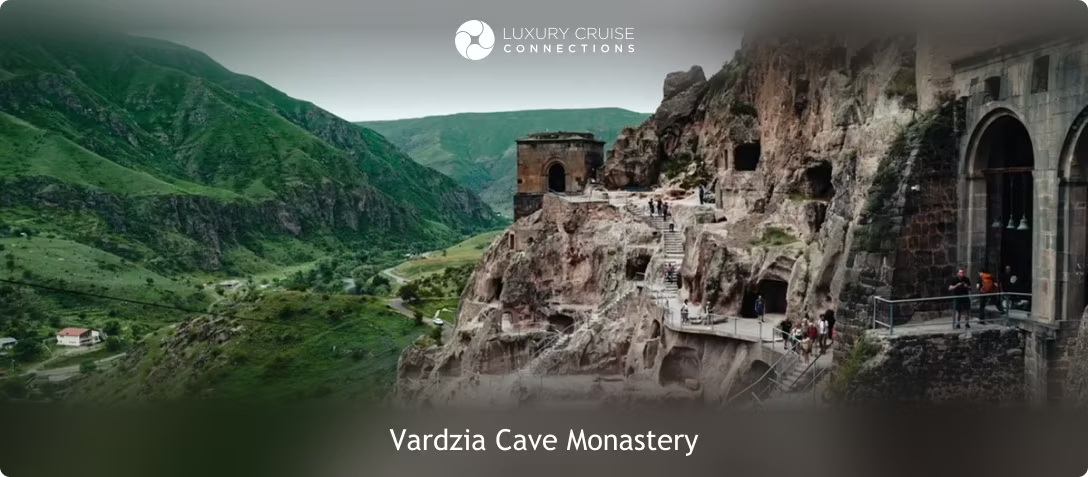
    Vardzia Cave Monastery is a sprawling monastic complex carved into a cliff in southern Georgia near the Turkish border. Vardzia consists of over 600 man-made caves spread over 13 levels and connected by tunnels and staircases. Walking through Vardzia is one of the best ways for visitors to immerse themselves in Georgia’s medieval religious and defensive history. The archaeological site dates between the 11th and 13th centuries and flourished during the reign of Queen Tamar. Vardzia functioned as a fortified monastery and refuge along Georgia’s southern frontier with Seljuk Turkish forces. Vardzia’s complex once contained caves, chapels, storage rooms, and living quarters.
    Experience the Vardzia Cave Monastery

    Highlights of Vardzia include walking through the labyrinth of rock cut caves, tunnels, monk cells, and storage rooms carved deep into the rock. Another highlight is the Church of the Dormition, which contains rare twelfth century frescoes depicting religious scenes and Queen Tamar. Another key attraction of Vardzia is the sacred Tears of Tamar spring, where water flows from inside the cliff near the main church. Another highlight of Vardzia is the elevated viewpoints that offer wide views across the Kura River valley and surrounding highlands.

    Exploring Vardzia Cave Monastery involves following a marked route through a multi level medieval complex. Visitors walk along cliffside paths and climb steep stairs that connect caves, corridors, and chapels. They enter dim chambers and admire frescoes and carved niches. Visitors look for the Tears of Tamar spring and have the chance to taste its sweet waters. They climb to Vardzia’s higher levels for panoramic views across the river valley. The full experience of Vardzia typically takes 2-3 hours.

    The best time to visit Vardzia Cave Monastery is from May to October when mild temperatures and comfortable weather conditions support walking and climbing.

    Local guides lead site tours of Vardzia Cave Monastery that explain its history, architecture, and religious role and help visitors navigate its complex layout.

    Entry to Vardzia Cave Monastery costs $6 USD per person.

  • Go Hiking in the Caucasus Mountains

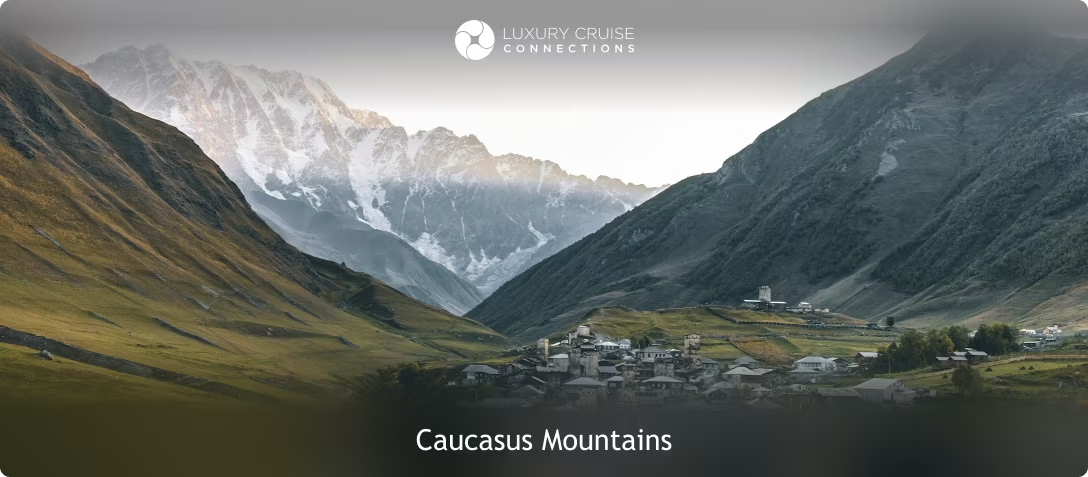
    The Caucasus Mountains are a mountain range in northern Georgia along the Russian border. Going hiking in the Caucasus Mountains gives visitors direct access to Georgia’s most remote regions, where mountain life, landscape, and tradition remain largely unchanged. Hiking routes in the Caucasus Mountains cross high alpine peaks, deep valleys, glaciers, and isolated villages that few visitors ever reach. These trails offer one of Georgia’s most rewarding adventure experiences through remote terrain and long distance walking.
     Go Hiking in the Caucasus Mountains

    Highlights of hiking in the Caucasus Mountains include walking routes in regions such as Svaneti, Kazbegi, and Tusheti that offer dramatic scenery and isolation. Another highlight is hiking through remote mountain villages such as Ushguli and Dartlo, where traditional stone houses and towers dominate the landscape. Another highlight is the presence of medieval defensive towers in Svaneti, which hikers encounter when passing through mountain villages. Another highlight is the popular trek from Mestia to Ushguli, one of Georgia’s most well known multi day hikes. Another highlight is the hike to Gergeti Trinity Church which provides iconic mountain views.

    Going hiking in the Caucasus Mountains involves walking through some of Georgia’s most remote and scenic terrain. Hikers usually begin in mountain towns such as Mestia and Stepantsminda. Hikers follow marked trails or traditional footpaths that climb through forested slopes and open alpine meadows. Visitors cross rivers, mountain passes, and high valleys. Hikers stop in villages throughout the Caucasus Mountains to rest, eat local food, and observe mountain life. Multi-day hikes in the Caucasus Mountains include guesthouse stays, simple meals and long days of walking.

    The best time to go hiking in the Caucasus Mountains is from June to September when snow has melted and daytime temperatures are pleasant for outdoor adventure.

    Local mountain guides lead day hikes and multi day treks across the Caucasus Mountains. These expert guides provide route planning and safety support in remote regions of Georgia.

    Hiking trails in the Caucasus Mountains are generally free to access. Accommodation in guesthouses throughout the Caucasus region ranges from $20 USD to $40 USD per night depending on location, season, and amenities provided.

  • Visit the Stalin Museum in Gori

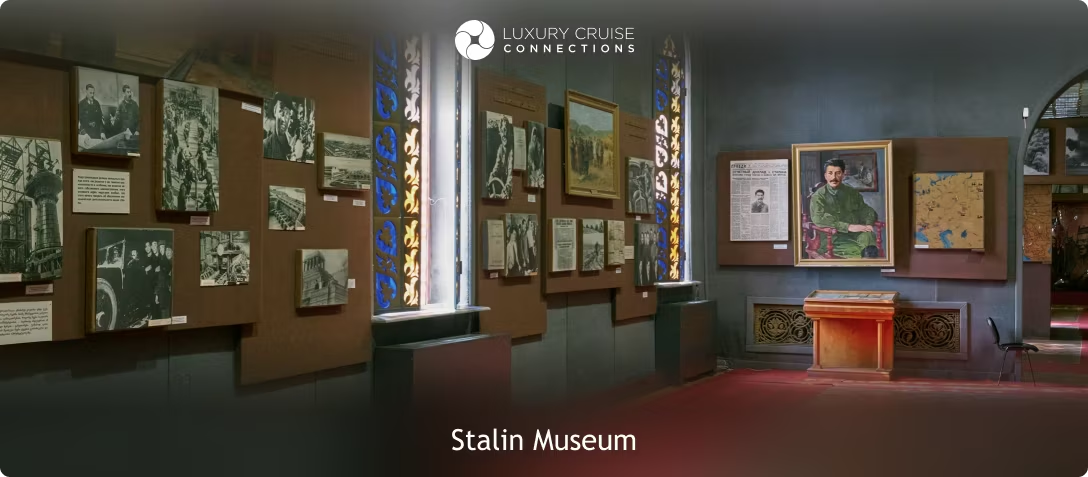
    The Stalin Museum is a historical museum dedicated to the life and legacy of Joseph Stalin. Joseph Stalin was born in Georgia and rose from the Georgian town of Gori to become the leader of the Soviet Union. Visiting the Stalin Museum offers insight into Georgia’s complex relationship with its most controversial historical figure. The Stalin Museum is located in the town of Gori in central Georgia. The complex includes a main exhibition building, Stalin’s preserved childhood house, and his personal railway carriage.
    Visit the Stalin Museum in Gori

    Highlights of the Stalin Museum in Georgia include the preserved house where Joseph Stalin was born, protected beneath a marble canopy. Another highlight is the main exhibition hall, which displays photographs, documents, gifts, and personal items from Stalin’s life such as his tobacco pipe and stationery. Another highlight is Stalin’s armored railway carriage which he used for official travel during World War II. Another attraction is Stalin’s death mask which is displayed on a velvet cushion in a large chamber.

    Visiting the Stalin Museum is a controversial experience that offers insight into twentieth century political history in Georgia. Visitors enter the Stalin Museum’s main exhibition hall and follow rooms arranged chronologically. They examine the museum’s curated photographs, uniforms, letters, and propaganda materials that present a heroic view of Stalin, focusing on his rise and role in WWII. Visitors then step outside to view Stalin’s childhood home and how it has been preserved. They later enter the railway carriage and see its original interiors.

    The best time to visit the Stalin Museum is from April to October when comfortable weather supports walking between outdoor exhibits.

    Official museum guides lead English-speaking guided tours that explain exhibits, museum narrative, and historical context of Joseph Stalin’s life.

    Tickets to the Stalin Museum in Georgia cost $6 USD per person and include a guided tour and entry to the museum, house and carriage.

  • Enjoy the Vibrant Tbilisi Flea Market

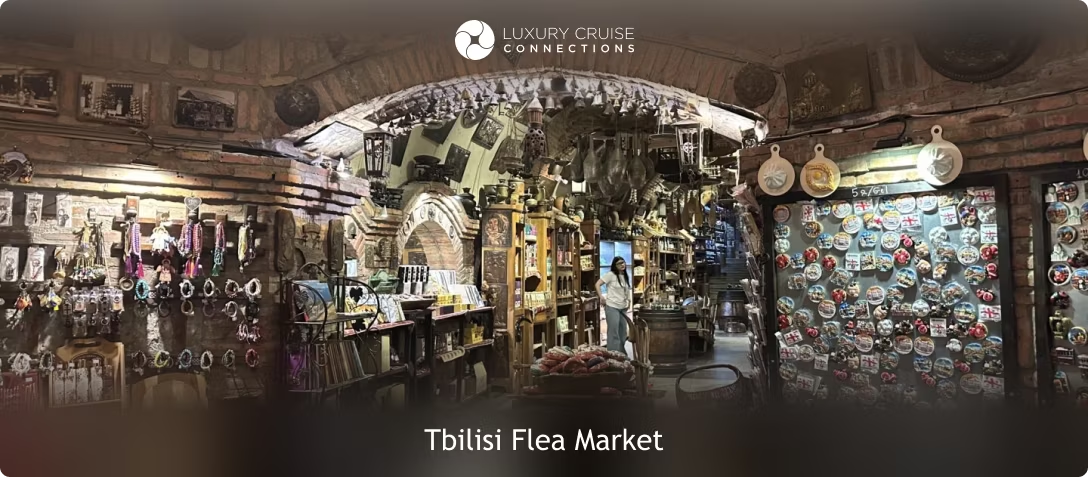
    The Tbilisi Flea Market is a unique daily open-air market located in central Tbilisi, near Dry Bridge. Visiting the Tbilisi Flea Market is one of the most immersive ways for visitors to experience local creative culture in Georgia. The market developed after the Soviet period as local Georgians sold personal belongings and antiques. Today, Tbilisi Flea Market functions as a cultural marketplace with eclectic stalls selling Soviet-era antiques, handicrafts, original artworks and household items.
    Enjoy the Vibrant Tbilisi Flea Market

    Highlights of the Tbilisi Flea Market include Soviet-era memorabilia such as medals, cameras, and vinyl records. Another highlight is the range of original paintings and handmade artwork sold directly by local artists. Another key attraction is the collection of antiques, including coins, jewelry, ceramics, and old photographs. Another highlight of Tbilisi Flea Market is the market's location under a bridge and near the Kura River and central walking areas.

    Enjoying the Tbilisi Flea Market is a lively shopping experience in Georgia’s capital city. Visitors browse between laid-out displays and rummage for Soviet-era medals, cameras, radios, and photographs. They search for antiques such as old coins, tools, door hardware, and vintage household items. They shop for souvenirs including original paintings, wood carvings, cloisonné enamel jewelry, and handmade crafts sold by local artists. Visitors negotiate prices with vendors, as haggling is expected.

    The best time to visit the Tbilisi Flea Market is during spring (March to May) or autumn (September to October), when daytime temperatures are pleasant and the atmosphere is lively.

    Local guides sometimes include the Tbilisi Flea Market in cultural walking tours and help explain historical items and negotiation practices. Visitors easily explore the Tbilisi Flea Market independently.

    Entry to the Tbilisi Flea Market is free.


What are the Most Popular Tourist Attractions in Georgia?

The most popular tourist attractions in Georgia are listed below.

  • Tbilisi Old Town
  • Svetitskhoveli Cathedral
  • Vardzia Cave Monastery
  • Caucasus Mountains
  • Uplistsikhe Cave Town
  • Batumi Beach
  • The Georgian Military Road
  • Georgian National Museum
  • Stalin Museum
  • Tbilisi Flea Market
  • Tbilisi Old Town

    Tbilisi Old Town is the historic core of Georgia’s capital along the Kura River. Tbilisi Old Town attracts large numbers of tourists because it concentrates historic architecture, sulfur baths, churches, and walkable streets in one central district.
    Tbilisi Old Town
  • Svetitskhoveli Cathedral

    Svetitskhoveli Cathedral is a medieval cathedral in the historic town of Mtskheta and a UNESCO World Heritage Site. Svetitskhoveli Cathedral draws domestic and international tourists due to its role in Georgian statehood and long-standing religious significance.
    Svetitskhoveli Cathedral
  • Vardzia Cave Monastery

    Vardzia Cave Monastery is a large cliff-carved monastic complex in southern Georgia. Vardzia Cave Monastery is one of Georgia’s most visited archaeological attractions because of its scale, dramatic setting, and association with Queen Tamar.
    Vardzia Cave Monastery
  • Caucasus Mountains

    The Caucasus Mountains form Georgia’s northern mountain region along the Russian border. The Caucasus Mountains attract nature-loving tourists for hiking, alpine scenery, and remote villages.
    Caucasus Mountains
  • Uplistsikhe Cave Town

    Uplistsikhe Cave Town is an ancient rock-cut settlement in eastern Georgia. Uplistsikhe Cave Town is popular with tourists because it provides direct access to Georgia’s pre-Christian history in a compact and accessible site.
    Uplistsikhe Cave Town
  • Batumi Beach

    Batumi Beach is Georgia’s main seaside leisure area along the Black Sea. Batumi Beach is popular for its pebble beach, vibrant waterfront promenade, and resort atmosphere.
    Batumi Beach
  • The Georgian Military Road

    The Georgian Military Road is a historic mountain highway connecting Tbilisi with the Greater Caucasus. The Georgian Military Road is widely visited by tourists because it combines dramatic mountain scenery, historic landmarks, and easy road access.
    The Georgian Military Road
  • Georgian National Museum

    The Georgian National Museum is the country’s leading museum complex. The Georgian National Museum is popular with tourists looking to learn about Georgia’s archaeology, medieval art, and modern history.
    Georgian National Museum
  • Stalin Museum

    The Stalin Museum is located in the town of Gori, the birthplace of Joseph Stalin. The Stalin Museum attracts tourists interested in Soviet history and Georgia’s complex twentieth-century political legacy.
    Stalin Museum
  • Tbilisi Flea Market

    The Tbilisi Flea Market is a well-known open-air market near Dry Bridge in central Tbilisi. The Tbilisi Flea Market attracts tourists for Soviet-era antiques, local artwork, and its reputation as an authentic cultural marketplace.div> Tbilisi Flea Market


Which Vacation Spots in Georgia Are Best for Beach Lovers?

The vacation spots in Georgia best for beach lovers are listed below.


What are the Best Things to Do in Georgia for First-Time Visitors?

The best things to do in Georgia for first-time visitors are listed below.

Tbilisi is Georgia’s capital city and main historical and cultural center. Exploring Tbilisi introduces first-time visitors to Georgian history, architecture, and food culture within a walkable area.
The Georgian Military Road is a historic mountain highway connecting Tbilisi with the Greater Caucasus in northern Georgia. Taking a scenic drive on the Georgian Military Road lets first-time visitors experience alpine scenery, historic fortresses, and mountain valleys without trekking.
Mtskheta is Georgia’s ancient capital and one of the country’s most important historic towns. Visiting Mtskheta and the Svetitskhoveli Cathedral introduces first-time visitors to Georgian statehood and early Christianity.
The Georgian National Museum is Georgia’s leading museum complex with multiple branches in Tbilisi. Visiting the Georgian National Museum provides first-time visitors with essential context through exhibitions on archaeology, medieval culture, and modern history.
Uplistsikhe Cave Town is an ancient rock-hewn settlement in eastern Georgia near the town of Gori. Walking through the caves of Uplistsikhe Cave Town helps first-time visitors understand Georgia’s pre-Christian life.
The Caucasus Mountains form Georgia’s dramatic northern highlands along the Russian border. Experiencing mountain scenery in the Caucasus Mountains introduces first-time visitors to Georgia’s alpine landscapes, remote villages, and best viewpoints.

What makes Georgia a Beautiful Country to Visit?

Georgia is a beautiful country to visit for three main reasons. The first reason is Georgia’s landscape diversity. Georgia combines high mountains, fertile valleys, dense forests, and a Black Sea coastline. Visitors experience this beauty through constant scenery changes while exploring The Georgian Military Road or roads in the Caucasus Mountains. The second reason Georgia is a beautiful country to visit is because of its historical depth. Visitors explore ancient cave cities, early Christian churches, and hilltop fortresses that reflect a history of continuous settlement in Georgia. The third reason is Georgia’s authentic culture. Traditional architecture, regional food, and everyday social life in Georgia remain visible and practiced rather than staged for tourism.

How can I experience Local Culture in Georgia?

You can experience local culture in Georgia by engaging with daily life, food traditions, historic spaces, and public celebrations rather than only visiting landmarks. Firstly, experience everyday life in Georgia by spending time walking through historic neighborhoods in Tbilisi. Exploring Tbilisi’s courtyards, churches, and flea markets allows visitors to people-watch and observe local routines in casual public spaces. Secondly, eat traditional Georgian food in local restaurants and family-run guesthouses, where shared meals and wine play a central role in social life. Thirdly, visit museums, monasteries, and historic towns to understand how religion and history shape modern Georgian identity. Finally, attend local festivals and public celebrations to experience Georgian culture as it is actively practiced. Two annual local events to experience in Georgia include Tbilisoba, the annual city festival in Tbilisi, and Rtveli, the traditional wine harvest celebrations.

Are there Activities in Georgia Perfect for Families with Children?

Yes, there are activities in Georgia perfect for families with children, because the country offers walkable cities, outdoor attractions, and short excursions that work well for mixed age groups.

In Tbilisi, families ride the cable car to Narikala Fortress, walk along the Kura River promenade, explore Mtatsminda Park, and visit the Tbilisi Zoo. Families browse the Tbilisi Flea Market, where children see unusual antiques, old cameras, coins, and everyday objects laid out in the open. Outside the capital, families walk through the cave city of Uplistsikhe Cave Town, explore the Open Air Museum of Ethnography, and visit the Botanical Gardens. In Batumi, families swim at Batumi Beach, walk the seaside promenade, use playgrounds, and visit the Batumi Botanical Garden. For simple nature experiences, families also walk to Gergeti Trinity Church in Kazbegi, explore parks and lake areas, and take short countryside walks near towns.

Are there Fun Things to Do in Georgia for Outdoor Adventures?

Yes, there are fun things to do in Georgia for outdoor adventures, because Georgia offers mountain-based activities, scenic outdoor travel, and water-based experiences. Mountain-based outdoor adventure in Georgia includes hiking, mountaineering, rock climbing, ice climbing, and village-to-village routes in the Caucasus Mountains. The Caucasus Mountains support accessible hiking on marked trails that allow visitors to experience alpine landscapes without technical skills. The Caucasus Mountains also support high-intensity outdoor adventure, including multi-day high-altitude expeditions in regions such as Svaneti, Kazbegi, and Tusheti.

Scenic travel-based outdoor adventure in Georgia includes driving mountain routes, stopping at viewpoints, and exploring valleys along the Georgian Military Road. Exploring the Georgian Military Road allows travelers to experience dramatic landscapes, river gorges, and high mountain passes without extended trekking.

Water-based outdoor adventure in Georgia includes swimming, paddleboarding, rafting, and coastal walking along the Black Sea and inland rivers. Along the coast near Batumi, visitors enjoy seaside activities. Georgia’s inland regions support rafting and nature walks in protected river valleys

Best Things to Do Around the World

Discover the best activities, landmarks, and experiences in every cruise destination and port of call.

Europe Western, Central & Mediterranean
America North, Central, South & Caribbean
Africa & Asia Oceania & Antarctica