10 Best Things to Do in China

China is a vast country with a rich ancient history, modern megacities, and diverse landscapes. Visiting China offers an...

add

China is a vast country with a rich ancient history, modern megacities, and diverse landscapes. Visiting China offers an array of experiences, from ancient landmarks to natural wonders. Visitors are able to explore historical sites, breathtaking scenery, and vibrant cities, making China a destination full of excitement and culture. Attractions represent the best things to do in China. The sites offer diverse and enriching experiences, from historical landmarks to natural wonders. Wondering what to do in China, the destinations are at the top of the list. Exploring places to visit in China guarantees a memorable and unique travel experience.

  • Visit the Great Wall of China
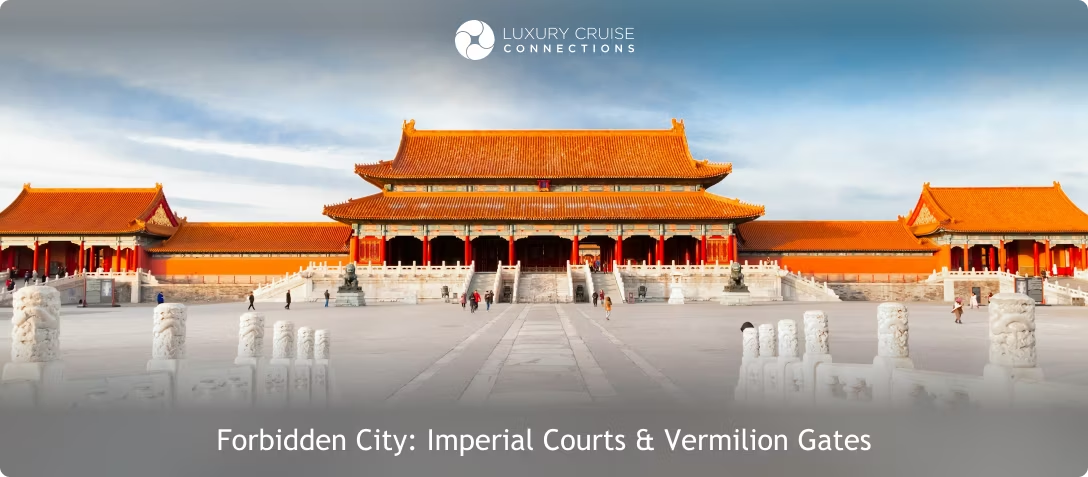
  • Explore the Forbidden City in Beijing
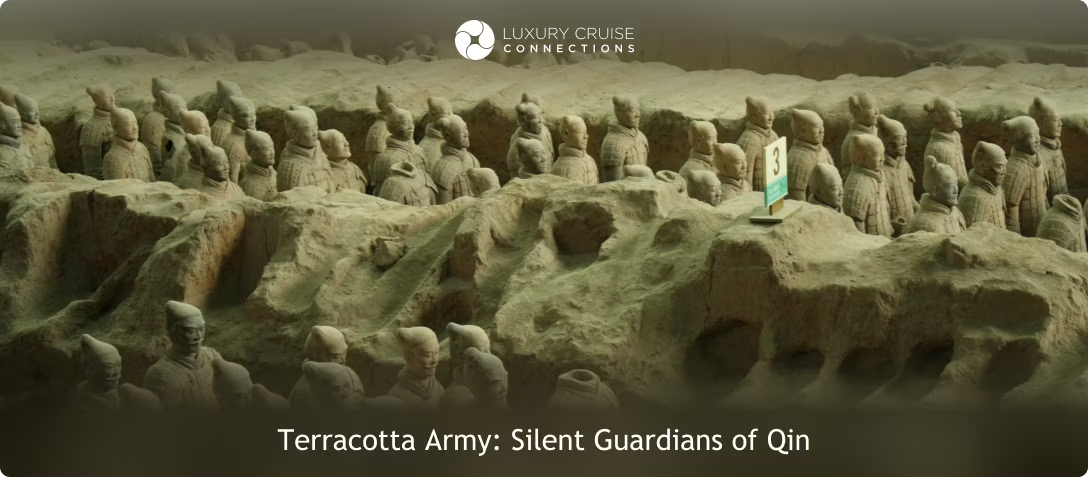
  • See the Terracotta Army in Xi'an
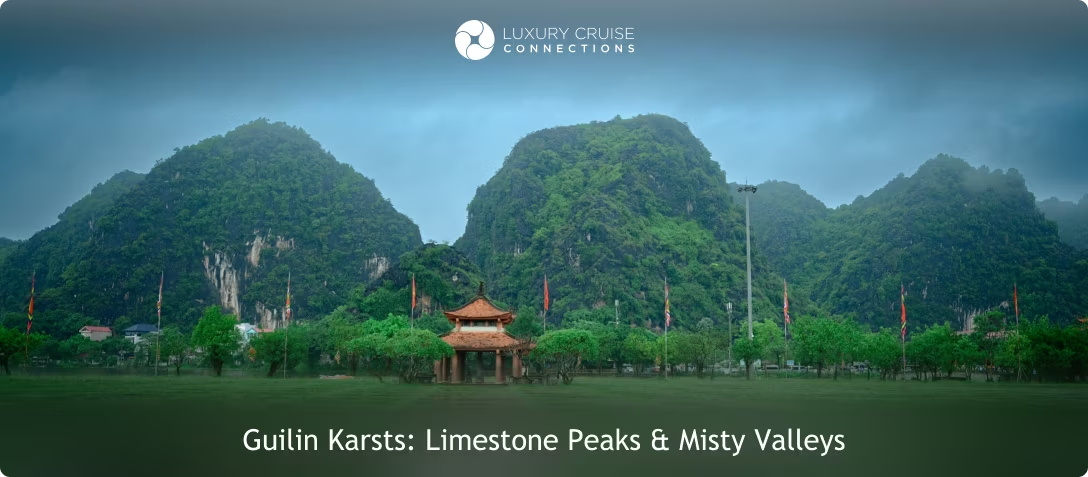
  • Discover the Karst Mountains in Guilin
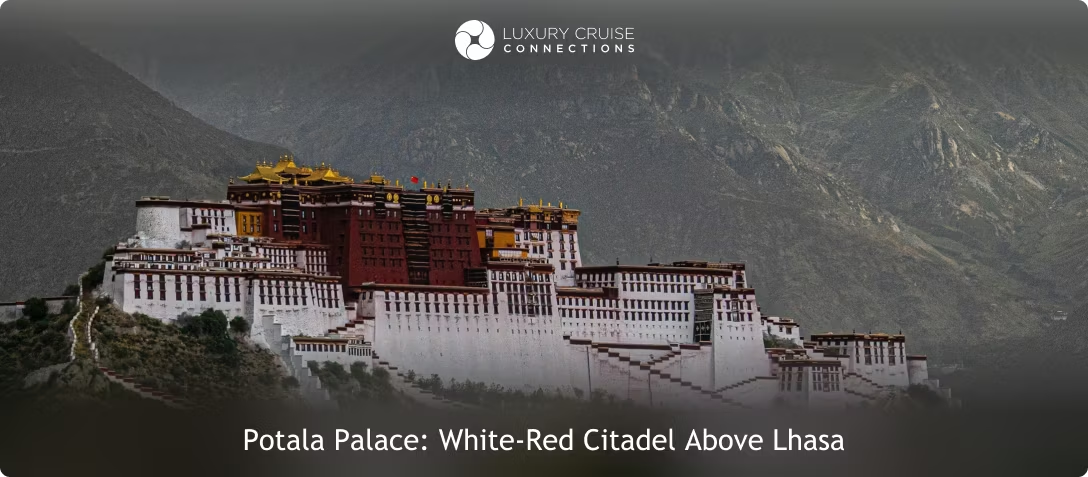
  • Visit the Potala Palace in Lhasa
  • Cruise the Li River
  • Explore Zhangjiajie National Forest Park
  • Visit the Summer Palace in Beijing
  • See the Giant Panda Research Center in Chengdu
  • Walk along the Bund in Shanghai
  • Visit the Great Wall of China

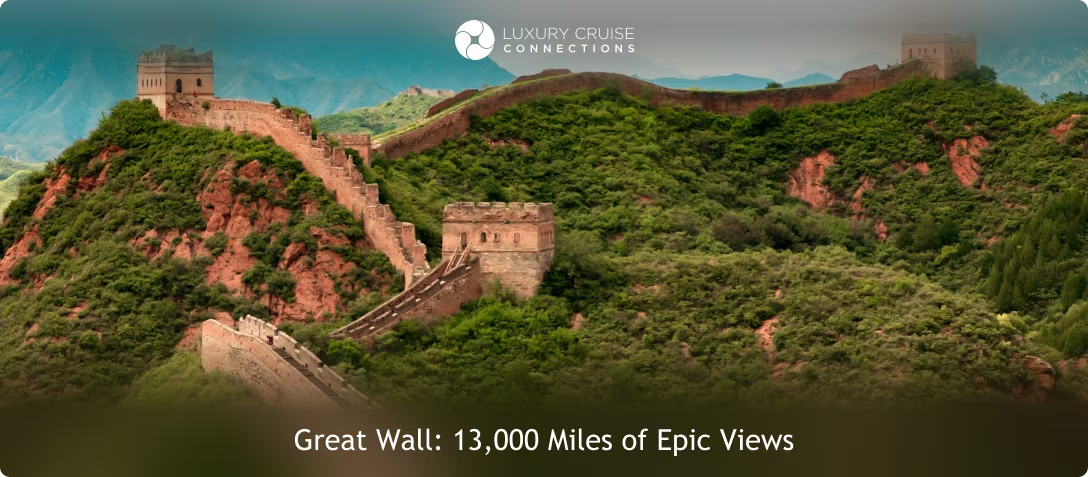
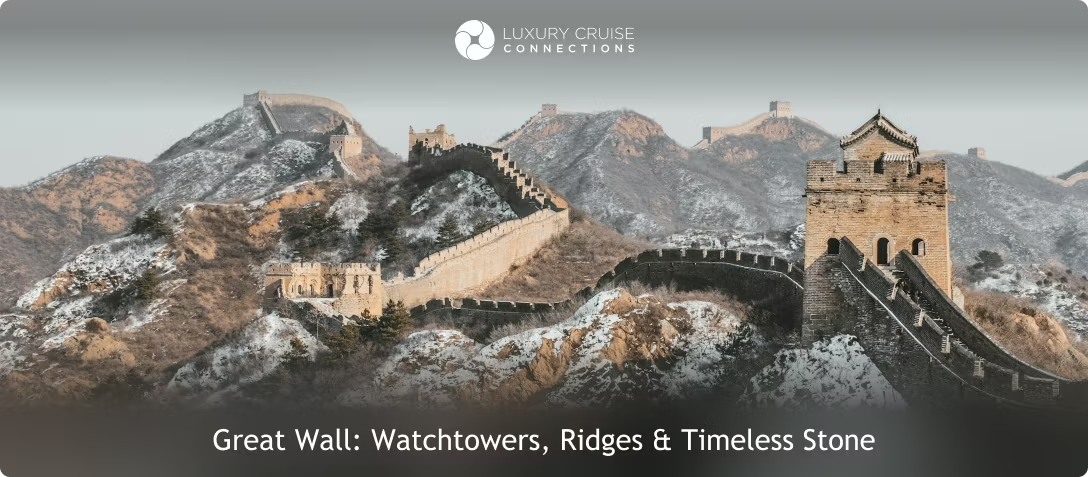
    The Great Wall of China is an ancient fortification stretching across northern China. The series of fortifications was built to protect against invasions, spans over 13,000 miles, and is a United Nations Educational, Scientific, and Cultural Organization (UNESCO) World Heritage site. The Wall showcases impressive military engineering and architectural feats.
    Visit the Great Wall of China

    Badaling and Mutianyu are the most popular sections, offering well-preserved features and easy access. Visit sections like Jinshanling or Simatai, which provide rugged terrain and fewer tourists, for a quieter experience.

    Visitors are able to walk along the Wall, climb steep sections, and enjoy expansive views of the surrounding landscapes. Historical displays at key points provide insights into its military significance and the engineering behind the Wall.

    Spring and autumn provide ideal weather and fewer crowds.

    A local guide offers in-depth knowledge and improves the experience.

    The price ranges from 40 to 65 CNY, depending on the section, with discounts available for students or large groups. Additional fees apply for cable cars and other transportation services

  • Explore the Forbidden City in Beijing

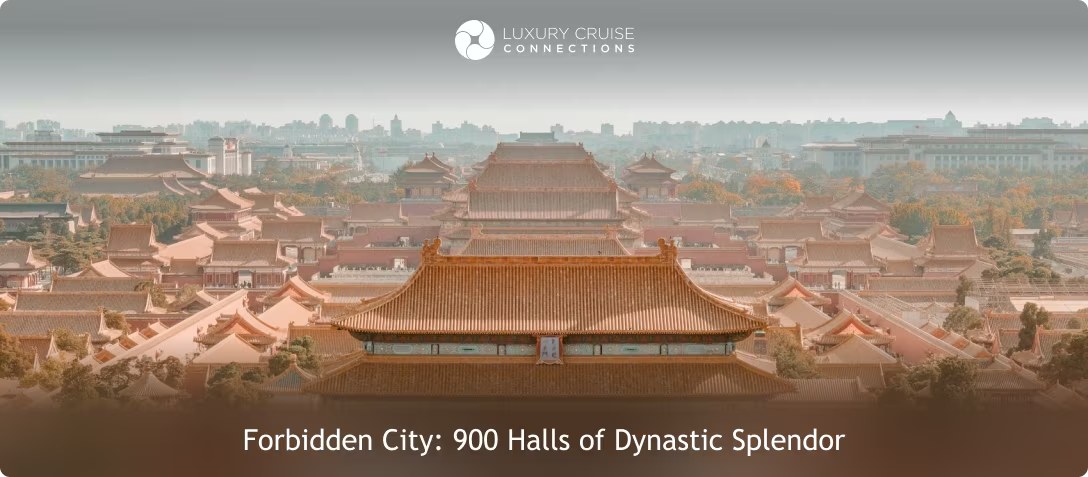
    The Forbidden City in Beijing is a vast imperial palace complex that served as the home of Chinese emperors for almost 500 years. The city is one of the largest and best-preserved palaces in the world. The site is a UNESCO World Heritage site and a symbol of China's imperial history.
    Explore the Forbidden City in Beijing

    Must-see attractions include the Hall of Supreme Harmony, the Emperor's residence, and the Imperial Garden. The Hall of Clocks displays an impressive collection of antique timepieces. Visitors must not miss the Nine Dragon Screen, which is an iconic feature of the complex.

    Visitors are able to explore the many courtyards, halls, and gardens of the Forbidden City. The architecture reflects traditional Chinese design, with intricate details and grand structures. Exhibitions throughout the palace display artifacts from China's dynastic history.

    The Forbidden City is most enjoyable in spring (April to May) and autumn (September to October) when the weather is mild, and the crowds are smaller. Summer is most likely to be very crowded, and temperatures rise. Winter is less crowded, but the cold weather is challenging

    A guide improves the visit by explaining the rich history and symbolism of the palace. A guided tour provides in-depth historical knowledge and insights into the architecture and symbolism of the palace. Audio guides are available in multiple languages and offer a self-guided option. Private tours are ideal for tourists seeking a personalized experience.

    Entrance fees range from 40 to 60 CNY, with discounts for students and children. Special exhibitions have additional charges. Some deals are available for students, children, and seniors.

  • See the Terracotta Army in Xi'an

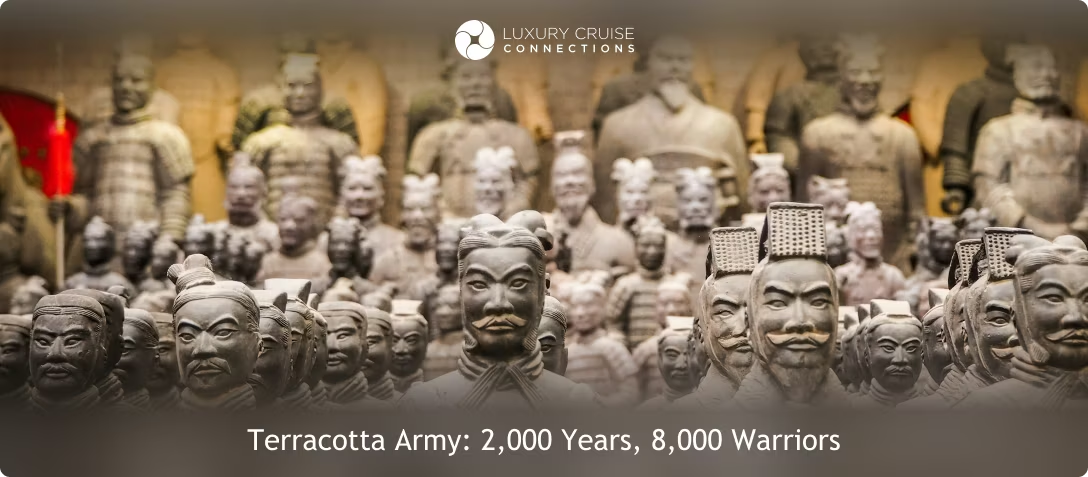
    The Terracotta Army in Xi'an is a collection of life-sized statues made to protect the tomb of China's first emperor, Qin Shi Huang. The figures, discovered in 1974, include soldiers, horses, and chariots, each with unique features. The site is a UNESCO World Heritage site and an extraordinary archaeological find.
    See the Terracotta Army in Xi'an

    The main excavation pits display thousands of soldiers in formation, offering a glimpse into the scale of the emperor's army. The Bronze Chariot and Horses exhibit shows detailed replicas of the emperor's war chariots. The Terracotta figures are organized into infantry, archers, and cavalry units, with various ranks represented.

    Visitors walk through large excavation sites, where the soldiers are displayed in the original formation. The museum provides information on the history, techniques, and discovery of the Terracotta Army. Exhibits show the intricate details of the statues, highlighting the craftsmanship of ancient Chinese artisans.

    The best time to visit is spring (April to May) and autumn (September to October) for mild weather and fewer crowds. Summer brings large tourist crowds, and winter experiences colder weather but fewer people.

    A guide offers detailed insights into the history and significance of the Terracotta Army. Audio guides are available in multiple languages.

    Entrance fees range from 120 to 150 CNY. Special exhibitions have additional charges. Discounts are available for students and children.

  • Discover the Karst Mountains in Guilin

    The Karst Mountains in Guilin are a spectacular landscape of limestone peaks, caves, and rivers. The UNESCO World Heritage site is famous for its stunning natural beauty. The mountains have inspired poets and artists for centuries.
    Discover the Karst Mountains in Guilin

    Must-see attractions include the Li River, which offers scenic boat rides through the karst formations. The Reed Flute Cave, with its colorful stalactites and stalagmites, is a highlight. The Longji Rice Terraces provide breathtaking views of terraced fields set against the backdrop of the mountains.

    Visitors are able to take a boat cruise along the Li River to see dramatic peaks rising from the water. Hiking through the Longji Rice Terraces offers a closer look at local farming practices and panoramic views. The Reed Flute Cave offers a surreal experience with its well-lit formations.

    Spring (April to May) and autumn (September to October) provide the best weather and clear views. Summer sees higher temperatures and tourists.

    A guide provides context on the history and formation of the karst landscape.

    Entrance fees vary. The Reed Flute Cave charges around 90 CNY, and boat tours along the Li River cost approximately 150 to 300 CNY.

  • Visit the Potala Palace in Lhasa

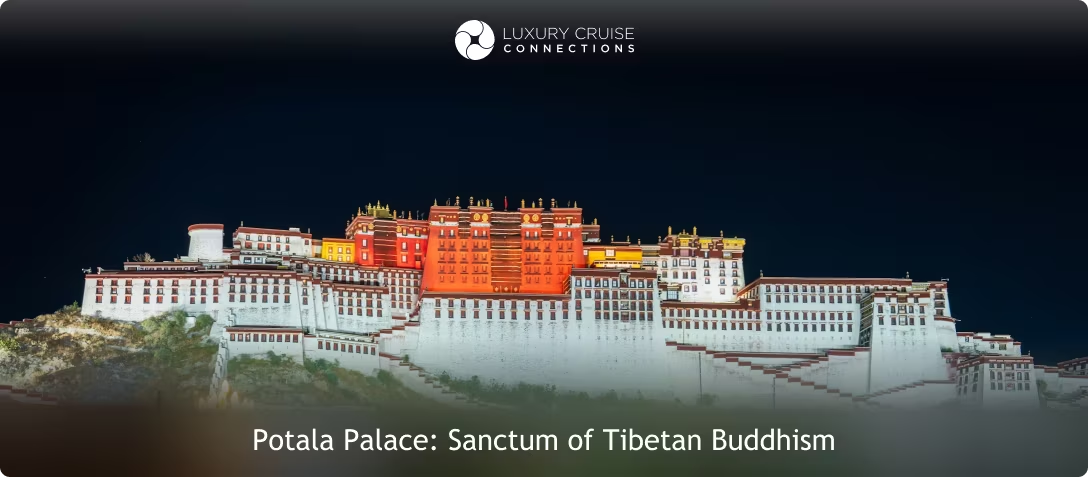
    The Potala Palace in Lhasa is a monumental structure that served as the winter residence of the Dalai Lama. Perched on a hill, it offers views of the surrounding Tibetan Plateau. The palace is a symbol of Tibetan Buddhism and a UNESCO World Heritage site.
    Visit the Potala Palace in Lhasa

    Key attractions include the Red Palace, which houses sacred shrines and tombs of past Dalai Lamas. The White Palace, with its administrative and living quarters, is open to visitors. The murals and sculptures within the palace are remarkable representations of Tibetan culture and religion.

    Visitors are able to explore the palace's various levels, each filled with intricate art and religious relics. The journey up to the palace offers breathtaking views of Lhasa and the surrounding mountains. The palace’s calm atmosphere provides a sense of Tibetan spirituality and history.

    Summer (May to September) offers the most comfortable weather. Winter is cold, and the palace is likely to be less crowded.

    A guide offers detailed explanations of the palace's history and religious significance.

    Entrance fees range from 100 to 200 CNY. Tickets are expected to be more expensive during peak tourist seasons.

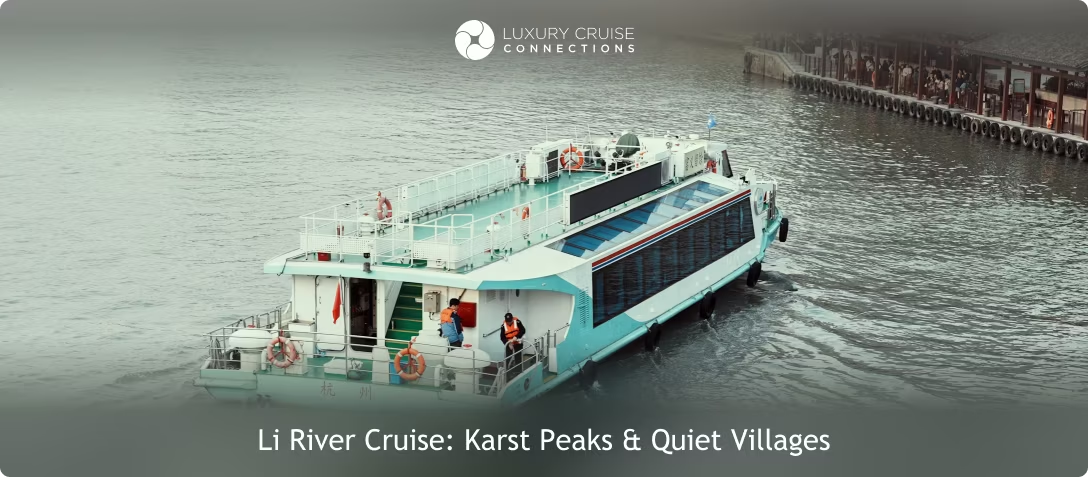
  • Cruise the Li River

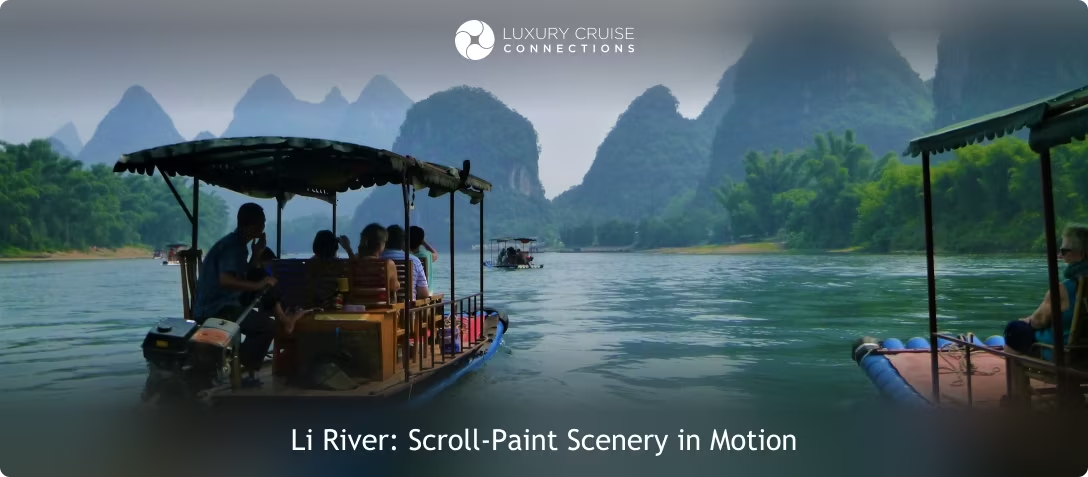
    The Li River is a scenic waterway in Guangxi Province, China, known for its dramatic karst mountain landscape. A cruise along the river offers breathtaking views of limestone peaks, caves, and lush greenery. The river has been an inspiration for Chinese art and poetry for centuries.
    Cruise the Li River

    The Li River cruise starts in Guilin and ends in Yangshuo. Key attractions include the iconic Elephant Trunk Hill, which resembles an elephant drinking from the river, and the serene Xingping Village. The landscape features mist-covered peaks and traditional fishing villages.

    Passengers are able to relax on the boat while enjoying panoramic views of the karst formations. The cruise offers a peaceful and picturesque journey through the countryside. Opportunities to photograph the dramatic scenery and local life are plentiful, making the experience unforgettable.

    The ideal time to cruise the Li River is in spring (April to May) and autumn (September to October), when the weather is mild and the river’s misty atmosphere improves the experience. Summer brings higher temperatures and tourists, and winter sees fewer crowds but colder conditions, making tours less frequent.

    Hiring a local guide adds depth to the experience, providing insights into the region's history, the cultural significance of landmarks, and the local way of life.

    Cruise fees range from 200 to 500 CNY, depending on the boat type and route. During peak tourist seasons, tickets are expected to be more expensive

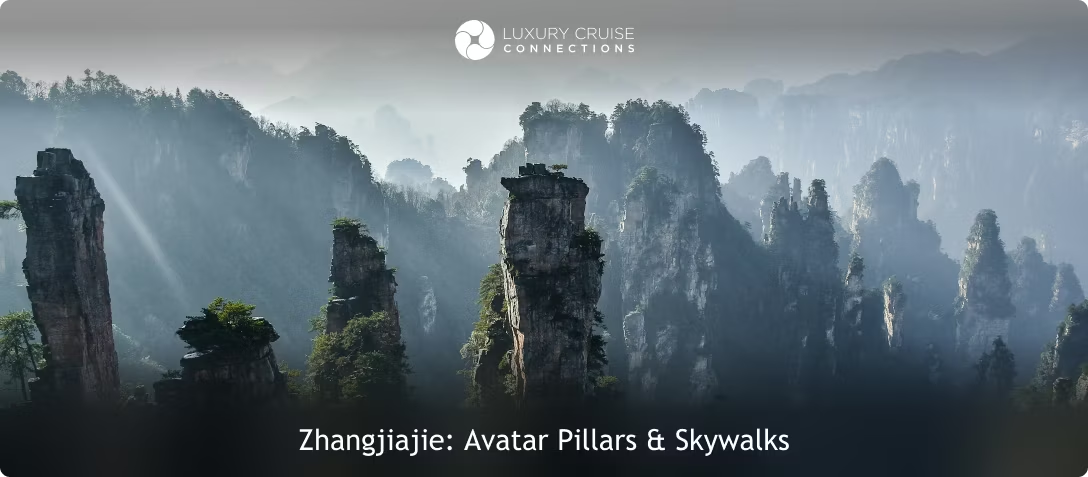
  • Explore Zhangjiajie National Forest Park

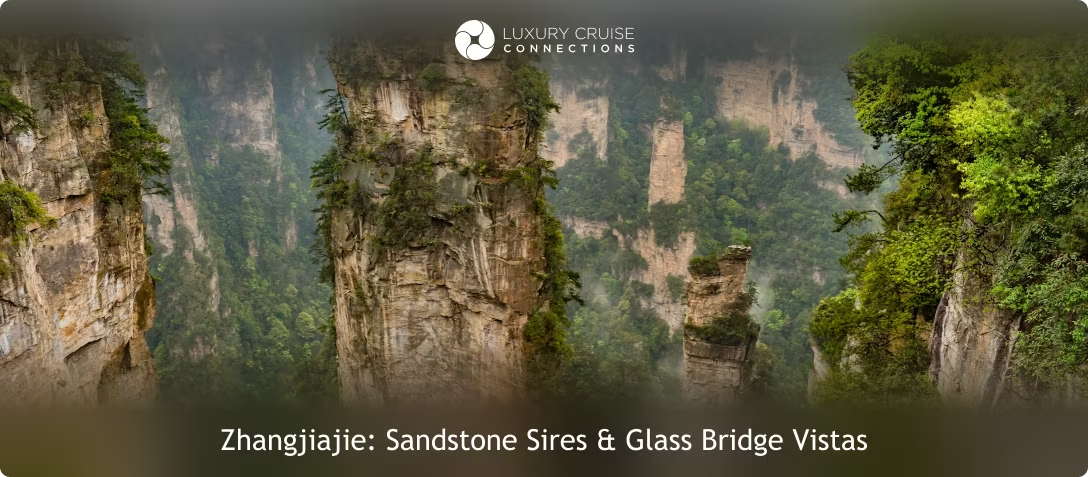
    Zhangjiajie National Forest Park is a UNESCO World Heritage site located in China’s Hunan Province. The park is famous for its towering sandstone pillars, which inspired the floating mountains in the movie “Avatar”. The park covers 11,900 hectares of forested land with diverse ecosystems.
    Explore Zhangjiajie National Forest Park

    Key attractions include the Tianzi Mountain, known for its dramatic peak formations, and the Avatar Hallelujah Mountain. The Glass Bridge is the world’s longest glass bridge, offering stunning views of the canyon below. The Golden Whip Stream provides a scenic walking trail through lush forests and crystal-clear water.

    Visitors are able to hike through the park’s trails, climb the mountains, and experience the natural beauty from several viewpoints. A cable car ride offers panoramic views of the towering pillars. The Glass Bridge provides a thrilling experience for tourists looking to walk across a transparent surface above the canyon.

    Spring (April to May) and autumn (September to October) offer comfortable weather and fewer crowds. Summer brings higher temperatures and larger crowds. Winter is expected to be cold, but fewer tourists visit during the season.

    A guide offers valuable insights into the history, geology, and flora of the park. Audio guides are available in multiple languages.

    Entrance fees range from 150 to 250 CNY, with extra charges for the Glass Bridge and cable cars. Discounts are available for students and seniors

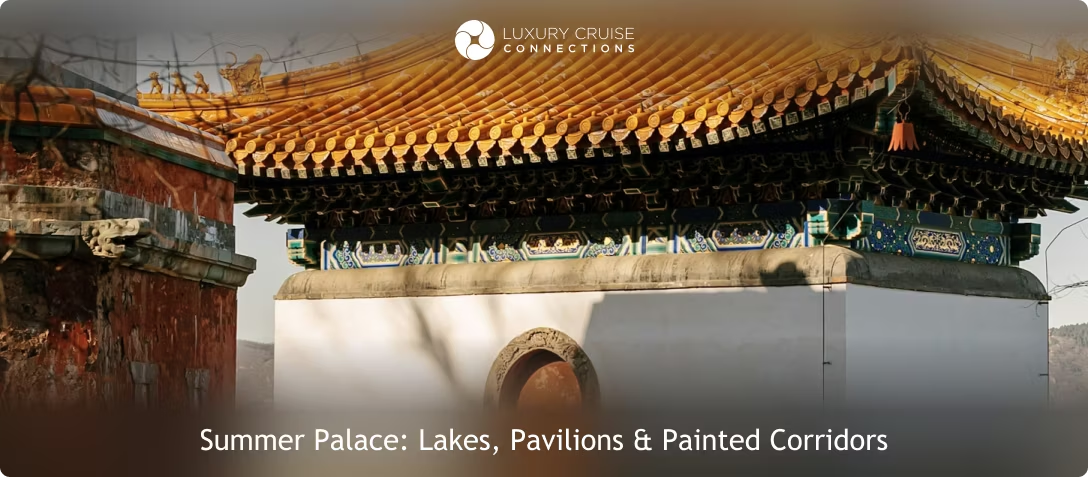
  • Visit the Summer Palace in Beijing

    The Summer Palace in Beijing is a vast imperial garden and palace complex. The palace served as the summer retreat for the Qing Dynasty emperors. The palace spans over 700 acres and is known for its beautiful landscapes and classical Chinese architecture.
    Visit the Summer Palace in Beijing

    Must-see attractions include the Long Corridor, famous for its intricate paintings, and the Marble Boat, a unique lakeside structure. The Tower of Buddhist Incense offers a panoramic view of the palace grounds. Kunming Lake provides a tranquil setting for visitors with its boat rides.

    Visitors are able to explore the grand halls, gardens, and pavilions. Walking along the Long Corridor reveals detailed art and historical scenes. Boating on Kunming Lake offers a peaceful way to enjoy the surroundings. The intricate bridges and pavilions add to the overall scenic beauty

    The best time to visit is during spring (April to May) and autumn (September to October) for mild weather and fewer tourists. Summer brings higher temperatures and large crowds, making it less comfortable to explore. Winter sees fewer tourists but cold weather

    A guide offers historical context and details about the architecture and gardens. Audio guides are available for a self-guided tour.

    Entrance fees range from 10 to 30 CNY. Additional fees apply for boat rides and special areas.

  • See the Giant Panda Research Center in Chengdu

    The Giant Panda Research Center in Chengdu is dedicated to the conservation and research of giant pandas. The center houses over 80 pandas and provides a natural habitat for their breeding and care. The research center is one of the leading panda conservation facilities in the world
     See the Giant Panda Research Center in Chengdu

    The most popular attraction is the Panda Breeding Center, where visitors are able to watch pandas of all ages. The center has a research area where visitors learn about panda behavior and conservation efforts. The Panda Nursery offers a chance to see newborn pandas up close.

    Visitors are able to watch pandas eating bamboo, playing, and interacting in their naturalistic enclosures. The center offers educational exhibits on panda conservation and the ecological challenges the species faces. Interactive displays help visitors understand the efforts to protect the panda population.

    Spring (March to May) and autumn (September to November) provide mild weather and fewer tourists. Summer is busy, with higher temperatures, and winter is expected to be cold but quieter.

    A guide improves the experience by providing detailed information on panda conservation efforts and research. Audio guides are available for a self-guided experience.

    Entrance fees are around 60 to 80 CNY. Additional charges apply for special experiences, like feeding the pandas. Discounts are available for students and children.

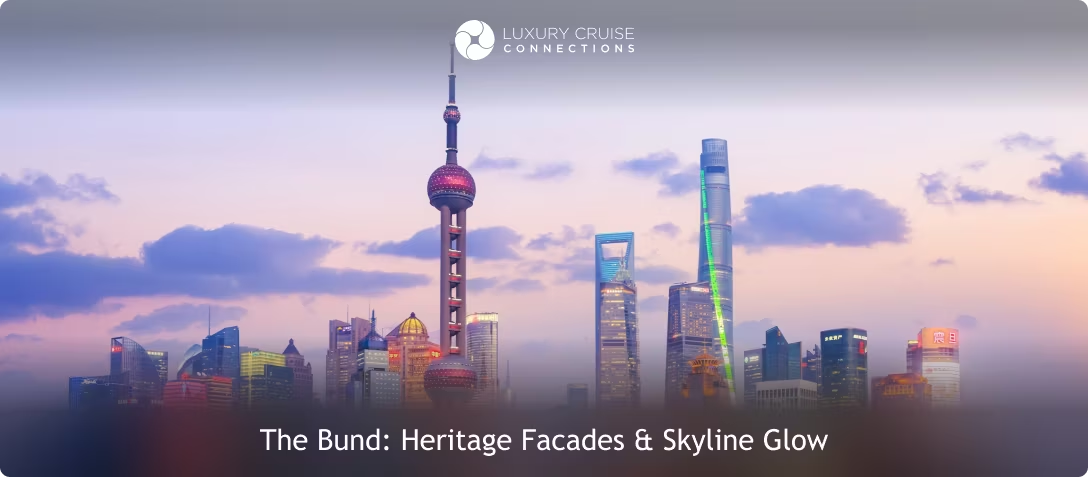
  • Walk along the Bund in Shanghai

    The Bund in Shanghai is a historic waterfront area along the Huangpu River. The bund features a collection of colonial-era buildings that showcase a mix of architectural styles. The Bund is a symbol of Shanghai’s past as an international settlement.
     Walk along the Bund in Shanghai

    Must-see attractions include the famous colonial-era buildings, the former branch of Hongkong and Shanghai Banking Corporation (HSBC) Building from 1923 to 1955, and the Customs House. The promenade offers panoramic views of the modern skyline, including the Oriental Pearl Tower and the Jin Mao Tower. The contrast between the old and new architecture is striking.

    Visitors walk along the riverfront, enjoying views of the river and skyline. The area is stunning at night when the buildings are illuminated. A cruise along the Huangpu River offers an alternative perspective of the Bund and Shanghai’s skyline.

    The best time to visit is in the early morning or late evening for fewer crowds. The area is busiest in the late afternoon and evening.

    A guide provides historical context and insight into the significance of the Bund’s architecture.

    Walking along the Bund is free, but a river cruise or entry into certain buildings requires a ticket, around 70 to 150 CNY.


What are the Most Popular Tourist Attractions in China?

The most popular tourist attractions in China are listed below.

  • Great Wall of China
  • Forbidden City in Beijing
  • Terracotta Army in Xi'an
  • Li River in Guilin
  • West Lake in Hangzhou
  • Zhangjiajie National Forest Park
  • Potala Palace in Lhasa
  • Great Wall of China

    The Great Wall stretches over 13,000 miles and is one of the most iconic landmarks in the world. The tourist spot was built to protect China from invasions and offers stunning views of the surrounding landscapes. Sections like Badaling and Mutianyu are well-preserved and easily accessible to visitors.
    Great Wall of China
  • Forbidden City in Beijing

    The Forbidden City was the imperial palace of Chinese emperors for nearly 500 years. The city's vast complex with over 900 buildings features ancient architecture and a rich collection of cultural artifacts. The site is a UNESCO World Heritage site and a symbol of China’s dynastic history.
    Forbidden City in Beijing
  • Terracotta Army in Xi'an

    The Terracotta Army consists of thousands of life-sized statues created to protect the tomb of Emperor Qin Shi Huang. Discovered in 1974, the site is one of the greatest archaeological finds, offering a fascinating glimpse into ancient China’s military and cultural history.
    Terracotta Army in Xi'an
  • Li River in Guilin

    The Li River is famous for its stunning karst mountain landscapes. A cruise along the river offers views of limestone peaks, traditional fishing villages, and lush greenery. The scenery has inspired Chinese art and poetry for centuries.
    Li River in Guilin
  • West Lake in Hangzhou

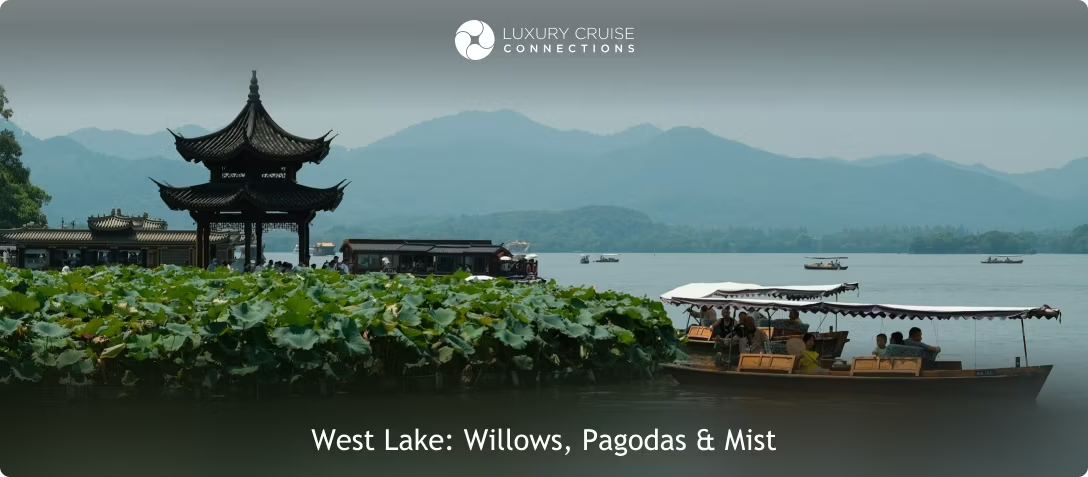
    West Lake is a picturesque body of water surrounded by temples, pagodas, and gardens. The lake is known for its beauty and tranquility. The lake has been a source of inspiration for poets and artists throughout history. Walking around the lake offers a peaceful escape and stunning views.
    West Lake in Hangzhou
  • Zhangjiajie National Forest Park

    Zhangjiajie is famous for its towering sandstone pillars, which inspired the floating mountains in the film Avatar. The park features unique landscapes, hiking trails, and the world’s longest glass bridge, offering breathtaking views of the surrounding forested mountains.
    Zhangjiajie National Forest Park
  • Potala Palace in Lhasa

    The Potala Palace is a historic structure and the former winter residence of the Dalai Lama. Located in the Tibetan Plateau, it offers stunning views of Lhasa and is a symbol of Tibetan Buddhism. The palace is a UNESCO World Heritage site, rich in cultural and religious significance.
    Potala Palace in Lhasa


Which Vacation Spots in China Are Best for Beach Lovers?

The vacation spots in China that are best for beach lovers are listed below.


What are the Best Things to Do in China for First-Time Visitors?

The best things to do in China for first-time visitors are listed below.

The Great Wall is one of China’s most famous landmarks. The Great Wall offers breathtaking views and a glimpse into the country’s ancient history. Walking along the Wall allows visitors to experience its magnificence and the stunning landscapes surrounding it.
The Forbidden City is a vast imperial palace that served as the home of Chinese emperors. The city is one of the world’s most well-preserved ancient architectural complexes. Touring the Forbidden City reveals China’s royal history and rich cultural heritage.
The Terracotta Army consists of thousands of life-sized statues created to protect Emperor Qin Shi Huang’s tomb. The archaeological site offers a fascinating look at ancient Chinese military history and craftsmanship. The statues provide insight into the scale of China’s ancient empire.
The Li River is known for its dramatic karst mountain scenery. A boat cruise along the river offers a tranquil and picturesque experience. The towering limestone peaks and crystal-clear waters create a stunning natural backdrop, ideal for photography.
The Potala Palace is a historic Tibetan site that served as the residence of the Dalai Lama. The palace offers spectacular views of Lhasa and showcases Tibetan Buddhism’s cultural significance. The palace's architecture and religious artifacts are of great historical value.

Is the Great Wall of China One of the Coolest Places to Visit in China?

Yes, the Great Wall of China is one of the coolest places to visit in China. The tourist spot is one of the world’s most iconic landmarks, and it holds immense historical and cultural significance. The Wall stretches over 13,000 miles, winding through mountains, deserts, and valleys, showcasing the incredible engineering skills of ancient China. Walking along its ancient pathways offers a deep connection to the past, with stunning views of the surrounding landscapes that change from rugged cliffs to lush valleys. The Wall is an architectural marvel and a symbol of China’s strength and determination in protecting its people from invasions. Tourists who are looking for cool places to visit in China, the Great Wall is a must-see destination that embodies the country's rich history and heritage.

The experience of visiting the Great Wall is unlike any other, especially when exploring sections like Badaling and Mutianyu, which are well-preserved and accessible. Sections allow visitors to walk on restored paths while enjoying magnificent views of the Wall’s serpentine route across the hills. Hiking remote areas, including Jinshanling and Simatai, provides a rugged, less crowded experience, offering dramatic views of the Wall’s historical significance. The Great Wall is an essential part of any trip to China and stands as one of the inspiring places in China. The Great Wall of China ranks high on the list of cool things in China, offering an adventure through history and nature that other places match.

Are there Activities in China Perfect for Families with Children?

Yes, there are activities in China perfect for families with children. Visiting the Chengdu Research Base of Giant Panda Breeding offers a chance to see adorable pandas up close, which is educational and fun for children. A toboggan ride down the Great Wall of China adds excitement to a visit, making it a thrilling family experience. Modern theme parks like Shanghai Disneyland provide a variety of entertainment, from rides to character meet-and-greets, suitable for all ages. Several examples of activities to do in China that are perfect for families include educational and exciting experiences like seeing pandas in Chengdu, riding a toboggan down the Great Wall, and enjoying modern theme parks. Combine education, adventure, and fun, making them some of the most popular activities in China.

Are there Fun Things to Do in China for Outdoor Adventures?

Yes, there are fun things to do in China for outdoor adventures. Hiking in Zhangjiajie provides an unforgettable experience, with its towering sandstone pillars and stunning landscapes. The park’s unique terrain inspired the floating mountains in “Avatar”, making it a must-visit for adventure seekers and nature lovers alike. Cycling in Yangshuo offers scenic views of lush countryside, steep limestone peaks, and winding rivers. The experience is peaceful and exciting, ideal for tourists wanting to enjoy the countryside and its charm. Trekking through Tiger Leaping Gorge in Yunnan is another adventure, offering terrain and dramatic mountain vistas. The gorge is one of the deepest in the world, and the trail provides a challenging yet rewarding experience with breathtaking views of the Jinsha River below.

The outdoor activities are just a few examples of the many exciting experiences in China, and they showcase the country's diverse natural beauty and make China a top destination for tourists seeking thrilling outdoor experiences. The activities are some exciting and fun things to do in China and offer visitors an opportunity to explore the country's landscapes in an active and adventurous way. The range of fun activities in China ensures there is something for every outdoor enthusiast.

Best Things to Do Around the World

Discover the best activities, landmarks, and experiences in every cruise destination and port of call.

Europe Western, Central & Mediterranean
America North, Central, South & Caribbean
Africa & Asia Oceania & Antarctica