10 Best Things to Do in Belgium

The best things to do in Belgium are to explore Brussels' Grand Place, visit Bruges canals, and tour the Atomium. Other...

add

The best things to do in Belgium are to explore Brussels' Grand Place, visit Bruges canals, and tour the Atomium. Other best things to do in Belgium are to admire Ghent’s architecture, discover Antwerp’s diamond district, taste waffles and chocolate, hike the Ardennes, see Manneken Pis, and attend Binche Carnival. Belgium's top activities include a variety of offerings that show why the country is becoming a favorite travel spot. Belgium has beautiful old towns with medieval buildings, tasty food, and a history that goes back over a thousand years. Brussels, Bruges, and Antwerp mix old-world charm with modern life, giving visitors a bit of everything. The countryside offers calm forests, essential war sites, and small, charming villages. Travelers choose Belgium because it provides an authentic European experience without the large crowds found in cities (Paris or London). The small size and easy-to-walk city centers make it simple for visitors to see a lot in a short time, which is why the things to do in Belgium rank high among what to do in Belgium. The variety of experiences makes it one of the top places to visit in Belgium for travelers seeking history and culture.

  • Explore Brussels Grand Place
  • Visit Bruges Canals and Historic Center
  • Tour the Atomium in Brussels
  • Admire Ghent’s Medieval Architecture
  • Discover Antwerp’s Diamond District
  • Taste Belgian Waffles and Chocolate
  • Experience the Battlefields of Flanders
  • Hike in the Ardennes Region
  • See the Manneken Pis Statue
  • Attend the Carnival of Binche
  • Explore Brussels Grand Place

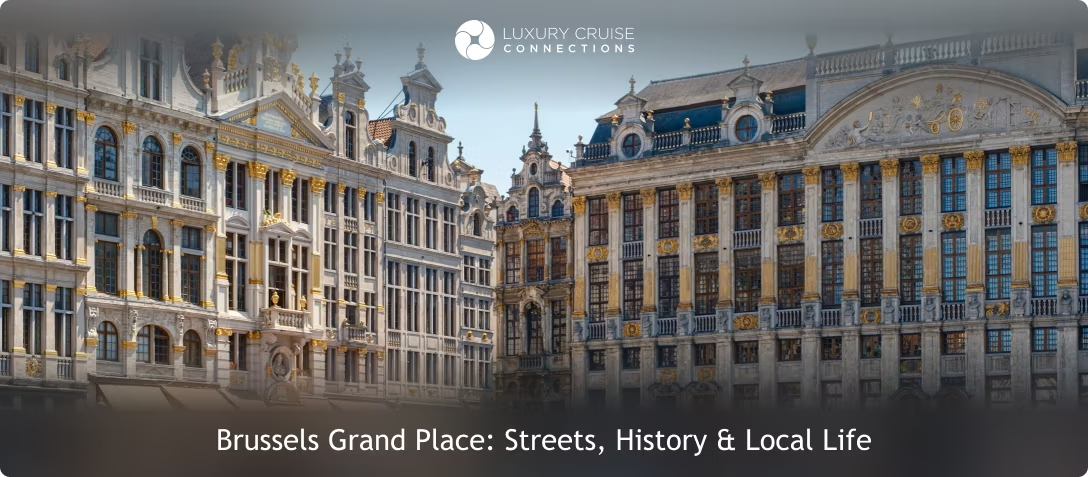
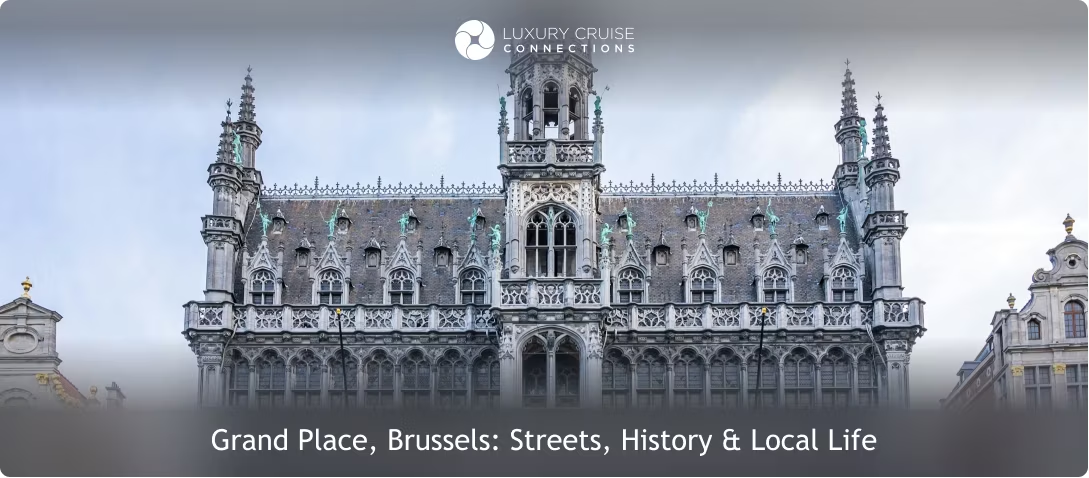
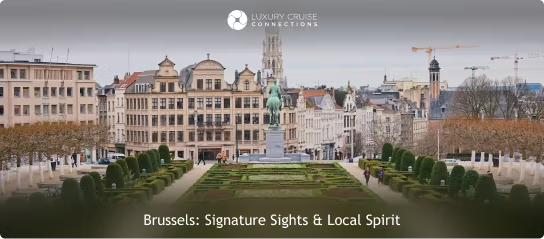
    Brussels’ Grand Place is the main square of Brussels and has been listed as a United Nations Educational, Scientific and Cultural Organization (UNESCO) World Heritage Site since 1998. The Grand Place is surrounded by the Gothic Town Hall, the neo-Gothic King’s House, and richly decorated guildhalls that once represented specific trades (bakers, brewers, and tailors). Each building displays Gothic, Baroque, and Louis XIV styles, telling the story of Brussels’ merchant guilds from the 15th to the 17th centuries. The Grand Place spans 110 by 68 meters and is a historic landmark and a lively meeting place for residents and visitors.
     Explore Brussels Grand Place

    The Gothic Town Hall of Brussels, constructed between 1402 and 1455, rises 96 meters and is topped with a statue of Saint Michael. The guildhalls surrounding the Grand Place feature golden decorations, carved stone designs, and symbols of their respective trades. The King’s House (Maison du Roi) houses the Museum of the City of Brussels, which displays historical artifacts and the entire costume collection of the Manneken Pis statue. The Grand Place hosts major events, including the biennial Flower Carpet in August, when over 700,000 begonias are arranged in detailed patterns, and the Christmas season, which fills the square with markets, festive lights, and decorations.

    A visit to the Grand Place provides panoramic views of historic architecture from every direction, with golden facades that shift in appearance from the soft tones of morning sunlight to the warm glow of evening illumination. Outdoor cafés and restaurants located along the Grand Place serve Belgian dishes (waffles and mussels), allowing diners to enjoy local food while watching the activity in the square. The enclosed layout of the Grand Place improves the sound quality of live concerts and public events. Photographers capture detailed shots of the ornate carvings or wide images that showcase the entire square.

    Best Time: Early morning around 8 AM or late evening after 6 PM from April through September offers smaller crowds and beautiful evening illumination.

    Self-guided exploration works well with free maps, while Brussels City Tours provides guided walking tours explaining Gothic and Baroque architecture.

    Access is free, guided tours cost €15 ($16) per adult, and audio guide rentals are €5 ($5.50) per device.

  • Visit Bruges Canals and Historic Center

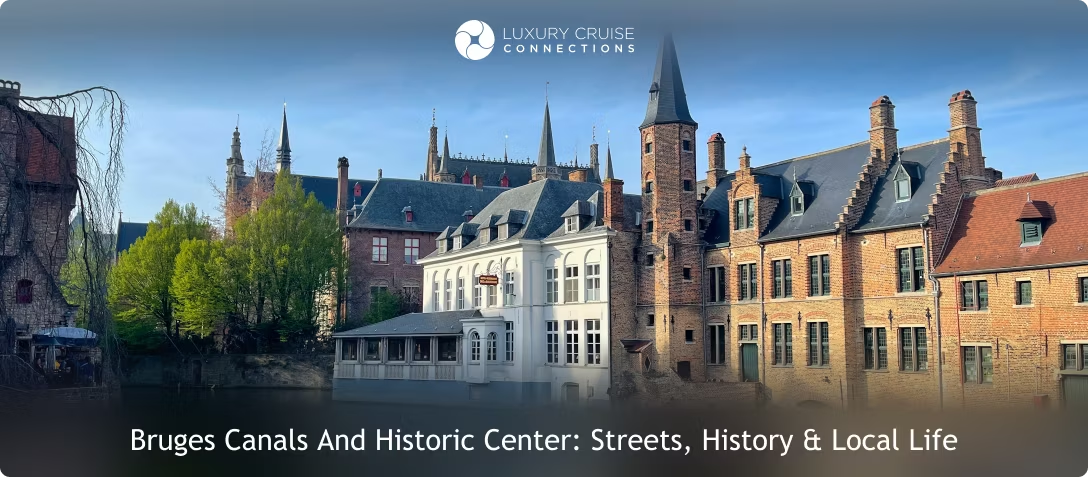
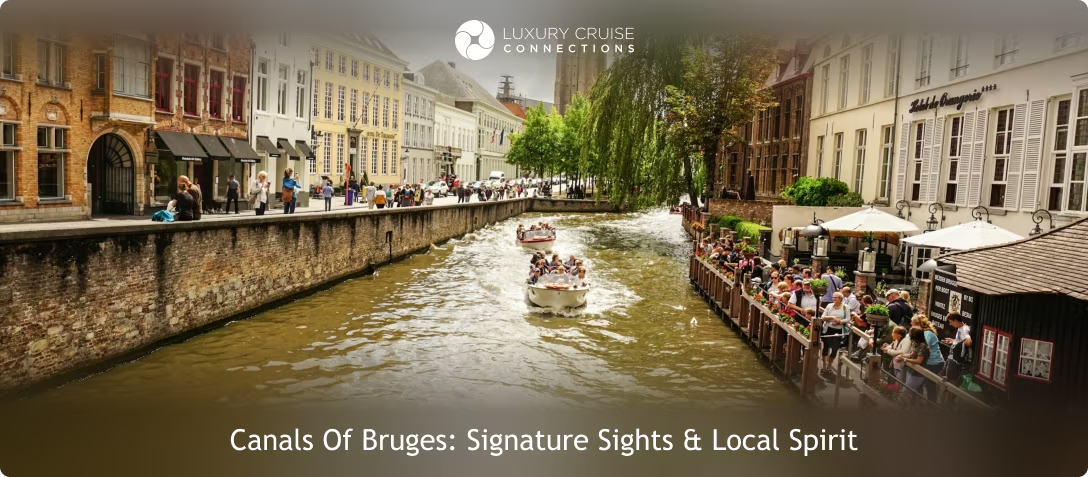
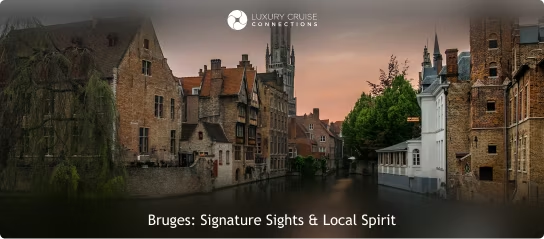
    Bruges’ canals and historic center form one of the best-preserved medieval cityscapes in Europe and have been a UNESCO World Heritage Site since 2000. The city’s network of winding canals, initially built for trade and transportation, flows past cobblestone streets lined with step-gabled houses, Gothic churches, and medieval guildhalls. Bruges features 13th to 15th-century architecture that has remained largely unchanged and is known as the “Venice of the North.” The historic center includes the Market Square with its iconic Belfry tower, the Burg Square with the Basilica of the Holy Blood, and several museums that display masterpieces by Flemish painters (Jan van Eyck and Hans Memling).
    Visit Bruges Canals and Historic Center

    A canal boat tour offers unique views of medieval houses, stone bridges, and hidden gardens, with guides sharing stories about the city’s history. The Belfry provides panoramic views after climbing 366 steps. The Market Square is filled with horse-drawn carriages and open-air cafés. The Groeninge Museum displays an outstanding collection of Flemish primitive paintings. The Church of Our Lady houses Michelangelo’s Madonna and Child, and the Basilica of the Holy Blood preserves a relic from the Crusades. The medieval City Hall is decorated with impressive Gothic murals. Visitors enjoy lace-making demonstrations, chocolate-making workshops, and brewery tours.

    A boat ride along the Bruges canals passes swans, ancient bridges, and private gardens hidden from the streets. Walking through the traffic-free historic center reveals narrow medieval lanes, ornate buildings, and squares full of activity. Morning brings soft mist over the canals, afternoons are lively with street performances and café culture, and evenings feature romantic lights reflecting on the water. Local artisans work in traditional craft shops, and historic pubs serve Belgian Trappist beers in settings that have been preserved for centuries.

    Best Time: Weekday mornings between 9 AM and 11 AM from spring through early fall offer pleasant weather and fewer tour groups.

    Canal boat tours include multilingual guides explaining medieval history, while certified walking tour guides provide architectural insights.

    Canal boat tours cost €14 ($15) for adults and €7 ($7.50) for children, with walking tours ranging €12 to €20 ($13 to $22) per person.

  • Tour the Atomium in Brussels

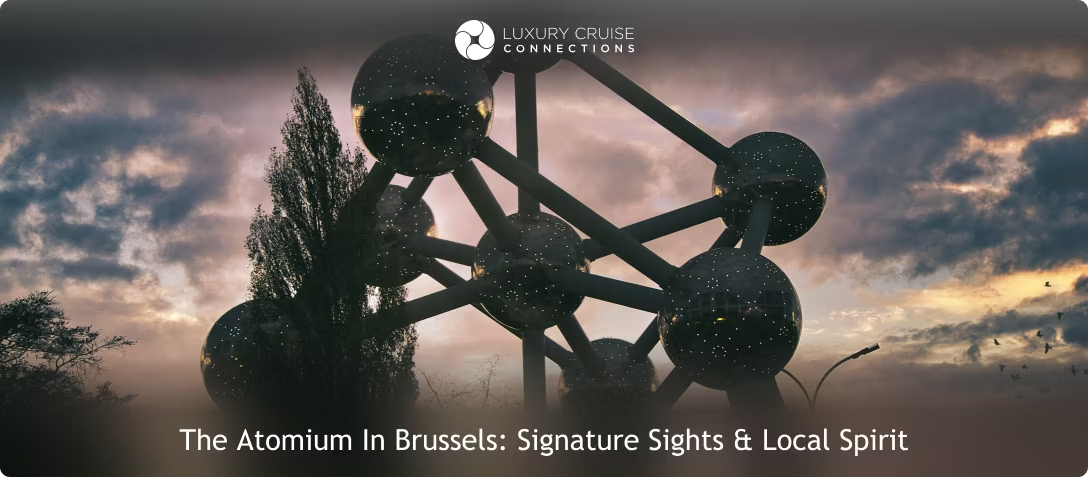
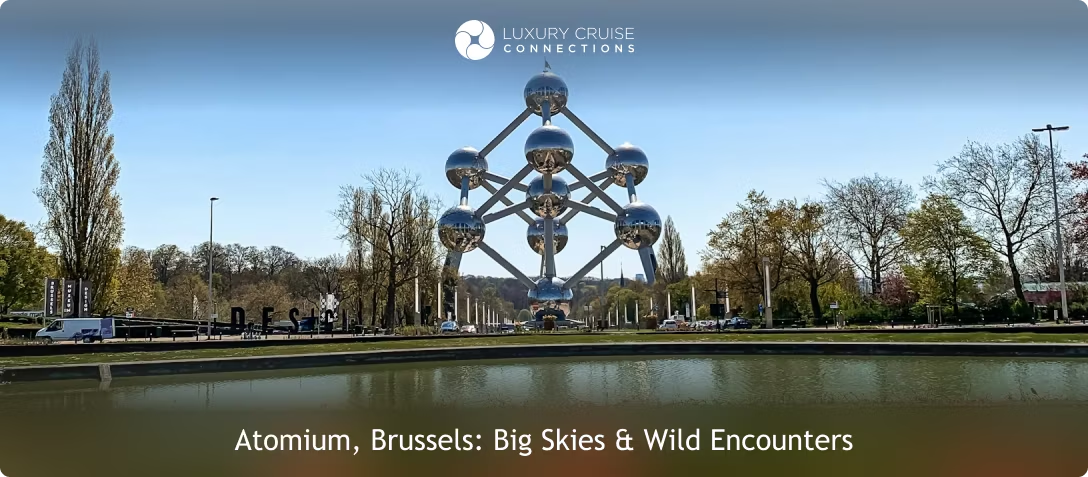
    The Atomium is the most famous landmark in Brussels and a unique work in the history of architecture. Belgian engineer André Waterkeyn designed it for the 1958 Brussels World’s Fair to represent an iron crystal magnified 165 billion times. The structure stands 102 meters tall, weighs over 2,400 tons, and contains nine stainless steel spheres connected by tubes to form the crystal’s unit cell. It is the only pavilion from the event still standing, with a major renovation from 2004 to 2007 replacing its aluminum exterior with stainless steel. The Atomium is a symbol of the atomic age, scientific progress, and post-war optimism, while showcasing mid-20th-century design.
    Tour the Atomium in Brussels

    The top sphere of the Atomium offers 360-degree panoramic views of the 19 municipalities of Brussels, reached by high-speed elevators running through the connecting tubes. Six spheres are open to visitors and feature exhibitions on the 1958 World’s Fair, atomic science, and contemporary design. The Brussels Art and Design Atomium Museum (ADAM) presents rotating collections of modern art and furniture. A restaurant inside one sphere serves fine dining alongside sweeping views of the city. The exterior becomes a glowing light display each evening, creating a striking visual in Heysel Park. Photographers find striking angles from inside the spheres and from the park grounds.

    Touring the Atomium feels like walking inside a giant molecular model, as elevators and escalators connect the spheres. The top platform reveals Brussels spread out to the horizon, with neighborhoods, parks, and landmarks forming a patchwork view. Multimedia exhibits and interactive installations put visitors in the spirit of the atomic age. Artifacts from the 1958 World’s Fair bring the optimism of that era to life. Dining inside the restaurant sphere offers Belgian cuisine paired with a rare setting where curved glass walls frame the city’s lights.

    Best Time: Weekday mornings or late afternoons with clear skies provide the best panoramic views

    Audio guides explain the Atomium’s history and symbolism, with group tours available by advance booking.

    Adult tickets €16 ($17.50), students and seniors €14 ($15), children 6-11 €8 ($8.75), and under 6 enter free.

  • Admire Ghent’s Medieval Architecture

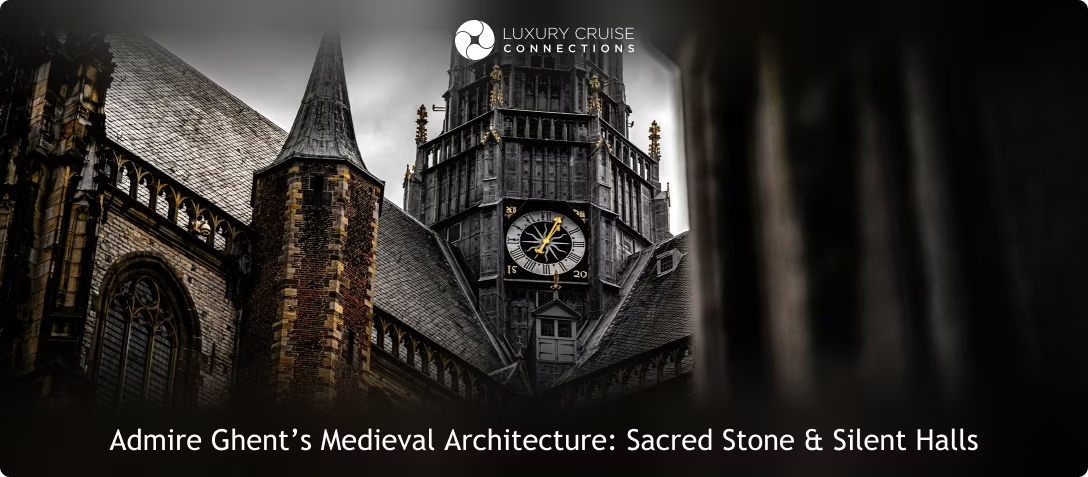
    Ghent’s medieval architecture forms one of Europe’s most complete and authentic collections of Gothic, Romanesque, and early Renaissance buildings, reflecting over eight centuries of design and craftsmanship. The historic center blends towering church spires, fortified castle walls, and ornate guild houses into a striking urban skyline. Gravensteen Castle, St. Bavo’s Cathedral, and the Belfry dominate the heart of the city as enduring symbols of Ghent’s power and wealth during the Middle Ages. Every street reveals layers of history, from stone foundations of Romanesque origin to Gothic facades and Renaissance details, preserved within a thriving modern city.
    Admire Ghent’s Medieval Architecture

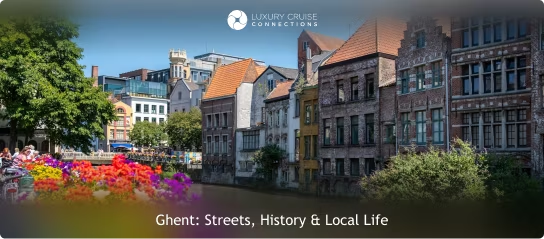
    Gravensteen Castle was built in the 12th century and is one of Europe’s best-preserved medieval fortresses. The castle features authentic chambers, defensive towers, and displays of medieval weaponry and torture instruments. St. Bavo’s Cathedral contains the Ghent Altarpiece, an 18-panel masterpiece completed in 1432, with “The Adoration of the Mystic Lamb” as its centerpiece. The Gothic Belfry rises 95 meters and offers panoramic views after a climb of 366 steps, with medieval bells still chiming across the city. St. Nicholas Church exemplifies pure Scheldt Gothic architecture. The medieval Cloth Hall reflects Ghent’s historic textile trade. The Graslei and Korenlei waterfronts line the Leie River with rows of guild houses that create one of Europe’s most photographed medieval scenes.

    Exploring Ghent’s historic center offers an unforgettable journey through centuries of European history. Narrow cobblestone streets reveal stone facades, intimate courtyards, and dramatic towers that frame every view. Visitors step into the same chambers inside Gravensteen Castle, where medieval counts ruled and justice was dispensed. St. Bavo’s Cathedral surrounds guests with soaring arches, intricate stained-glass, and a sense of quiet reverence. Evening transforms the cityscape as warm lights illuminate the stone facades, casting golden tones over the riverfront and highlighting the textures of the centuries-old architecture.

    Best Time: Morning hours between 9 AM and noon during weekdays, highlighting Gothic facades and avoiding crowds.

    Ghent City Museum offers guided architectural tours or self-guided exploration using the city app.

    Walking the streets is free. Guided tours cost €12 ($13) per adult, and individual church visits €3 to €5 ($3.25 to $5.50).

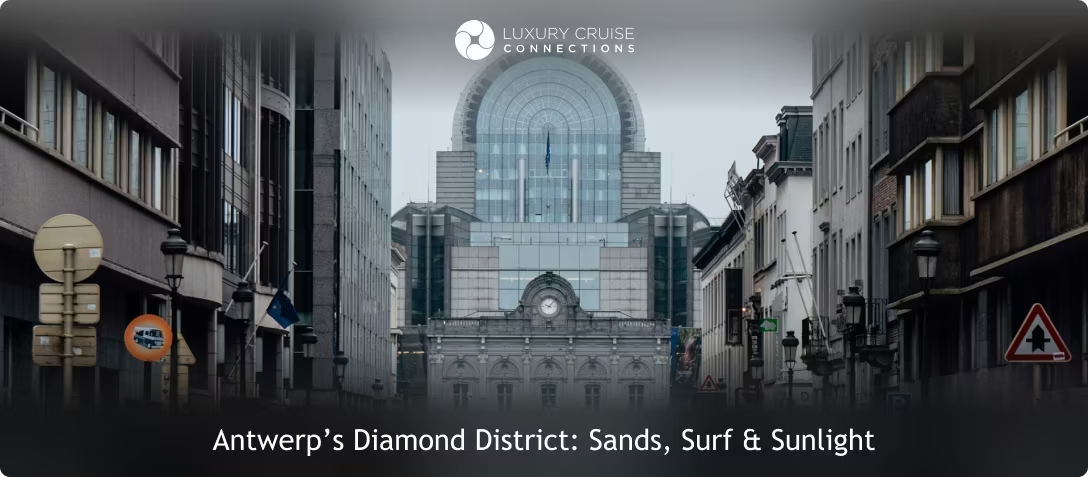
  • Discover Antwerp’s Diamond District

    Antwerp’s Diamond District is the world’s largest diamond trading hub, with 84 percent of all rough diamonds passing through its compact network of streets near Central Station. The district spans Pelikaanstraat, Hoveniersstraat, Vestingstraat, and Rijfstraat, concentrating more than 1,500 diamond companies within a few city blocks. Its role as a global diamond center stretches back over 500 years, making it a vital part of Antwerp’s economic and cultural identity. The area reflects a rich multicultural heritage, with the Orthodox Jewish community at its heart since the 16th century, alongside Indian, Lebanese, and Armenian merchants who have shaped its international character.
    Discover Antwerp’s Diamond District

    Dresses and Interiors Virtual Archive (DIVA) is Antwerp’s interactive museum for diamonds, jewelry, and silver, and presents the complete diamond journey from uncut stone to polished masterpiece through captivating exhibits and rare artifacts. Guided walks through the district offer views of the secure Diamond Exchange building, where high-value transactions occur daily behind reinforced doors. The historic Beth Moshe Synagogue provides insight into the community that built the district’s reputation. Jewelry boutiques and artisan workshops reveal master goldsmiths and diamond cutters at work. Organized tours of the Diamond Exchange and the Famous Diamond Factory grant rare access to restricted spaces where the trade’s most guarded operations take place

    Walking into the Diamond District takes visitors into a high-security world where tradition meets modern commerce. Surveillance systems cover every angle, and diamond couriers move discreetly between plain building fronts and fortified vaults. Guests handle replica diamonds, learn the 4 Cs of gem grading, and explore Antwerp’s rise inside the DIVA museum as a diamond powerhouse through interactive displays. The district’s cultural texture extends beyond gemstones, with kosher eateries, Jewish bakeries, and specialty shops offering a glimpse into the daily life of the Orthodox Jewish community that has sustained the trade for centuries.

    Best Time: Business hours Tuesday through Friday from 10 AM to 4 PM when workshops and showrooms are active.

    Diamond Land and tour companies provide guided visits with experts explaining cutting processes and market operations.

    Walking the district is free. Guided tours cost €25 to €35 ($27 to $38) per person, including showroom visits.

  • Taste Belgian Waffles and Chocolate

    Belgian waffles and chocolate are two of the country’s most iconic culinary treasures, each rooted in centuries-old traditions that have shaped Belgium’s global reputation for sweet excellence. Belgian chocolate follows strict quality standards, requiring at least 35% cocoa content and pure cocoa butter without vegetable substitutes. Master chocolatiers craft delicate pralines with precise techniques, creating unique fillings and intricate designs. The two main varieties of Belgian waffles are the Brussels waffle and the Liège waffle. The Brussels waffle features deep rectangular pockets and a light, crispy texture, and the Liège waffle contains pearl sugar that caramelizes during cooking to form a sweet, chewy crust. The treats originated from medieval guild traditions and remain central to Belgium’s cultural and gastronomic identity.
    Taste Belgian Waffles and Chocolate

    Chocolate workshops in Brussels and Bruges allow visitors to watch master chocolatiers transform cocoa beans into finished pralines using traditional hand techniques. Chocolate Nation museum showcases the complete chocolate-making process and offers tastings of up to ten varieties. Artisanal chocolateries present freshly made pralines in creative flavors. Street vendors serve Brussels waffles topped with powdered sugar, whipped cream, or seasonal fruits. Guided food tours combine historical walking routes with visits to renowned chocolate shops, family-owned pâtisseries, and long-standing waffle vendors whose recipes have been perfected over generations.

    The Belgian chocolate and waffle experience delivers rich aromas, vibrant textures, and indulgent flavors at every turn. Visitors sample pralines with smooth ganache or liqueur fillings, explore the differences between single-origin chocolates, and learn how precise tempering creates the chocolate’s glossy finish and crisp snap. Waffle tastings range from street-side Brussels waffles fresh off the iron to Liège waffles paired with rich hot chocolate in elegant cafés. Hands-on chocolate-making workshops offer the chance to design and fill personalized pralines. Guided tours lasting up to 2.5 hours bring guests into working kitchens where every step is done by hand, highlighting the craftsmanship behind each bite.

    Best Time: Mid-morning or mid-afternoon avoids meal times and ensures freshly prepared treats.

    Brussels Chocolate and Beer Tours combine tastings with historical context. Some chocolatiers offer free mini-tastings.

    Waffles cost €3 to €6 ($3.25 to $6.50), premium chocolates €20 to €40 ($22 to $44) per box, guided food tours €45 to €65 ($49 to $71) per person.

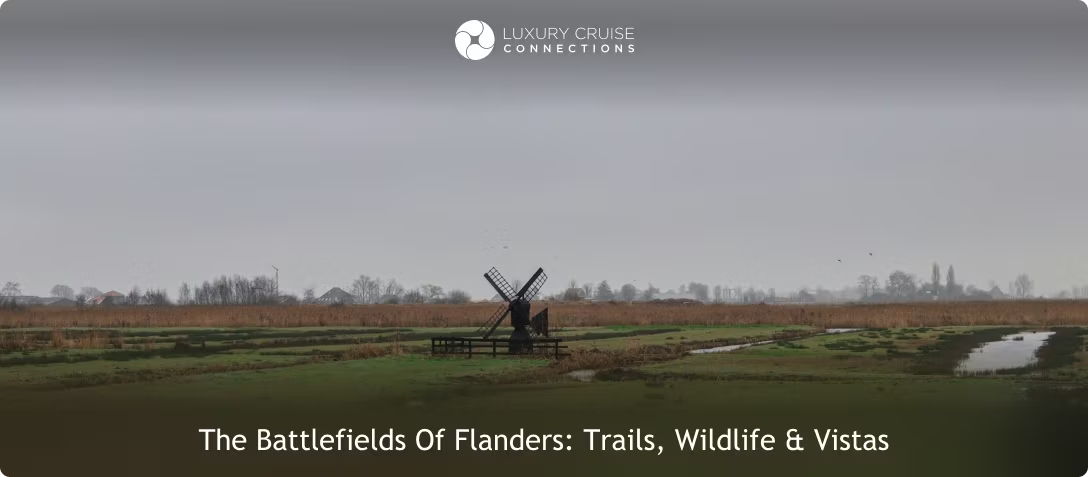
  • Experience the Battlefields of Flanders

    The Battlefields of Flanders cover the Ypres Salient and nearby areas in Belgium’s West Flanders province, where some of World War I’s most intense battles occurred between 1914 and 1918. The historic landscape honors the memory of over a million casualties through Commonwealth war cemeteries, German military graveyards, preserved trenches, and solemn memorials. Ypres is a medieval town that was almost destroyed during the war and later rebuilt, and it is the central base for exploring the region. The battlefields recount the stories of the Battles of Passchendaele, Messines, and the Hundred Days Offensive, which involved soldiers from the British Empire, France, Germany, and other nations fighting in the harsh conditions of trench warfare.
     Experience the Battlefields of Flanders

    The In Flanders Fields Museum inside Ypres’ reconstructed Cloth Hall offers an engaging introduction to the war through personal stories and interactive displays. Tyne Cot Cemetery, the largest Commonwealth war cemetery in the world, honors 11,956 soldiers and features the moving Memorial to the Missing. The Menin Gate hosts the daily Last Post ceremony at 8 PM, attracting crowds who gather to remember the fallen. Hill 60, Sanctuary Wood with its original trenches, and the vast mine craters at Messines Ridge give physical context to the battles. The German Military Cemetery at Vladslo, marked by Käthe Kollwitz’s sorrowful sculptures, provides a poignant view of the shared loss on all sides.

    A visit to the Flanders battlefields offers an emotional connection to the events of the Great War. Walking among the orderly rows of white headstones at Tyne Cot in the quiet of sunset allows for deep reflection on personal stories of sacrifice. Exploring the preserved trenches at Sanctuary Wood or Hill 60 reveals the confined and harsh reality of trench life. The mine craters at Messines Ridge show the immense destructive force of the conflict. Each visitor at the In Flanders Fields Museum receives a Poppy Bracelet that triggers personal stories linked to specific exhibits, creating a meaningful and personalized encounter. The Last Post ceremony at the Menin Gate delivers a solemn and unifying moment as bugle notes echo through the memorial in complete silence.

    Best Time: Spring through fall (April through June) provides optimal weather for battlefield exploration

    Specialized battlefield guides explain historical context and access preserved trenches and memorials.

    Self-guided access is free. Guided tours cost €40 to €60 ($44 to $66) per person, including transportation.

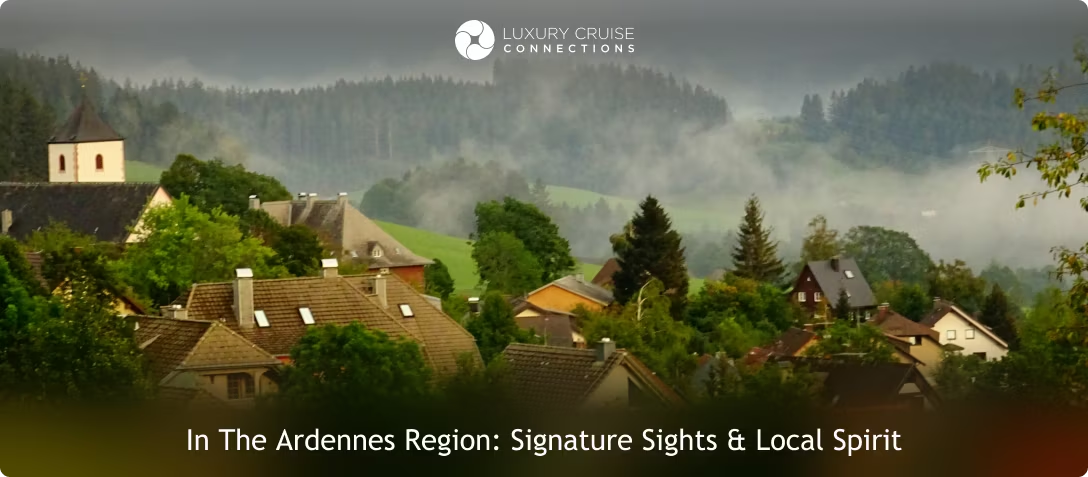
  • Hike in the Ardennes Region

    The Belgian Ardennes is a huge forested region in southern Belgium, known for rolling hills, deep river valleys, and dense woodlands. The area spans the provinces of Luxembourg, Namur, and Liège, with elevations reaching 694 meters at the Signal de Botrange. Trails with over 5,000 kilometers of marked routes wind through pristine forests, along clear rivers, and past medieval castles and picturesque villages. The varied terrain offers family walks to challenging multi-day treks, making it Belgium’s most celebrated hiking destination.
    Hike in the Ardennes Region

    The Ninglinspo Trail follows Belgium’s only mountain river, passing waterfalls, rocky paths, and panoramic viewpoints. The Escapardenne Eislek Trail stretches 106 kilometers between Belgium and Luxembourg and ranks among Europe’s best quality trails. The Transardennaise Trail begins in La Roche-en-Ardenne and offers a seven-day hiking route through scenic landscapes. Le Hérou overlooks the Ourthe Valley. Castle ruins (Château de La Roche) offer historical interest. The High Fens moorland, dense beech and oak forests, and traditional villages (Durbuy and Bouillon) showcase the region’s natural and cultural diversity. The converted Réseau Autonome des Voies Lentes (RAVeL) railway paths provide accessible routes for casual hikers.

    Hiking in the Ardennes offers a trip to landscapes where morning mists rise from valleys and ancient forests form green canopies overhead. Waterfalls and mountain streams create a constant soundtrack, while deer, wild boar, and birds inhabit the trailside forests. Multi-day routes average 22 to 26 kilometers per day, connecting villages and showcasing the shifting light and atmosphere of the woodland. Megalithic monuments, World War battlefields, and centuries-old abbeys enrich the journey. Evenings bring rest in mountain huts or taverns serving traditional Ardennes dishes, offering warmth and comfort after a day’s hike.

    Best Time: Spring through early fall keeps trails dry, with autumn showing spectacular foliage.

    Marked trails allow self-guided hikes, while local guides offer tours focused on flora and fauna.

    Trail access is free. Guided tours cost €15 to €25 ($16 to $27) per person, and equipment rentals average €10 ($11) per day.

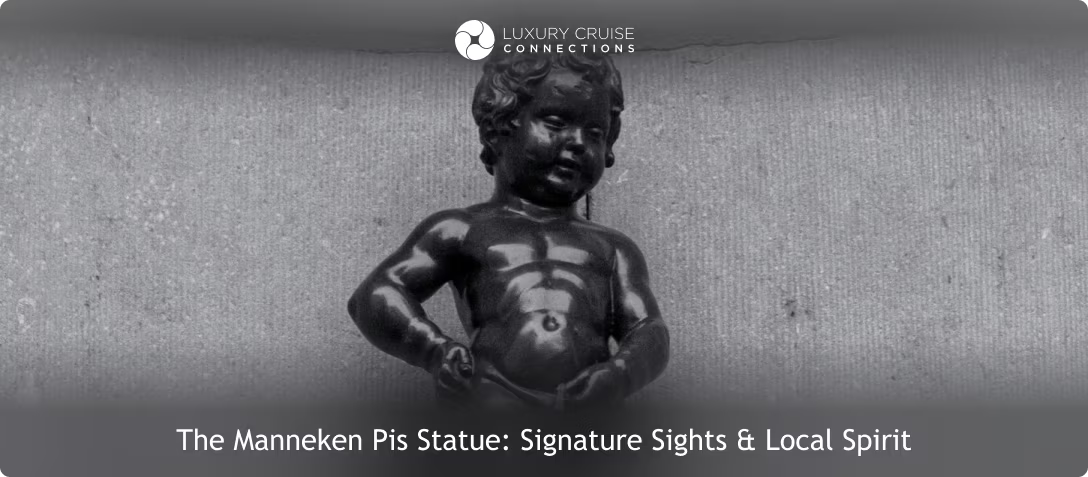
  • See the Manneken Pis Statue

    The Manneken Pis is a small bronze statue in central Brussels that has become one of the city’s most famous landmarks. The 61-centimeter figure of a little boy urinating into a fountain dates back to 1619 and was created by sculptor Jérôme Duquesnoy the Elder. The statue stands on the corner of Rue de l’Étuve and Rue du Chêne, just a short walk from the Grand Place. It is a symbol of Brussels’ humor and independence, attracting visitors from around the world who come to see its playful charm. The statue is dressed in colorful costumes to mark festivals, events, and special occasions.
    See the Manneken Pis Statue

    The statue’s changing outfits are a major attraction, with more than 1,000 costumes stored and displayed at the City Museum in the Grand Place. Seasonal decorations and themed events add variety to each visit, and costume changes take place several times a week. The nearby Jeanneke Pis, a female counterpart, and Zinneke Pis, a dog statue, create a lighthearted “Pis family” trail for travelers exploring the area. Street performances and waffle stands surround the location, creating a lively atmosphere for visitors.

    Seeing the Manneken Pis offers a mix of history, humor, and local culture in a compact but memorable setting. Visitors gather to watch the statue dressed for different occasions, or even pouring beer instead of water during festivals. The short walk from the Grand Place allows travelers to enjoy the surrounding streets lined with chocolate shops, cafés, and souvenir stores. The spot is ideal for quick photos, viewing, and soaking up the lighthearted spirit of Brussels.

    Best Time: Early morning before 9 AM or late evening after 7 PM, which avoids crowds and allows clear photos.

    No guides required, though walking tours provide historical context about the statue’s origin and cultural meaning.

    Viewing is free. Souvenirs nearby range €2 to €15 ($2.25 to $16.50).

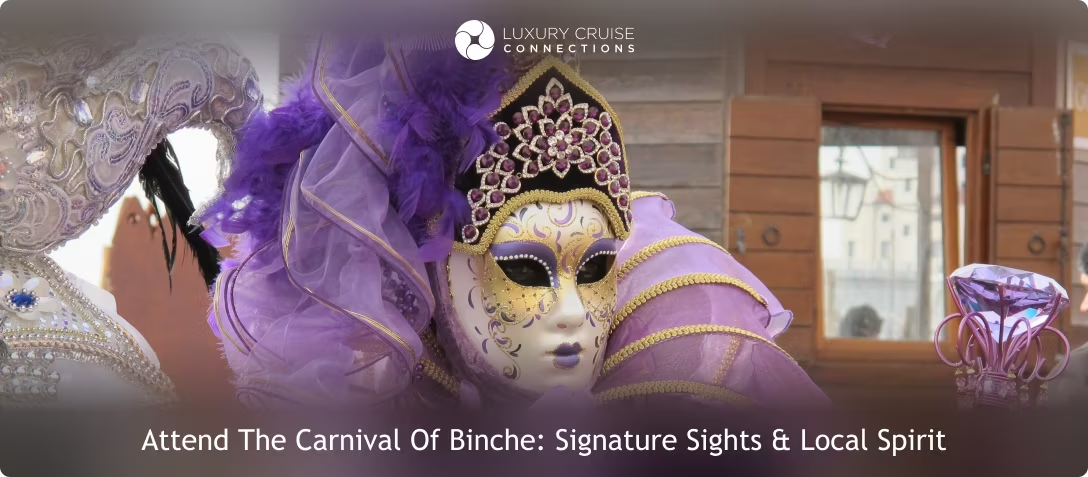
  • Attend the Carnival of Binche

    The Carnival of Binche is a three-day festival held in the town of Binche, in Belgium’s Hainaut province, on Sunday, Monday, and Tuesday before Ash Wednesday. UNESCO recognizes it as a Masterpiece of the Oral and Intangible Heritage of Humanity. The tradition dates back to the 14th century, making it one of Europe’s oldest surviving street carnivals. The historic town center during the event turns into a stage for centuries-old customs, with the legendary Gilles at the heart of the celebration. The Gilles wear elaborate costumes in Belgium’s red, yellow, and black, along with wax masks and towering ostrich feather hats.
    Attend the Carnival of Binche

    The Gilles are the main spectacle, dressed in identical costumes and masks, carrying twig bundles to ward off evil spirits and baskets to hold oranges. Nearly a thousand Gilles gather at the station on Tuesday morning for a champagne and oyster breakfast before marching through the streets. The afternoon parade is the most famous moment, when Gilles, riding on floats, throws oranges into the crowd as a sign of prosperity and good luck. Refusing an orange is considered rude, while catching one is thought to bring blessings. The parade features pierrots, harlequins, and peasants in colorful costumes, accompanied by folk music, street dancing, and carnival bonfires.

    The Carnival of Binche fills the streets with energy from early morning until late at night. Visitors hear the steady beat of drums as Gilles, in wooden clogs, moves in unison over cobblestones, creating a sound that echoes through the town. The orange-throwing tradition turns the crowd into part of the show, with them cheering enthusiastically and scrambling to catch the bright fruit. The celebrations grow livelier through the day, leading to evening dances, hearty local meals, and large bonfires that light up the night. Every moment offers a mix of history, pageantry, and pure joy

    Best Time: Three days before Lent (February or March), with Shrove Tuesday showcasing the main Gilles parade.

    Local cultural associations provide explanations, and UNESCO-recognized events include multilingual information.

    Street parade viewing is free; premium stands cost €10 to €20 ($11 to $22), and traditional costume rentals €50 to €100 ($55 to $110) per day.


What are the Most Popular Tourist Attractions in Belgium?

The most popular tourist attractions in Belgium are listed below.

  • Grand Place, Brussels
  • Canals of Bruges
  • Atomium, Brussels
  • Belfry of Bruges
  • Gravensteen Castle, Ghent
  • Belgian Comic Strip Center
  • Royal Museums of Fine Arts
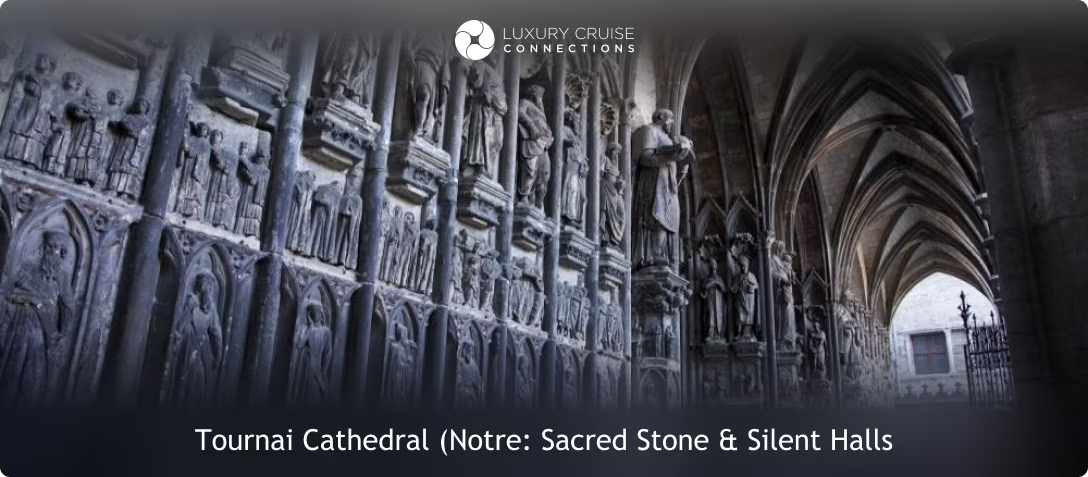
  • Tournai Cathedral
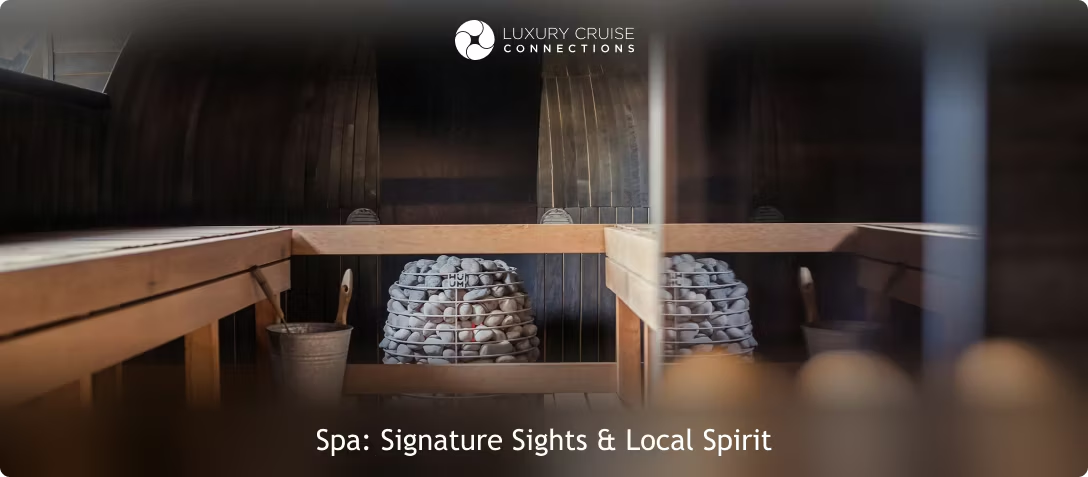
  • Spa
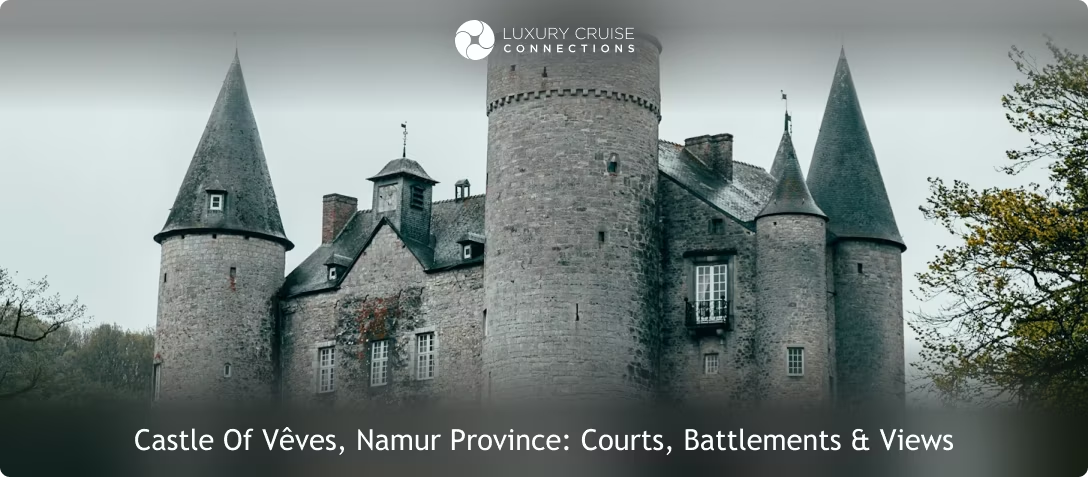
  • Castle of Vêves


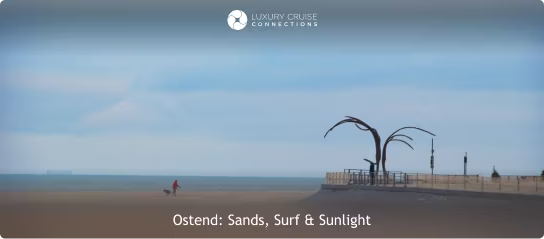
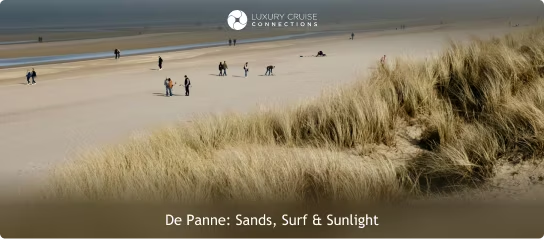
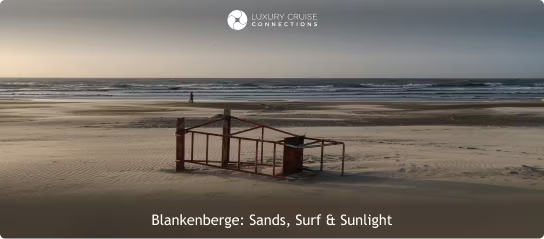
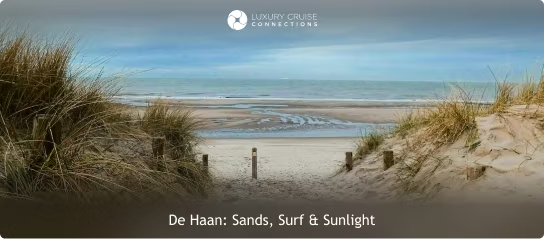
Which Vacation Spots in Belgium are Best for Beach Lovers?

Vacation spots in Belgium that are the best for beach lovers are listed below,


What Cities in Belgium are Best for a Short Vacation?

Cities in Belgium that are best for a short vacation are listed below.


What are the Best Things to Do in Belgium for First-Time Visitors?

The best things to do in Belgium for first-time visitors are listed below.

The square features stunning Gothic Town Hall architecture and baroque guildhalls with golden facades, creating a beautiful and historic setting recognized as a UNESCO World Heritage Site. The iconic site ranks among the best things to see in Belgium for visitors.

Attributes: Gothic Town Hall architecture, baroque guildhalls with golden facades, UNESCO World Heritage Site, historic merchant history, central city location

Visitors enjoy fairytale streets, romantic waterways, cobblestone paths, and charming step-gabled houses, with opportunities to taste waffles and chocolate. Bruges remains one of the best things to do in Belgium due to its magical atmosphere.

Attributes: Fairytale streets, romantic waterways, cobblestone paths, step-gabled houses, local food experiences (waffles and chocolate)

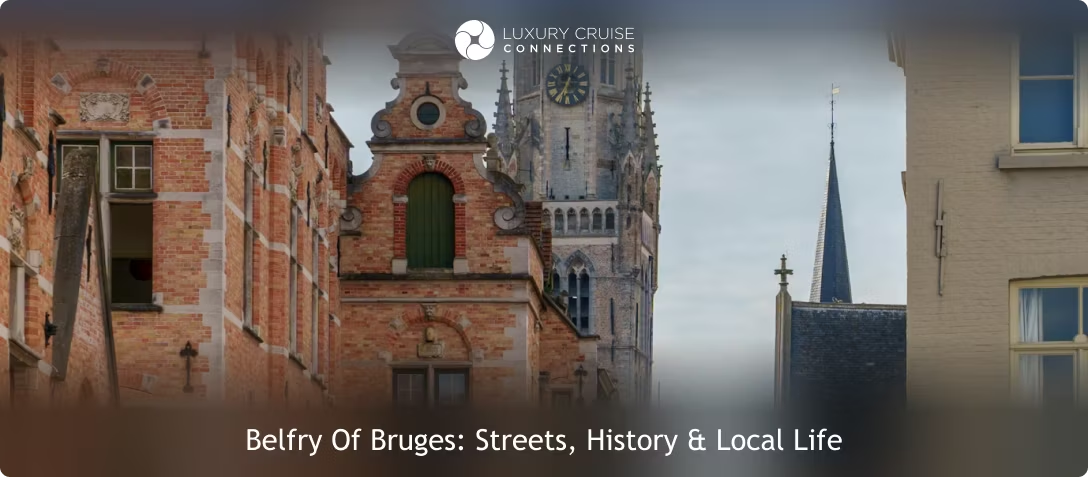
The 83-meter medieval tower offers breathtaking vistas over Bruges’ rooftops and canals after climbing 366 stone steps. The tower houses a carillon of 47 bells that chime melodiously across the city.

Attributes: 83-meter medieval tower, 366-step climb, panoramic city and canal views, 47-bell carillon, historic architectural design

An iconic structure with nine connected spheres representing an iron crystal magnified 165 billion times, featuring exhibitions, restaurants, and panoramic views inside the metallic spheres. The Atomium is a must-see for travelers exploring the best things to do in Belgium.

Attributes: Nine interconnected metallic spheres, panoramic city views, exhibitions and interactive displays, rooftop restaurant, iconic modern landmark

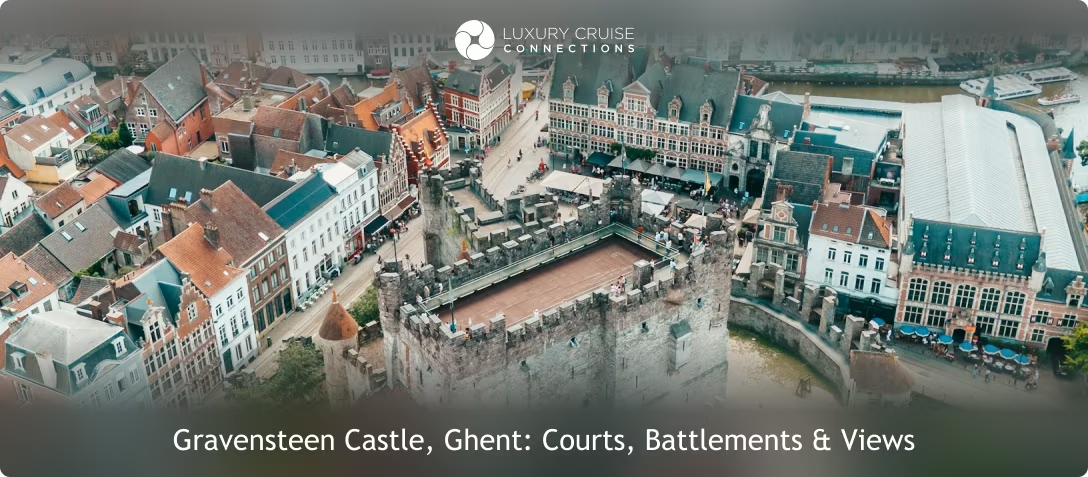
the castle showcases medieval defensive architecture with massive stone walls, battlements, and original chambers, providing a glimpse into feudal times and commanding views over Ghent’s canals and rooftops

Attributes: Medieval stone fortress, defensive battlements, original castle chambers, commanding canal and city views, historical weaponry and artifacts

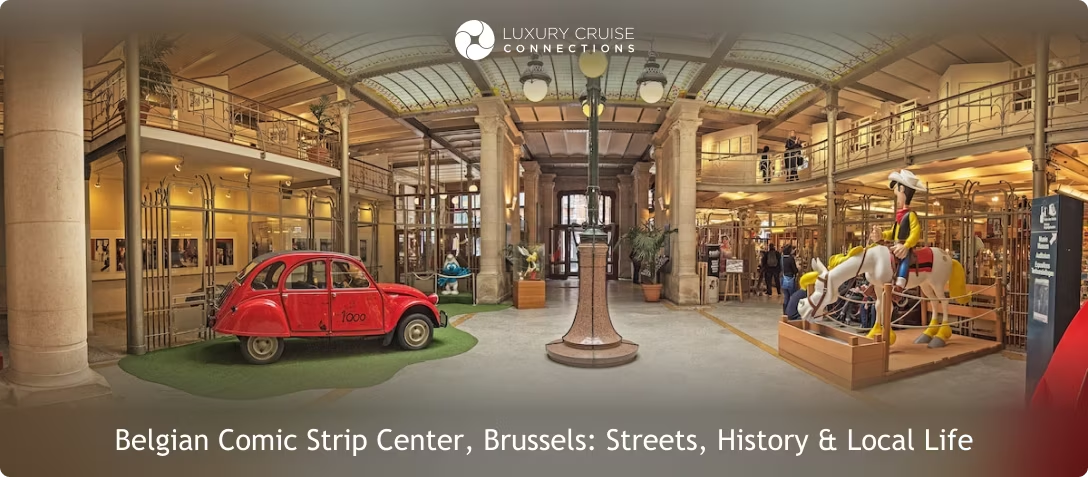
The museum highlights beloved characters (Tintin and the Smurfs) through interactive exhibits inside a stunning Art Nouveau building designed by Victor Horta.

Attributes: Interactive exhibits, characters like Tintin and the Smurfs, Art Nouveau building by Victor Horta, comic art history, family-friendly displays

Sample handcrafted pralines from world-renowned chocolatiers and fresh Brussels waffles topped with strawberries, whipped cream, or chocolate drizzle, representing Belgium’s rich food culture.

Attributes: Handcrafted pralines, fresh Brussels waffles, a variety of toppings, world-renowned chocolatiers, and a representation of Belgian food culture

Belgium offers hundreds of unique beer varieties, including Trappist ales and lambics, served in medieval taverns and family breweries, showcasing centuries-old brewing traditions and complex flavors.

Attributes: Trappist ales, lambics and other unique varieties, medieval taverns and family breweries, centuries-old brewing traditions, complex flavor profiles

Visit the Cathedral of Our Lady with Rubens’ masterpieces, explore diamond trading centers, and enjoy the Renaissance architecture of the Grote Markt and fashionable Zuid district.

Attributes: Cathedral of Our Lady with Rubens’ art, diamond trading centers, Renaissance architecture, Grote Markt and Zuid district, fashion and cultural attractions

A wellness destination featuring mineral-rich thermal springs, luxurious Belle Époque spa facilities, and casino entertainment, offering relaxation combined with natural healing and elegant hospitality.

Attributes: Mineral-rich thermal springs, Belle Époque spa architecture, wellness treatments, luxury facilities, casino entertainment


What is the Most Fun Thing to Do in Belgium with Kids?

The most fun thing to do in Belgium with kids is visiting the Atomium in Brussels. The Atomium looks like a giant silver molecule made of nine shiny balls connected by tubes, which fascinates children. Kids see cool exhibits inside about how the structure was built and enjoy a colorful light show. Taking a canal boat tour in Bruges is another great activity for families. Children watch swans swim by as the boat moves through quiet canals surrounded by old, storybook buildings. The Belgian Comic Strip Center in Brussels is popular with kids. It has fun displays featuring famous characters, with interactive exhibits that keep children entertained. Chocolate-making workshops where kids make their treats, climbing the Belfry tower in Bruges for great views, and spotting bright comic murals on walls around Brussels are other fun things to do in Belgium. The activities are great things to do in Belgium with kids, and make family trips fun and easy to enjoy.

Best Things to Do Around the World

Discover the best activities, landmarks, and experiences in every cruise destination and port of call.

Europe Western, Central & Mediterranean
America North, Central, South & Caribbean
Africa & Asia Oceania & Antarctica