
10 Best Things to Do in Ecuador

The 10 best things to do in Ecuador include visiting the Galápagos Islands, exploring Quito’s Historic Cent...

add

The 10 best things to do in Ecuador include visiting the Galápagos Islands, exploring Quito’s Historic Center, hiking Cotopaxi Volcano, and discovering Baños Waterfalls. Other activity highlights in Ecuador include visiting the Amazon Rainforest, taking the Devil’s Nose Train Ride, wandering through Cajas National Park, exploring Ingapirca Ruins, relaxing at Termas de Papallacta, and enjoying the beaches of Montañita. 

Ecuador is a country in northwestern South America that unites Andean peaks, Amazon rainforest, and Pacific coastline within a compact setting. Deciding what to do in Ecuador depends on whether you seek mountain adventure, close wildlife encounters, or coastal relaxation. The variety of things to do in Ecuador satisfies travelers interested in ancient culture, colonial architecture, and extraordinary biodiversity. The many things to see in Ecuador include volcanic summits, cloud forests, colonial plazas, and the Galápagos Islands.

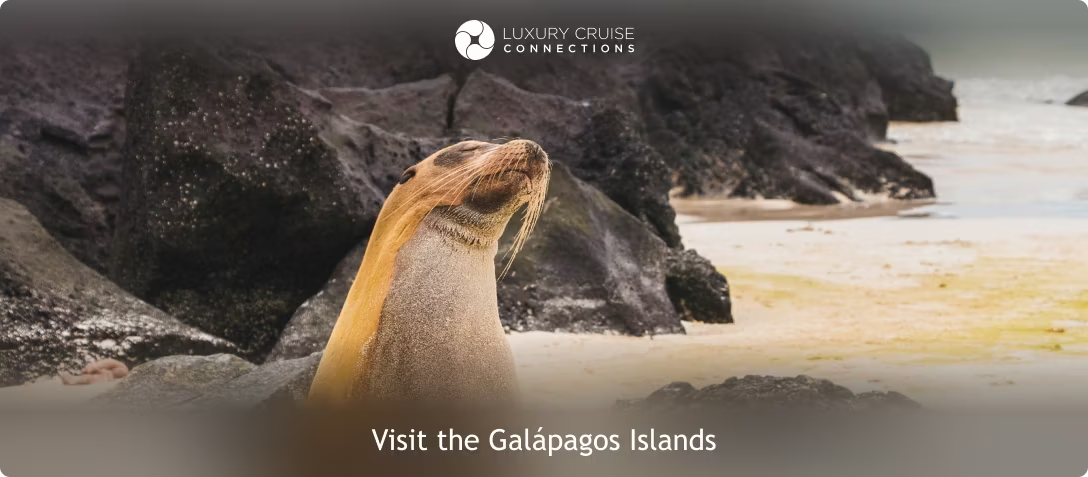
  • Visit the Galápagos Islands
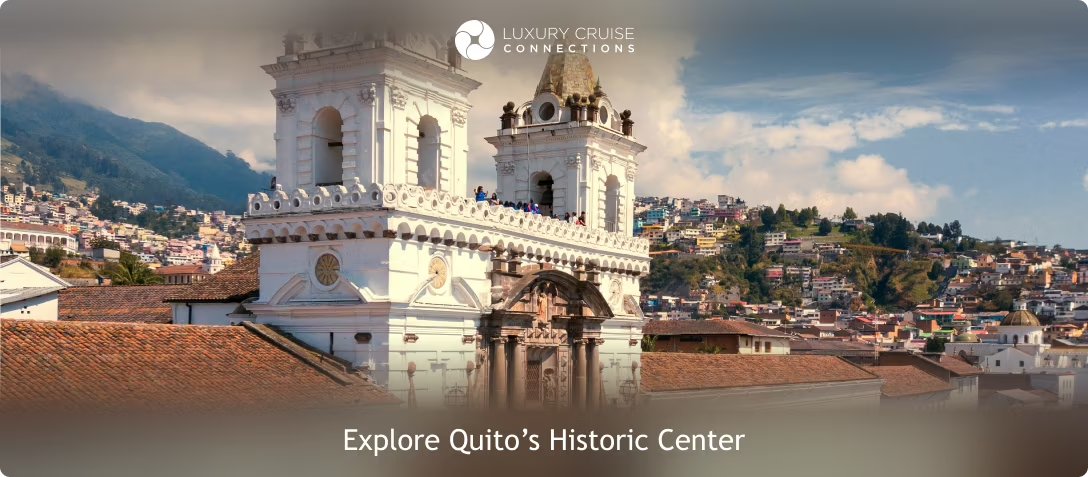
  • Explore Quito’s Historic Center
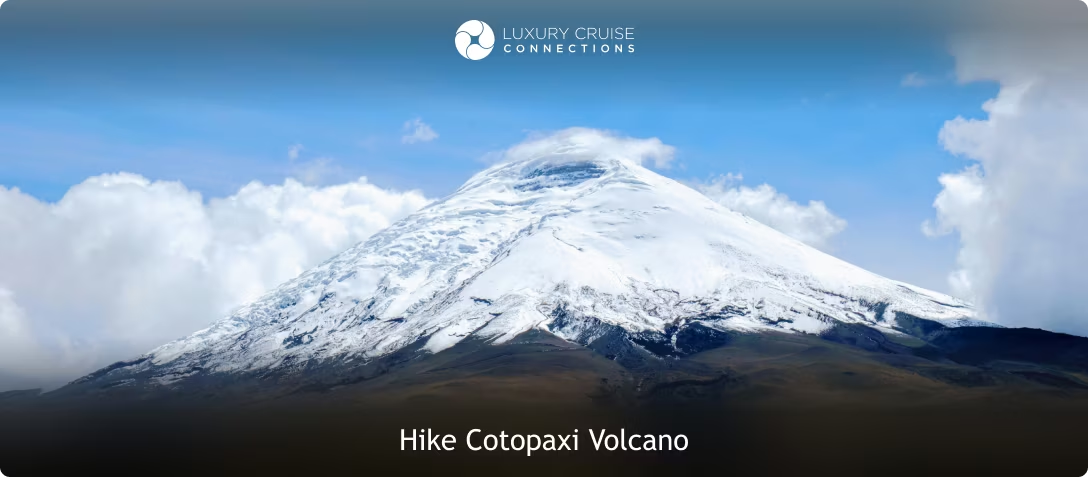
  • Hike Cotopaxi Volcano
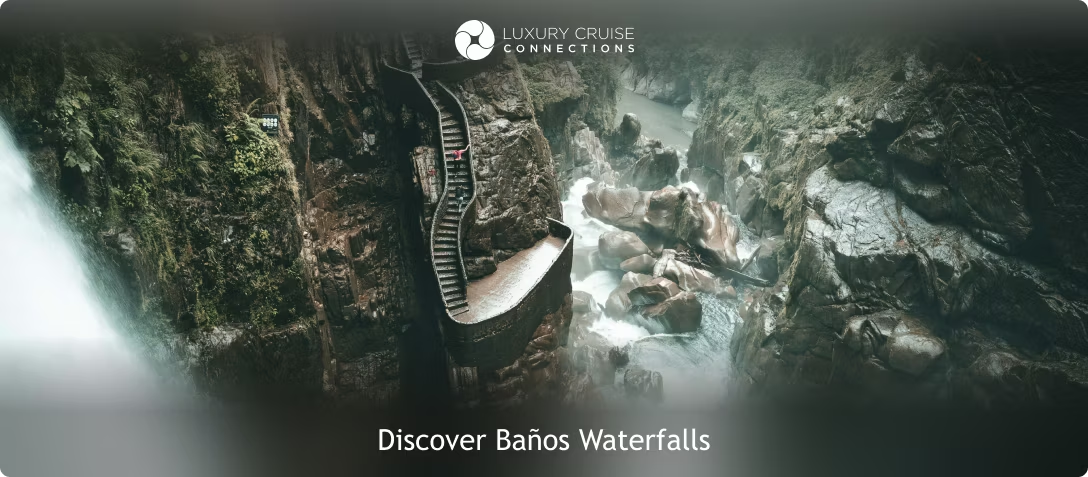
  • Discover Baños Waterfalls
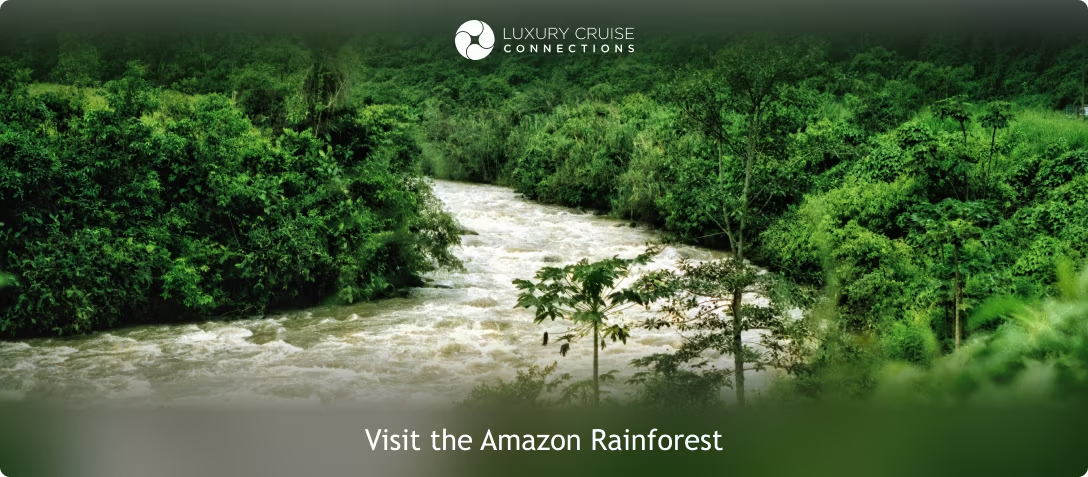
  • Visit the Amazon Rainforest
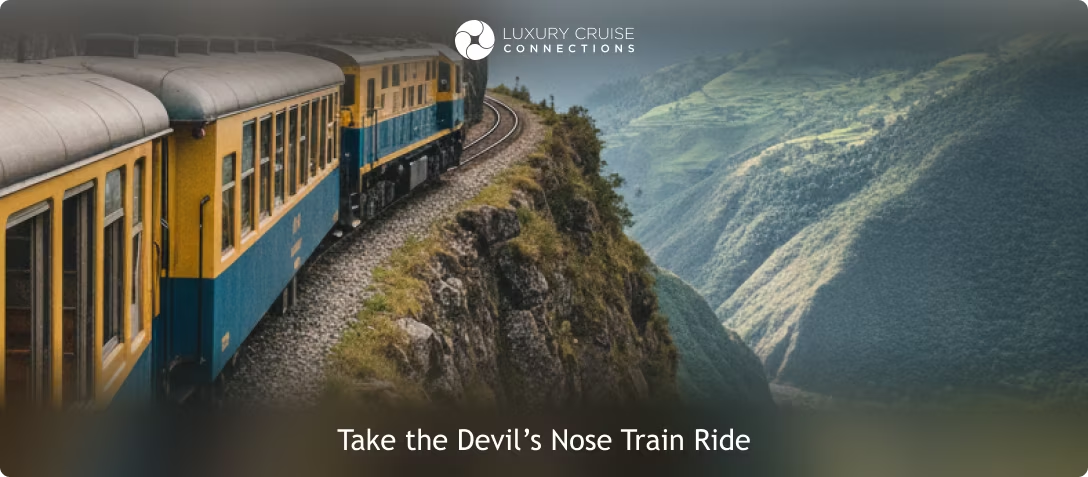
  • Take the Devil’s Nose Train Ride
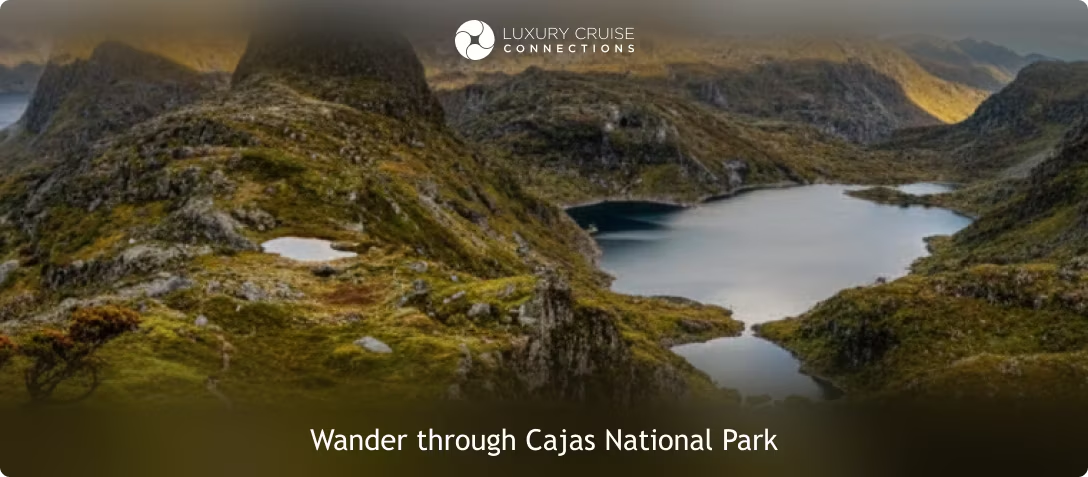
  • Wander through Cajas National Park
  • Explore Ingapirca Ruins
  • Relax at Termas de Papallacta
  • Enjoy the Beaches of Montañita
  • Visit the Galapagos Islands

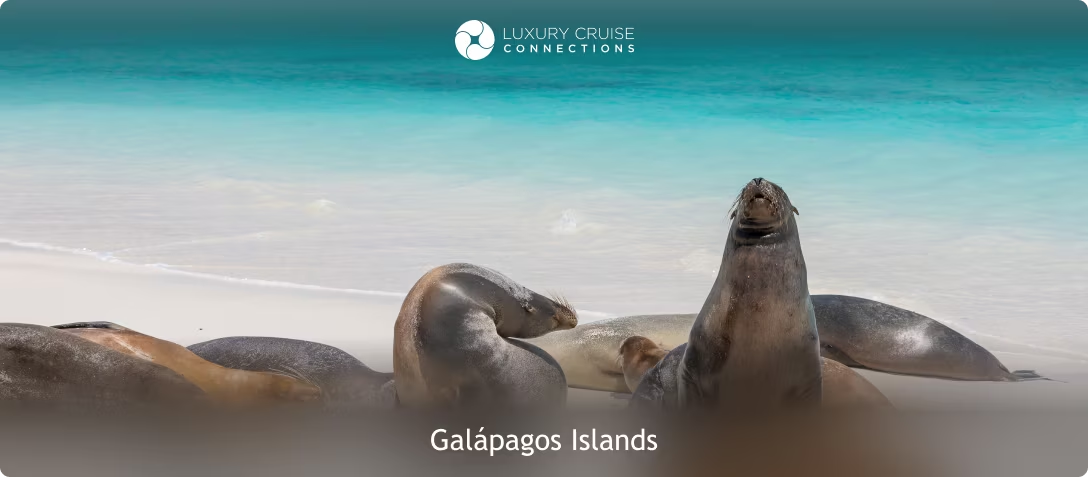
    The Galapagos Islands are an Ecuadorian archipelago situated 1,000 kilometers west of the mainland. The archipelago includes 13 main islands, 6 smaller islands, and more than 100 islets and rocks. The four inhabited islands of Galapagos are Santa Cruz, Isabela, San Cristóbal, and Floreana. The Galapagos Islands form part of a UNESCO World Heritage Site due to its unique endemic wildlife, including giant tortoises, marine iguanas, and blue-footed boobies. These islands are protected as part of Ecuador's Galápagos National Park and Marine Reserve and are famous for inspiring Charles Darwin’s Theory of Evolution. The terrain of Galapagos Islands spans volcanic landscapes, turquoise bays, and pristine beaches.
    Visit the Galapagos Islands

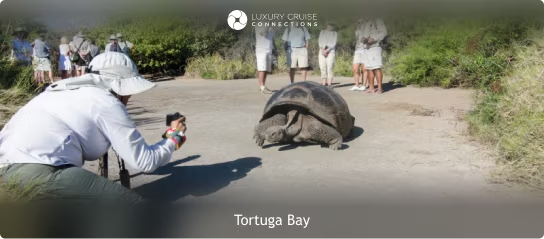
    Highlights of Ecuador’s Galápagos Islands include Tortuga Bay on Santa Cruz Island, known for its long stretch of white sand and nesting green sea turtles. Another highlight of the Galapagos islands is Bartolomé Island, which provides panoramic views over Pinnacle Rock and volcanic landscapes. The Charles Darwin Research Station in Puerto Ayora protects endangered species such as the Galápagos giant tortoise, land iguana, and mangrove finch. Española Island is another key attraction of Galapagos where waved albatross colonies gather each year for breeding. Kicker Rock near San Cristóbal attracts divers with sightings of hammerhead sharks, Galápagos sharks, and spotted eagle rays.

    Experiencing the Galápagos Islands offers rare encounters with wildlife found nowhere else on Earth. Travelers walk volcanic trails to spot large marine iguanas resting on black rocks and blue-footed boobies. Visitors to Santa Cruz Island’s dedicated conservation centers encounter the famous Galápagos tortoise which lives up to 150 years. Guided tours and snorkeling trips reveal sea lions, turtles, and colorful fish, while kayaking provides quiet views of rays and penguins. Visitors to Santiago Island admire its blue lagoons and spot fur seals basking near the shore.

    The best time to visit the Galápagos Islands depends on the type of wildlife activity travelers want to experience. December to May (rainy season) provides ideal conditions for snorkeling and diving, offering high water clarity and comfortable water temperatures. Galapagos’s rainy season coincides with sea turtle nesting and giant tortoise hatching. June to November brings plankton-rich waters that attract penguins, whales, and seabirds, making it the best time for observing marine life.

    Certified naturalist guides accompany every authorized Galapagos tour to ensure minimal disturbance to wildlife. Guides provide valuable insight into wildlife, volcanic geology and conservation challenges that shape the islands’ management.

    Tourists pay a $200 USD national park entry fee upon arrival. A transit control card costs $20 USD per person

  • Explore Quito’s Historic Center

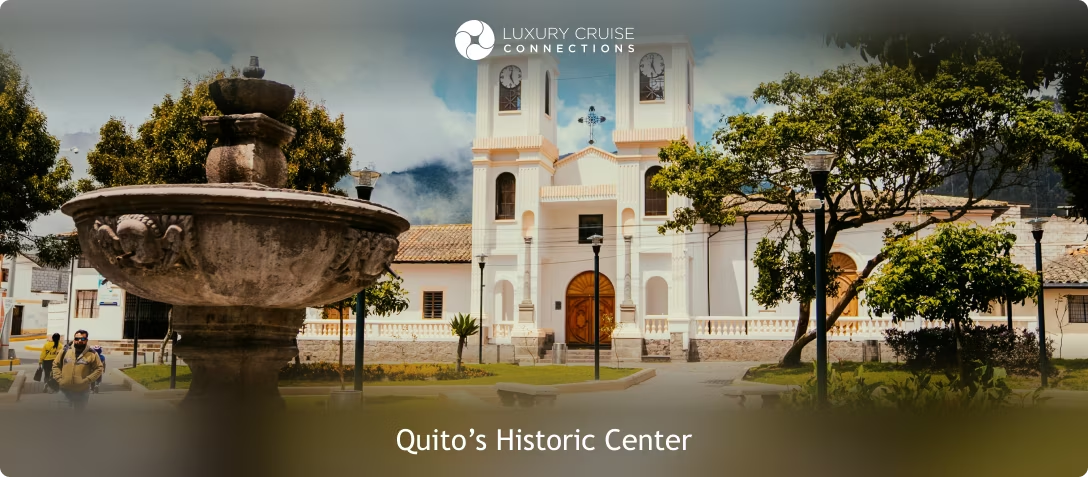
    Quito’s Historic Center lies in Ecuador’s capital city, Quito, at 2,820 meters above sea level. Quito’s Historic Center was founded by the Spanish in 1534 and remains one of the largest and best-preserved colonial centers in Latin America. Quito’s historic center became a UNESCO World Heritage Site in 1978 because of its historical significance. Exploring Quito’s historic center reveals a mix of colonial Spanish and indigenous Incan influences, with cobbled streets, flower-filled balconies, baroque churches, and shaded plazas. The surrounding Andean mountain peaks create a dramatic backdrop to Ecuador’s cultural heart.
     Explore Quito’s Historic Center

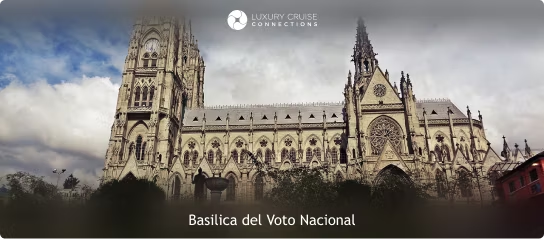
    Highlights of Quito’s Historic Center include La Compañía de Jesús, a baroque Jesuit church which is decorated with gold leaf and carvings that represent the height of Andean religious art. Another highlight is Plaza Grande, surrounded by the Ecuadorian Presidential Palace, the Metropolitan Cathedral, and arcaded walkways. The San Francisco Monastery displays art from the Quito School and offers tower views over the old town. The Basilica del Voto Nacional is a popular highlight where visitors climb inside its towers for a bird’s-eye view across the historic center. Panecillo Hill provides panoramic city vistas beneath the Virgin of Quito statue. The Museo de la Ciudad presents Quito’s colonial development through detailed exhibits and artifacts.

    Exploring Quito’s Historic Center brings visitors close to colonial history and daily Ecuadorian life. Travelers walk Quito’s cobbled streets, photograph pastel façades, and listen to church bells across the plazas. Plaza de la Independencia is an excellent starting point for exploring Quito’s Historic Center on foot and observing daily life. Visitors climb the Basílica del Voto Nacional towers for views over tiled roofs and distant volcanoes. Streets around the plazas offer cafés and artisan shops selling local Ecuadorian crafts. Travelers flock to Calle La Ronda in the evenings to drink canelazo (a sugar cane alcohol drink) and watch street performers.

    The best time to explore Quito’s Historic Center is from June to September when the weather is dry and skies are clear, creating comfortable walking conditions.

    Licensed city guides offer walking tours around Quito’s historic center, often focusing on art, architecture, and religious history. Audio guides are also available at many museums and key landmarks to provide additional context on Quito’s rich history.

    Access to public streets and plazas in Quito’s historic center is free. Entry to churches and museums in Quito costs $0 - $10 USD per entry.

  • Hike Cotopaxi Volcano

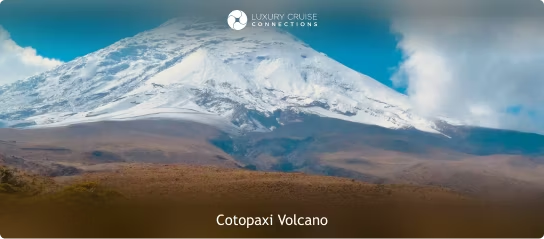
    Cotopaxi Volcano is an active stratovolcano located within Cotopaxi National Park, in Ecuador’s central highlands. Cotopaxi rises 5,897 meters above sea level and is one of the world’s highest active volcanoes, making it a defining symbol of the Andes. Cotopaxi’s perfect cone shape stands above grasslands, glacial streams, and herds of wild horses. Cotopaxi remains a sacred site in local mythology and a major attraction for climbers and hikers visiting Ecuador. Cotopaxi National Park protects páramo (high-altitude Andean plateaus) ecosystems and provides breathtaking views of snowcapped peaks.
    Hike Cotopaxi Volcano

    Highlights of Cotopaxi include the Cotopaxi volcano itself, distinguished by its perfect conical shape and glacier-capped summit. Another highlight is the José Rivas Refuge, located at 4,864 meters, which serves as the main base for climbers attempting the Cotopaxi summit. The Limpiopungo Lagoon reflects the peak in its calm waters and attracts Andean bird species such as coots and gulls. The park’s interpretive center near the entrance explains volcanic activity, geology, and native wildlife. Another key attraction of Cotopaxi is the surrounding páramo landscape which is filled with resilient high-altitude plants adapted to wind, frost, and thin air.

    Visitors experience Cotopaxi Volcano either through accessible day excursions around its lower slopes, or through the demanding two-day climb to its summit. Day trips bring visitors to Limpiopungo Lagoon to picnic, cycle, hike short trails, and photograph Cotopaxi’s snowcapped peak reflected in the water. The two-day Cotopaxi summit climb attracts adventurous hikers. Hikers begin from the José Rivas Refuge and follow the Yanasacha route or the Heartbreaker route to the summit. Climbers set out at midnight and reach Cotopaxi crater by dawn to enjoy sweeping views across the Andes.

    The best time to hike Cotopaxi Volcano is from June to September when skies are clearest and trails dry. November to February also offers stable weather with fewer visitors

    Certified mountain guides are a legal requirement when summiting Cotopaxi volcano. Guides lead hikes and climbs for safety and altitude management and provide equipment and instruction for acclimatization.

    Entry to Cotopaxi National Park is free. Guided day hikes in Cotopaxi cost $60 - $150 USD. Technical climbs to the summit range from $250 -$600 USD including gear, transport, and guide services.

  • Discover Baños Waterfalls

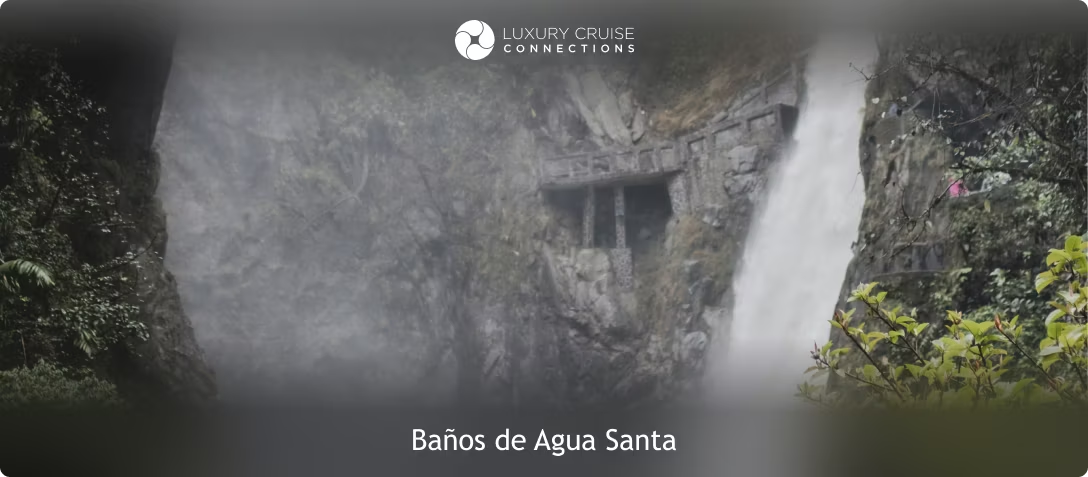
    Discovering Baños Waterfalls reveals one of Ecuador’s most striking natural landscapes of powerful waterfalls, green valleys and volcanic canyons. Baños waterfalls are located within minutes of the town of Baños de Agua Santa. Baños de Agua Santa serves as a gateway between the Andes and the Amazon and is known for its adventure tourism and thermal springs. Rivers flowing from the Tungurahua Volcano carve steep gorges that form a chain of easily accessible waterfalls just minutes from town. Trails and viewpoints lead visitors to thundering cascades surrounded by tropical vegetation and constant mist, creating one of Ecuador’s most scenic landscapes.
    Discover Baños Waterfalls

    Highlights of Baños Waterfalls include the Pailón del Diablo, or Devil’s Cauldron, a dramatic waterfall crashing through a narrow gorge beside a stone walkway. Another highlight is the Manto de la Novia, or Bridal Veil Waterfall, reached by cable car over the Pastaza River. The Agoyán Waterfall is the tallest falls in the region at 61 meters and sends up mist and bright rainbows visible from the roadside. Other highlights of Baños Waterfalls include Grieta al Cielo, or Crack to Heaven, a tunnel through the rocks that leads visitors directly beneath the turbulent water for a close view

    Experiencing Baños Waterfalls combines cycling, hiking, and scenic exploration. Visitors rent bicycles and follow the Route of the Waterfalls, a downhill trail crossing tunnels and bridges toward cascades such as Agoyán and Rocío Machay. Visitors enjoy a short walk down wooden stairs and swing bridges through lush vegetation to Rocío Machay. Swimmers find calm pools near the river where it is safe to cool off beneath the falls. Walkways and viewing platforms bring travelers close to the rushing water, while cable cars offer wide views of the Pastaza Valley. Visitors take Instagram-worthy photos at the Swing at the End of the World, or choose ziplining and cable crossings for more adventure.

    The best time to discover Baños Waterfalls is from June to September when rainfall decreases and walking and cycling trails between the cascades are less muddy.

    Local adventure guides in Banos organize biking and hiking tours with safety gear and route support. Guides explain regional geology and point out safe water access points near the strongest cascades

    Public access to most viewpoints in Banos Waterfalls is free. Entrance to private platforms and cable cars ranges from $1 to $3 USD.

  • Visit the Amazon Rainforest

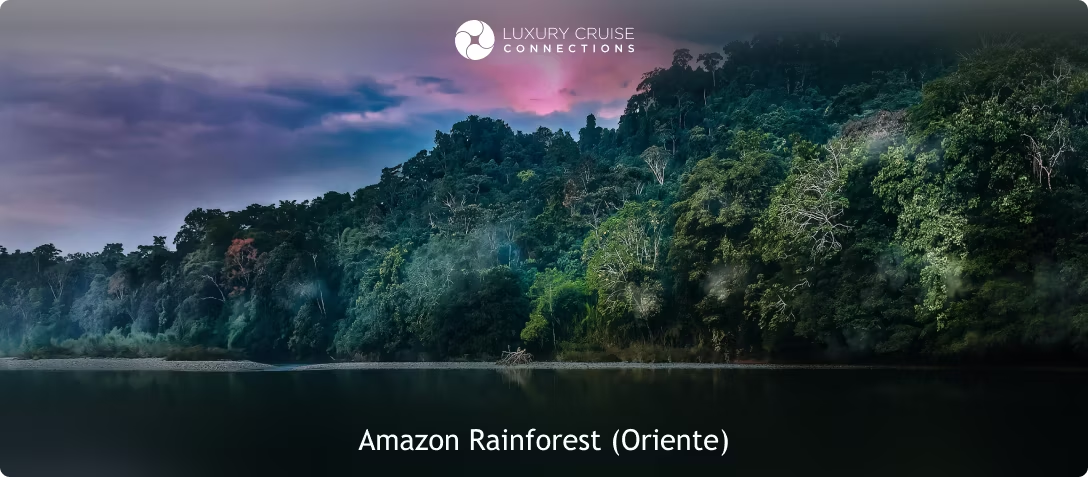
    A visit to the Amazon Rainforest in Ecuador reveals one of the world’s largest and most biologically rich ecosystems. The Ecuadorian Amazon, known as the Oriente, forms part of the vast Amazon Basin. It covers about 120,000 square kilometers across the provinces of Sucumbíos, Orellana, Napo, Pastaza, Morona, and Zamora. The Ecuadorian Amazon stretches east of the Andes and consists of dense rainforest cut by winding rivers. Indigenous communities live along the Napo River, preserving traditional ways of life within this immense landscape. The Amazon remains one of Earth’s most vital ecological reserves and a leading destination for eco-tourism and adventure travel in Ecuador.
    Visit the Amazon Rainforest

    Highlights of the Amazon Rainforest in Ecuador include Yasuní National Park, a UNESCO Biosphere Reserve. Yasuni National Park remains one of the most biodiverse locations on Earth, sheltering virgin tropical forest and diverse bird, tree, mammal, amphibian, and bat species. Another highlight of the Ecuadorian Amazon is the Cuyabeno Wildlife Reserve, famous for its lagoons, flooded forests, and wildlife-rich canoe routes. The Napo River corridor links ecolodges and community-based tourism projects. Another key attraction is Limoncocha Lagoon, a blackwater lake where travelers can spot caimans, herons, and tropical birdlife in a peaceful jungle setting.

    The Amazon Rainforest provides visitors with a deep sense of immersion in Ecuador’s most biodiverse region. Travelers glide by canoe along the Napo River, watching morning mist rise over the water and listening to howler monkeys. Guided hikes lead visitors beneath the canopy where they spot toucans, macaws, and traces of jaguars and sloths. Travelers kayak through narrow channels, fish for piranhas, and cross canopy walkways high above the treetops. Night excursions let visitors observe glowing insects and tree frogs under torchlight. Encounters with local communities reveal traditions of fishing, weaving, and forest stewardship. At the Napo Cultural Center, guests meet Kichwa Añangu women, share guayusa tea and listen to stories that connect daily life with the rhythms of the Amazon.

    The best time to visit the Amazon Rainforest in Ecuador is from August to November when rainfall decreases and river levels are moderate. December to March brings heavier rain that limits walking but improves canoe access to remote areas of the Amazon. Wildlife viewing in the Amazon remains constant year-round.

    Indigenous and naturalist guides accompany all rainforest excursions and identify species, interpret forest ecology, and share cultural knowledge. Guides ensure safe travel through river systems and forest trails.

    Entrance to Yasuní and Cuyabeno reserves is free. Community visits sometimes request small contributions of $5 to $10 USD per guest.

  • Take the Devil’s Nose Train Ride

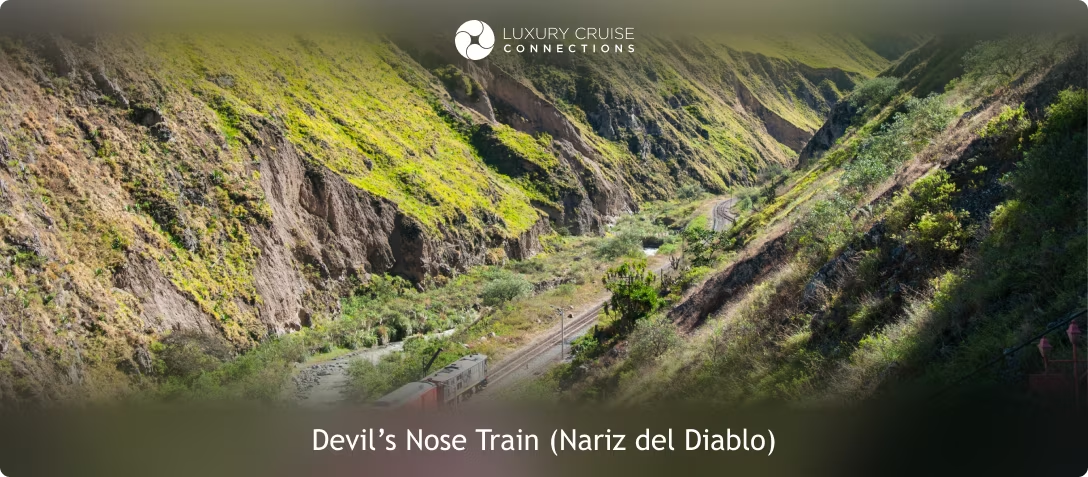
    The Devil’s Nose Train Ride (Nariz del Diablo) in Ecuador preserves the legacy of one of the omst ambitious transport projects in South America. Devil’s Nose refers to a small section of Ecuador’s Trans-Andean railroad system in Ecuador’s Chimborazo Province. The 12-kilometer Devil’s Nose railroad connects Alausí and Sibambe stations and descends a steep mountain face through a series of switchbacks built in the late 19th and early 20th centuries. The route crosses rugged Andean terrain that tested the limits of early railway construction. Today, the Devil’s Nose line stands as a national symbol of Ecuador’s engineering heritage and endurance
    Take the Devil’s Nose Train Ride

    Highlights of the Devil’s Nose Train Ride center on its exceptional engineering and dramatic Andean scenery. The route descends nearly 500 meters over 12 kilometers of track using tight switchbacks that allow the train to zigzag down near-vertical slopes. Another highlight is the Sibambe Station viewpoint, which overlooks the triangular rock formation known as the Devil’s Nose, carved into the side of Cóndor Puñuna. The feature gives the route its name and symbolizes the railway’s most difficult section, built at great human cost. Onboard commentary tells this story, and local dancers welcome passengers at Sibambe with traditional music and performance.

    Highlights of the Devil’s Nose Train Ride center on its exceptional engineering and dramatic Andean scenery. The route descends nearly 500 meters over 12 kilometers of track using tight switchbacks that allow the train to zigzag down near-vertical slopes. Another highlight is the Sibambe Station viewpoint, which overlooks the triangular rock formation known as the Devil’s Nose, carved into the side of Cóndor Puñuna. The feature gives the route its name and symbolizes the railway’s most difficult section, built at great human cost. Onboard commentary tells this story, and local dancers welcome passengers at Sibambe with traditional music and performance.

    The best time to take the Devil’s Nose Train Ride is from June to September when the weather is dry and visibility is optimal for mountain views.

    Train staff serve as onboard guides providing historical narration in Spanish and English. Local hosts at Sibambe Station share cultural context and stories about early railway life.

    Train tickets for the Devil’s Nose train costs around $30-$33 USD and includes round-trip travel, onboard guide service, museum entry, and access to viewpoints

  • Wander through Cajas National Park

    Cajas National Park is a national park that lies in southern Ecuador, 30 kilometers west of Cuenca within the Andean highlands. Cajas National Park protects more than 275 glacial lakes and rugged páramo ecosystems between 3,000 and 4,400 meters above sea level. Cajas forms part of Ecuador’s National System of Protected Areas and supplies water to the city of Cuenca. Cajas is a wildlife-rich destination that protects Andean condors, hummingbirds, spectacled bears and native flora adapted to cold, thin air. The Cajas landscape combines granite peaks, glacial valleys, waterfalls, Andean lakes and alpine grasslands.
    Wander through Cajas National Park

    Highlights of Cajas National Park include Laguna Toreadora, a scenic lake accessible from the main visitor center. Another highlight is Cerro Arquitectos, which is the highest peak in the park at 4,450 meters. Another highlight is the Camino del Inca trail which is part of the ancient network linking Ecuador’s highland and coastal regions. The Tres Cruces viewpoint marks the continental divide between the Pacific and Amazon basins. Another key attraction of Cajas National Park is the Polylepis forest, where twisted trees grow at the world’s highest elevation for woody plants.

    Wandering through Cajas National Park gives visitors an immersive experience within Ecuador’s high-altitude tundra wilderness. Visitors hike along winding trails that pass crystal lagoons and rocky outcrops where llamas graze. Short routes near Laguna Toreadora allow easy exploration, while longer treks challenge hikers through mist-covered valleys and mossy Polylepis forests. Bird-enthusiasts spot Andean condors, giant hummingbirds, and colorful parrots flying over the wetlands. Visitors photograph Cajas’ waterfalls, granite peaks, atmospheric fog, and the changing light that define the páramo landscape. Many travelers choose scenic drives or guided tours from Cuenca, stopping for panoramic views or tasting freshly caught trout at local restaurants.

    The best time to wander through Cajas National Park is from June to September during the dry season. Cool temperatures and clearer skies provide ideal conditions for hiking and photography within the national park.

    Certified park guides accompany longer routes and provide information on flora, fauna, and altitude adaptation. They also assist with navigation through fog-prone areas where trails are unclear.

    There is no entry fee to Cajas National Park.

  • Explore Ingapirca Ruins

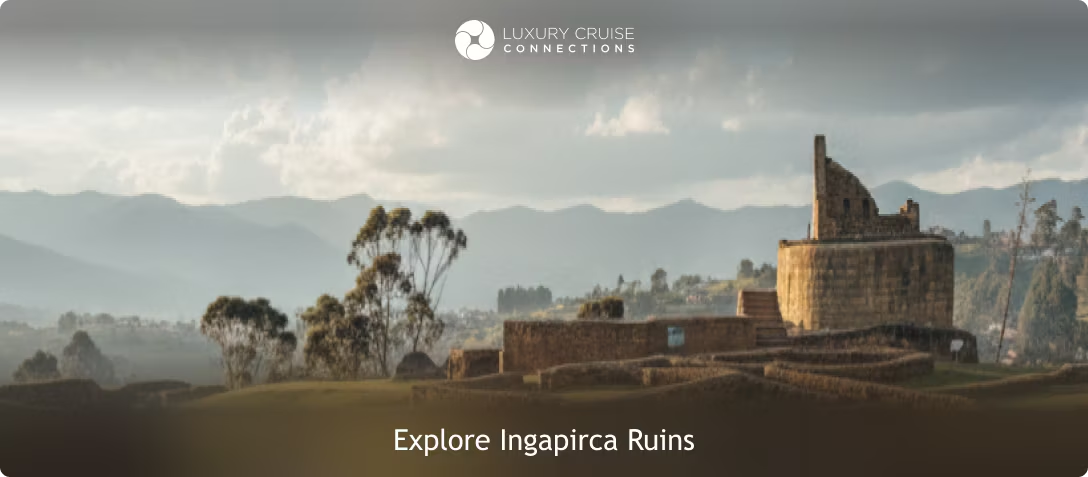
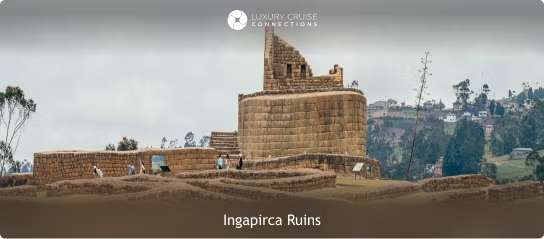
    Ingapirca Ruins are the largest and best-preserved complex of Inca ruins in Ecuador. Ingapirca Ruins lie in Ecuador’s Cañar Province, 80 kilometers north of Cuenca. This archeological site stands on a ridge that once formed a strategic point on the Inca Royal Road. The ruins combine Inca and Cañari architectural styles with finely cut stone walls and circular courtyards. Ingapirca remains a symbol of cultural fusion and pre-Columbian history.
    Explore Ingapirca Ruins

    Highlights of Ingapirca include the Temple of the Sun, an elliptical structure built without mortar using precisely fitted stone blocks. During the solstices, sunlight passes directly through the doorway of the small chamber at the Temple of The Sun’s summit, illuminating its center and demonstrating advanced Inca astronomical knowledge. Another highlight is the Cañari ceremonial complex, which predates Inca construction and reflects local religious traditions. The onsite museum in Ingapirca, Museo de Ingapirca, displays pottery, tools, and reconstructed artifacts uncovered through archaeological excavations.

    Exploring Ingapirca Ruins provides a fascinating look into Ecuador’s most significant Inca site. Visitors enter the ruins in groups at scheduled times and begin at the Museo de Ingapirca, which explains the earlier Cañari culture and its fusion with Inca rule. Guided tours lead through storage foundations, aqueducts, and ceremonial platforms where llamas graze among the stones. Visitors observe the Temple of the Sun before following the Intihuayco Trail, a short route past La Tortuga and The Face of the Inca. Visitors have the chance to browse and buy woven crafts and snacks being sold in local stalls near the exit.

    The best time to explore Ingapirca Ruins is from June to September when dry weather ensures comfortable walking around the archaeological complex.

    Local guides operate from the visitor center, explain the archaeological and cultural context of Ingapirca and clarify differences between Inca and Cañari construction.

    Entry to the Ingapirca Ruins cost $2 USD per person and include a guided tour and museum admission.

  • Relax at Termas de Papallacta

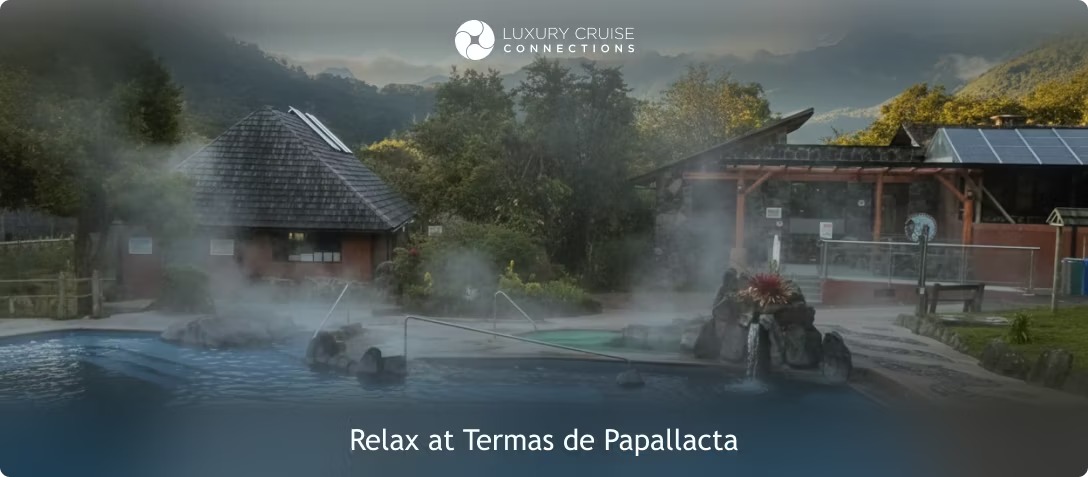
    Termas de Papallacta is a hot spring resort in the Ecuadorian Andes, located 67 kilometers east of Quito. The Termas de Papallacta complex draws heat from underground volcanic sources and pure glacial meltwater, forming natural mineral pools surrounded by mountain scenery. Papallacta offers crisp air, forested slopes, and calm alpine views, sitting at 3,250 meters above sea level. Papallacta’s thermal waters are rich in calcium, sulfate, and magnesium, believed to ease pain, improve circulation, and relieve stress. Papallacta stands as one of Ecuador’s leading natural spa destinations, known for its serene natural setting and wellness focus.
    Relax at Termas de Papallacta

    Highlights of Termas de Papallacta include a series of outdoor pools of different temperatures fed by natural thermal springs. Papallacta’s thermal springs are divided into two main areas, the public pools (Balneario) and the more exclusive Papallacta Spa Pools. Balneario area features ten public pools where families and locals relax together. The Papallacta Spa Pools offer a private and peaceful setting with landscaped gardens, reclining loungers, waterfalls, hydro-massage jets, and a cold plunge pool. Another highlight is the Spa Termal Center, where treatments use mountain herbs in massages, wraps, and hydrotherapy sessions.

    Relaxing at Termas de Papallacta provides visitors with a restorative experience up in the Andes. Guests soak in steaming waters that ease tired muscles after hikes or long journeys. Visitors alternate between hot and cold pools, stretch out on loungers, and unwind beneath open skies. Spa guests enjoy massages, facials, and herbal body wraps prepared with local ingredients such as chocolate and mountain herbs. Nature-lovers and active travelers have the opportunity to walk nearby trails like the La Isla Nature Trail, spotting orchids, mosses, and hummingbirds along the path

    The best time to relax at Termas de Papallacta is from June to September when skies are clear and views of the mountains are optimal. October to May brings more rainfall but creates a cosy, misty atmosphere that many visitors enjoy.

    Papallacta hotel staff assist with wellness schedules and provide visitor orientation. Local guides from nearby communities lead nature walks to the Cayambe-Coca Reserve and explain native plants used for traditional medicine.

    Entry to Public Papallacta Balneario costs $9 per person. Entry to the Papallacta spa pools costs $22 per person.

  • Enjoy the Beaches of Montañita

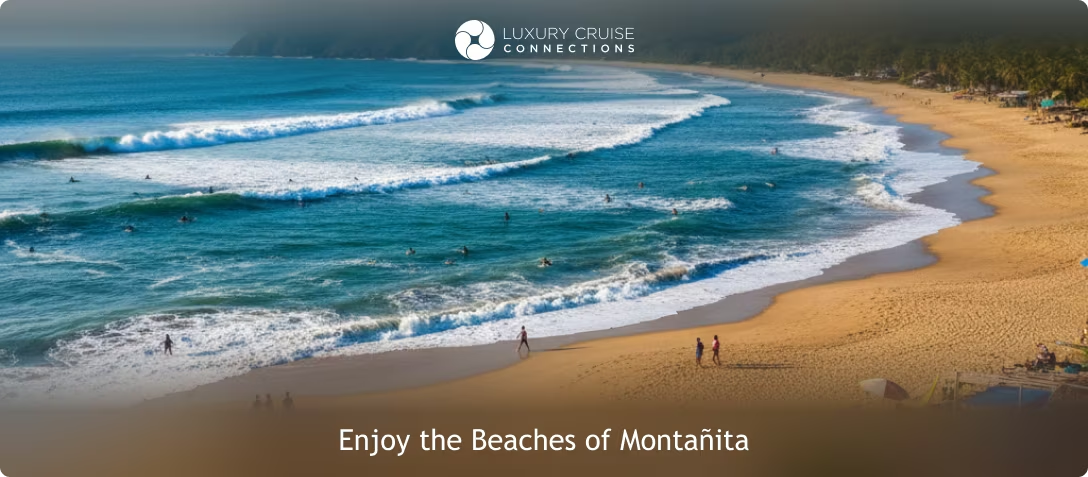
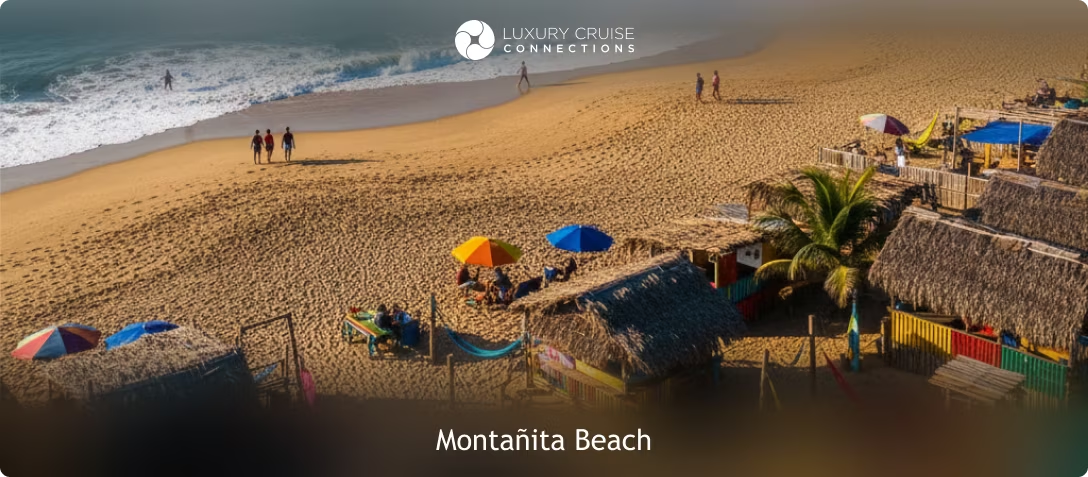
    The beaches of Montañita are known as one of the top surfing destinations in Ecuador. Montañita lies on Ecuador’s Santa Elena Peninsula along the Pacific coast, 180 kilometers from Guayaquil. Montañita’s beaches are known for their golden sand, surf breaks, and lively bohemian atmosphere that attract both locals and tourists. The surrounding coastline features cliffs, mangroves, and traditional fishing villages that contrast with the town’s energetic center
     Enjoy the Beaches of Montañita

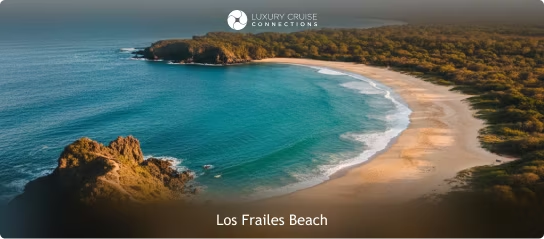
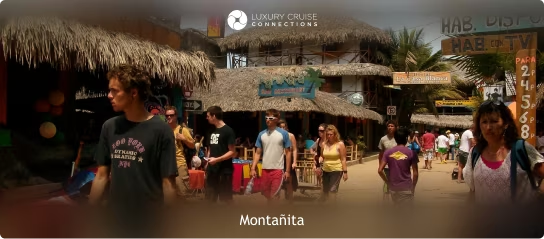
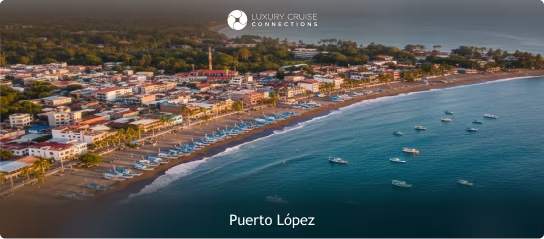
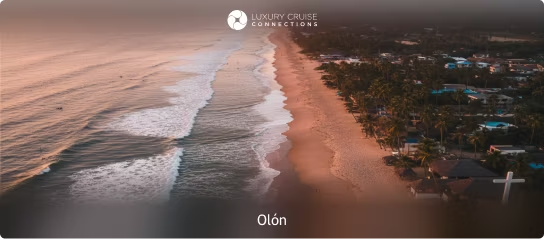
    Highlights of the beaches of Montañita include its main surf beach, Montañita. Montañita is known as a surfers’ paradise for its steady left and right breaks that attract surfers from around the world. Another highlight is the Punta Montañita viewpoint, which offers sweeping views over the bay and is popular for watching sunsets and surf competitions. Montañita town center offers seafood restaurants, bars, and small markets filled with handmade jewelry and clothing. Olón Beach, five minutes north, provides calm waters for swimming and yoga retreats. Other nearby spots include Ayampe for quiet surf, Los Frailes inside Machalilla National Park for families, and Puerto López for whale watching.

    Enjoying the beaches of Montañita lets visitors experience surf culture and relaxed coastal life. Travelers surf the main beach or walk the waterfront lined with shacks selling fresh ceviche and cold beer. Visitors browse local stalls selling woven crafts and listen to musicians performing in the plazas. Visitors photograph ocean views from La Punta and eat seafood at sunset restaurants overlooking the bay. Afternoons bring volleyball games and surf lessons on the sand. Evenings turn lively with open-air bars, live reggae, and night markets. Beyond town, visitors follow coastal trails to Olón or local fishing beaches for quiet walks and uninterrupted sea views

    The best time to enjoy the beaches of Montañita is from December to May when the weather is warm and seas calm, though surf conditions remain reliable year-round.

    Surf instructors and local guides offer lessons and board rentals along the beach. They ensure safe conditions and teach wave techniques for different skill levels.

    Access to Montañita beach is free. Surfboard rentals cost between $10 and $20 USD per day.


What are the Most Popular Tourist Attractions in Ecuador?

The most popular tourist attractions in Ecuador are listed below.

  • Galápagos Islands
  • Quito’s Historic Center
  • Baños de Agua Santa
  • Amazon Rainforest (Oriente)
  • Devil’s Nose Train (Nariz del Diablo)
  • Montañita Beach
  • Galápagos Islands

    The Galápagos Islands are Ecuador’s most visited natural attraction, drawing around 270,000 visitors annually. A UNESCO World Heritage Site, the archipelago is globally known for its endemic wildlife and pristine volcanic landscapes.
    Galápagos Islands
  • Quito’s Historic Center

    Quito’s Historic Center receives several million visitors each year as part of the capital’s urban tourism. Recognized by UNESCO since 1978, it remains one of Latin America’s largest and best-preserved colonial quarters, admired for its baroque churches and cultural museums.
    Quito’s Historic Center
  • Baños de Agua Santa

    Baños welcomes both domestic and international tourists throughout the year, with its adventure sports, hot springs, and waterfalls making it one of Ecuador’s top leisure destinations. Its balance of accessibility and variety ensures broad appeal.
    Baños de Agua Santa
  • Amazon Rainforest (Oriente)

    The Ecuadorian Amazon is among the most biodiverse regions on Earth and a leading destination for eco-travel. Yasuní National Park and Cuyabeno Reserve together host tens of thousands of visitors annually, mainly on guided eco-lodge and river tours.
    Amazon Rainforest (Oriente)
  • Devil’s Nose Train (Nariz del Diablo)

    The Devil’s Nose Train is Ecuador’s most famous rail attraction and draws both local and foreign passengers each season. Its steep switchback route between Alausí and Sibambe has been highlighted in international travel rankings for engineering and scenic value.
    Devil’s Nose Train (Nariz del Diablo)
  • Montañita Beach

    Montañita on the Santa Elena Peninsula ranks as Ecuador’s most visited beach town, especially among young travelers and surfers. Known for consistent waves and a lively coastal scene, it remains a major stop on Pacific Coast itineraries.
    Montañita Beach


Which Vacation Spots in Ecuador Are Best for Beach Lovers?

The vacation spots in Ecuador that are best for beach lovers are listed below.


What are the Most Famous Landmarks in Ecuador?

The most famous landmarks in Ecuador are listed below.


What are the Best Things to Do in Ecuador for First-Time Visitors?

The best things to do in Ecuador for first-time visitors are listed below.

A journey to the Galápagos Islands introduces first-time travelers to Ecuador’s most famous natural treasure. Galápagos Islands combine wildlife encounters, volcanic scenery, and authentic ecological discovery in one place.
Quito’s UNESCO-listed Old Town allows newcomers to immerse themselves in Ecuador’s colonial and indigenous heritage. Quito’s Historic Center’s architecture, plazas, and museums make it easy to understand the country’s cultural roots and artistic traditions.
Cotopaxi offers safe, guided treks up or around one of the world’s highest active volcanoes. It suits first-time visitors to Ecuador who want accessible mountain adventure and panoramic views within a short drive of Quito.
Exploring the Amazon helps first-time travelers immerse themselves in Ecuador’s biodiversity. Guided trips along jungle rivers reveal pink dolphins, monkeys, and tropical birds while introducing local communities and conservation efforts.
The Termas de Papallacta’s high-altitude hot springs offer a restful escape after days of sightseeing. They help first-time visitors adjust to Ecuador’s elevation while enjoying mountain views and spa facilities
Baños is the perfect adventure base for first-time visitors. The town combines easy hiking and biking routes with scenic waterfalls and hot springs surrounded by green valleys.
This highland park near Cuenca gives travelers a first-hand experience of Ecuador’s glacial lakes and alpine ecosystems. Cajas’s well-marked trails are ideal for visitors exploring high-altitude nature.
Visiting Ingapirca introduces first-time travelers to Ecuador’s pre-Columbian history. The site’s Inca and Cañari stonework helps explain the country’s ancient cultures and Andean beliefs.
Ecuador’s Pacific coast offers both lively and peaceful options for first-time visitors. Montañita provides surf and nightlife, while Los Frailes offers calm swimming and protected nature within a national park.
This historic railway trip through the Andes reveals first-time visitors Ecuador’s dramatic mountain landscapes.
What to do in Ecuador for a cultural experience?

Things to do in Ecuador for a cultural experience include exploring indigenous markets, visiting museums, attending traditional festivals, and joining local customs that express the country’s blend of Andean and coastal heritage. Exploring indigenous markets in Otavalo, Ecuador, introduces visitors to Andean culture through colorful textiles, handwoven crafts, and trade traditions preserved by the Otavalo Indigenous community. Visiting museums in Quito’s Historic Center connects travelers to Ecuador’s colonial and artistic history through landmarks such as the Museo de la Ciudad and Casa del Alabado. Attending traditional festivals reveals Ecuador’s regional dance, music, and costume. Key Ecuador traditional festivals include Inti Raymi in June, Corpus Christi in Cuenca, and La Diablada de Píllaro in January. Joining local customs along Ecuador’s coast (Esmeraldas and Manabí) lets travelers experience Afro-Ecuadorian culture through marimba rhythms, seafood dishes, and cacao workshops.

Are there Activities in Ecuador Perfect for Families with Children?

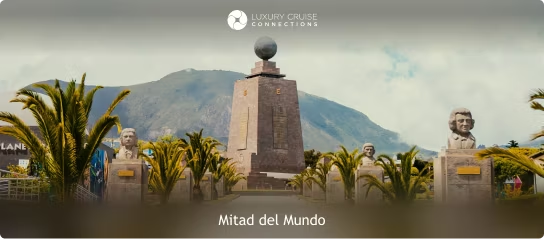
Yes, there are activities in Ecuador perfect for families with children, ranging from wildlife encounters to cultural discoveries and safe outdoor adventures. Families traveling with younger children enjoy easy excursions such as visiting the Mitad del Mundo monument near Quito, where visitors stand on the equator and take part in fun science demonstrations. In the Galápagos Islands, children see giant tortoises, sea lions, and blue-footed boobies up-close, turning the trip into a living classroom. Families with older children join guided snorkeling trips or gentle kayaking excursions in calm bays. At Baños de Agua Santa,

Are there Fun Things to Do in Ecuador for Outdoor Adventures?

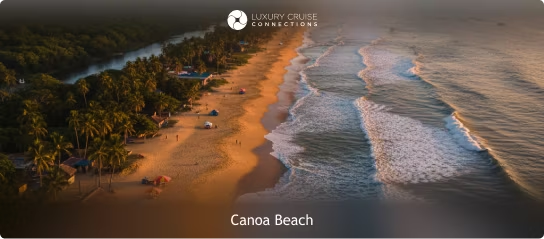
Yes, there are fun things to do in Ecuador for outdoor adventures because the country combines mountains, jungle, and coastline within a small but diverse landscape. In Ecuador’s Andes Mountains, visitors hike or mountain bike across Cotopaxi Volcano and explore its open plains and volcanic slopes. In Ecuador’s Amazon Rainforest, travelers take guided canoe trips, jungle treks, and canopy walks to spot unique wildlife. Around Baños de Agua Santa, adventurers go white-water rafting and canyoning through forested gorges. In the Galápagos Islands, visitors snorkel, kayak and spot marine life. Along Ecuador’s Pacific coast, travelers surf in Montañita, paraglide in Canoa, and kiteboard in Mompiche

Best Things to Do Around the World

Discover the best activities, landmarks, and experiences in every cruise destination and port of call.

Europe Western, Central & Mediterranean
America North, Central, South & Caribbean
Africa & Asia Oceania & Antarctica