10 Best Things to Do in Hungary

The 10 best things to do in Hungary include visiting the historic Buda Castle, exploring the thermal baths at Szechenyi...

add

The 10 best things to do in Hungary include visiting the historic Buda Castle, exploring the thermal baths at Szechenyi Spa, taking a cruise on the Danube River, discovering the Hungarian Parliament Building, and visiting the Fisherman's Bastion for panoramic views. Other Hungary highlights include exploring the Great Market Hall in Budapest, taking a walk through Heroes' Square, visiting the medieval town of Eger, relaxing at Lake Balaton, and experiencing the Hungarian National Museum in Budapest. 

Hungary is a Central European country with grand river cities, thermal spa culture, and rich Magyar heritage. The range of things to do in Hungary includes cruising along the Danube, bathing in mineral-rich spas and exploring national museums. River corridors, volcanic hills, sloping vineyards and charming cityscapes form the backdrop of the most striking places to visit in Hungary. Travelers shortlisting Hungary places to visit typically prioritize UNESCO listed landmarks, thermal bath complexes, historic castle districts, and wine regions.

  • Visit the historic Buda Castle in Budapest
  • Explore the thermal baths at Szechenyi Spa
  • Take a cruise on the Danube River
  • Discover the Hungarian Parliament Building
  • Visit the Fisherman's Bastion for panoramic views
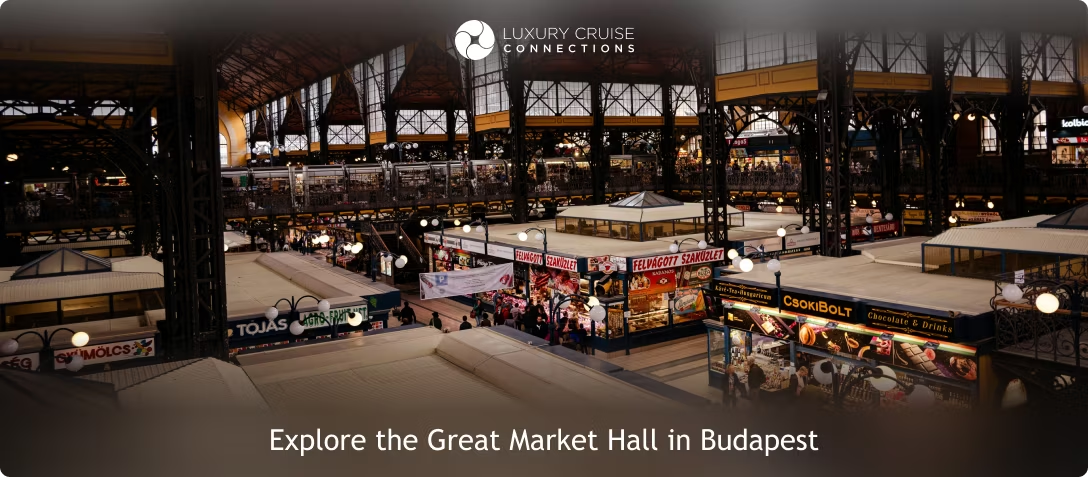
  • Explore the Great Market Hall in Budapest
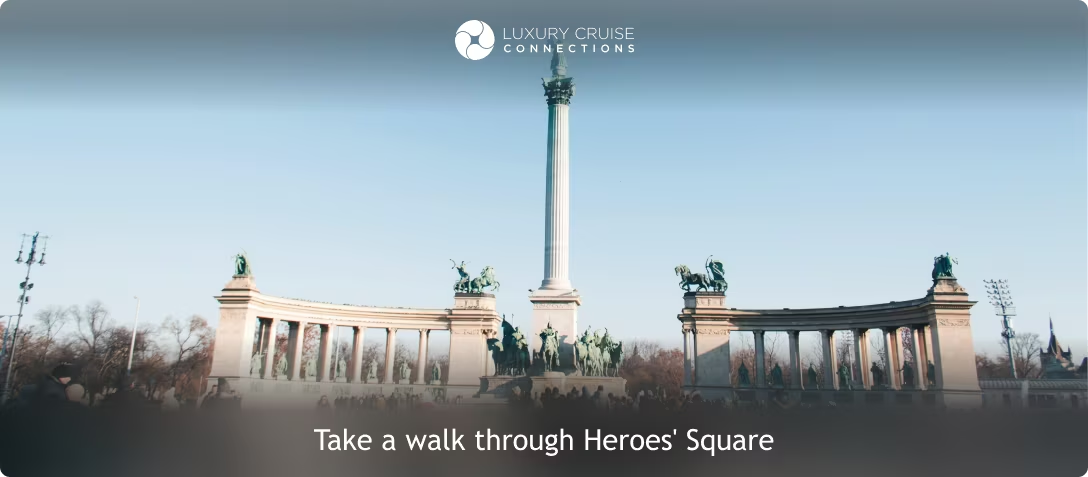
  • Take a walk through Heroes' Square
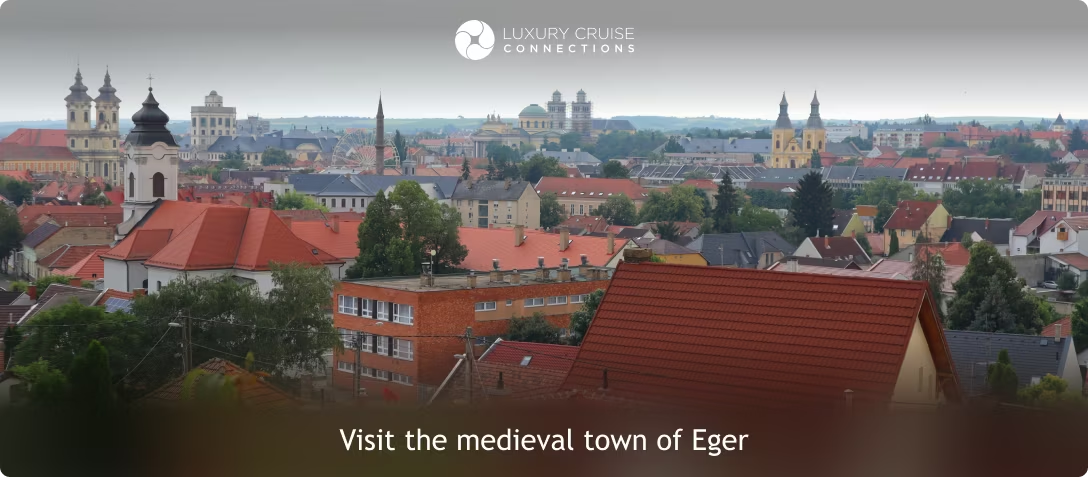
  • Visit the medieval town of Eger
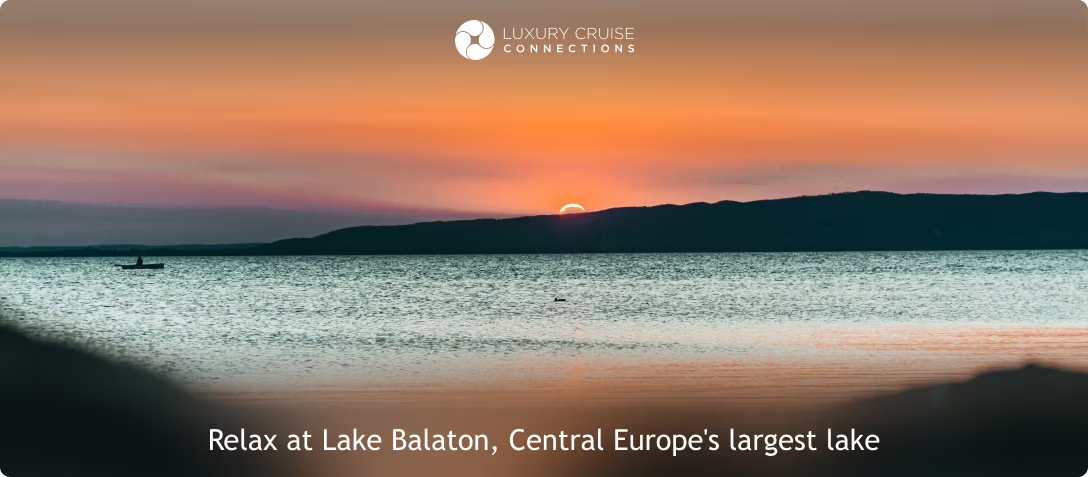
  • Relax at Lake Balaton, Central Europe's largest lake
  • Experience the Hungarian National Museum in Budapest
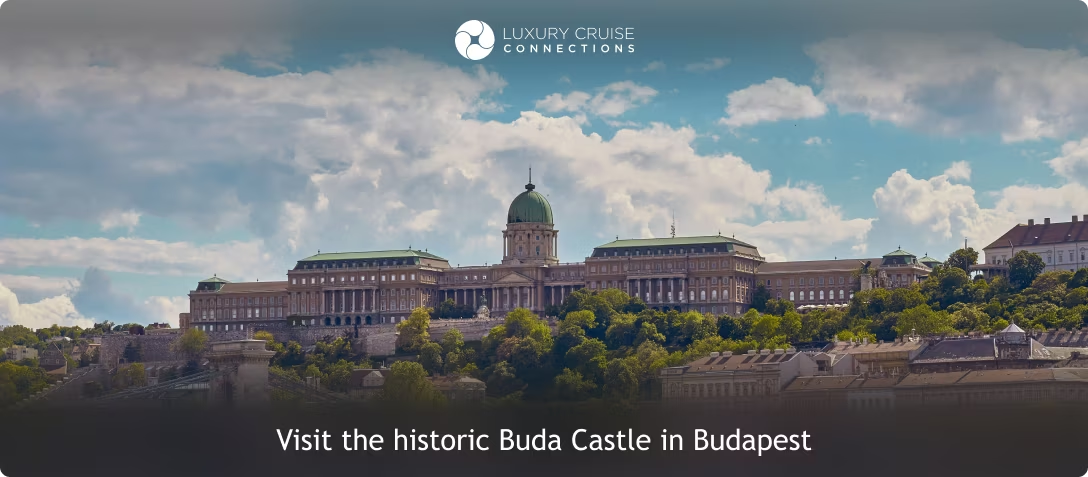
  • Visit the historic Buda Castle in Budapest

    The historic Buda Castle (Royal Palace) in Budapest is a monumental 14th-century structure that was once the residence of Hungarian kings. Buda Castle is now a UNESCO World Heritage Site that expresses Hungary’s medieval and Baroque legacy. The Royal Palace is located on Castle Hill (Várhegy) on the western side of the Danube River in Budapest. Visiting Buda Castle allows travelers to explore its courtyards, museums, panoramic terraces and underground labyrinths while learning about Hungary’s royal past. Buda Castle also houses the Hungarian National Gallery and the Budapest History Museum.

    Highlights of Buda Castle in Budapest include the ornate Lion Courtyard and its imposing dome, which dominates Budapest’s skyline. Another key attraction is the Budapest History Museum, with exhibits offering deep insight into the city’s past. Another highlight is the Hungarian National Gallery, featuring a wide collection of Hungarian art. Visitors also enjoy the changing of the guard and the sweeping views from the Fisherman’s Bastion nearby. Another highlight is the Castle Garden Bazaar (Várkert Bazár). The Castle Garden Bazaar was restored in recent years and adds a vibrant cultural and visual element to the visit with exhibition halls, a cinema, a theater, and lush gardens.

    Visiting the historic Buda Castle in Budapest offers an atmospheric journey through centuries of Hungarian history. Visitors reach the castle by climbing the stone stairways or riding the funicular from Clark Adam Square. They walk through the Royal Palace’s cobbled courtyards and enter the grand St. Stephen's Hall filled with art and artifacts. They view Gothic statues, admire cityscapes from the balconies, and tour regal rooms that once housed kings like Sigismund of Luxembourg, Matthias Corvinus, and Louis I The Great. Many proceed to walk through the maze of tunnels beneath Castle Hill. Visitors pause to photograph the domes and towers, dine at hilltop restaurants, and shop for souvenirs. They listen to bells chime across the Danube and enjoy the majestic scene.

    VThe best time to visit the historic Buda Castle is March to May and September to November, when the weather is mild and the castle grounds are most enjoyable for walking and outdoor views

    Historical and art-focused guides lead tours of historic Buda Castle in Budapest and offer in-depth commentary on royal life, architectural changes, and museum collections.

    Entry to the grounds of Buda Castle in Budapest is free.

  • Explore the thermal baths at Szechenyi Spa

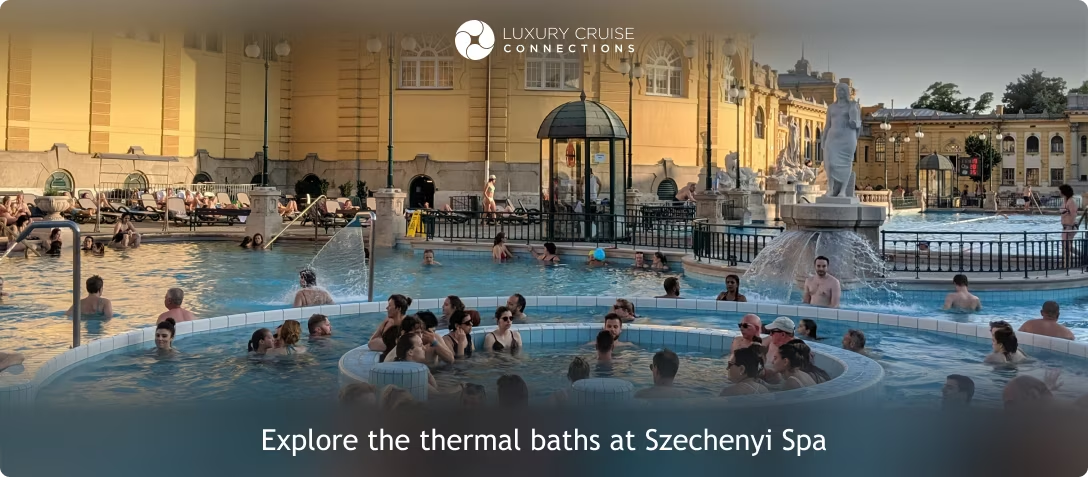
    The thermal baths at Szechenyi Spa (Széchenyi Thermal Bath) refer to a Neo-Baroque spa complex that is one of the largest spa facilities in Europe. Szechenyi Spa’s waters are supplied by two deep geothermal wells that are 1,250 meters deep, reflecting Hungary’s abundant natural thermal resources. Szechenyi’s thermal bathing complex provides visitors the chance to relax in therapeutic waters rich in calcium, magnesium, and hydrogen carbonate. Visitors explore and soak in a choice of 15 indoor pools and 3 large outdoor pools. Széchenyi Thermal Bath was opened in 1913 and is located on the Pest side of Budapest in City Park.
    Explore the thermal baths at Szechenyi Spa

    Highlights of thermal baths at Szechenyi Spa include its large outdoor thermal pools with steamy waters surrounded by ornate pavilions and colonnades. Another Szechenyi Spa highlight is the Art Nouveau-style interiors of the indoor pools, complete with domed ceilings and mosaic tiles. Another key attraction of Széchenyi Thermal Bath is the whirlpool corridor that gently pulls bathers in a circular current. Another Szechenyi Spa highlight is the tradition of water chess, where locals challenge each other to games of chess from inside the pools.

    Exploring the thermal baths at Szechenyi Spa is a rejuvenating experience that lets visitors partake in Hungary’s famous spa culture. Visitors enter through the spa’s grand yellow façade and pass under archways into open courtyards where steam rises from the heated pools. They soak in the warm mineral-rich waters outdoors or walk through the tiled interior halls to try the hot and cold plunge pools. Guests rest on loungers between dips, try thermal saunas, or book a massage treatment. In the outdoor pool, guests often watch or join chess players calmly seated at stone tables.

    The best time to explore the thermal baths at Szechenyi Spa is March to May or September to October, when the weather is mild and crowds are smaller, but the outdoor pools remain comfortably warm.

    Wellness and cultural guides lead tours that include Szechenyi Spa and provide insights into its therapeutic waters, historical development, and traditional spa etiquette.

    Entry to the thermal baths at Szechenyi Spa costs $40 - $60 USD depending on the day of the week. Specialized spa treatments and massages at Szechenyi Spa cost extra

  • Take a cruise on the Danube River

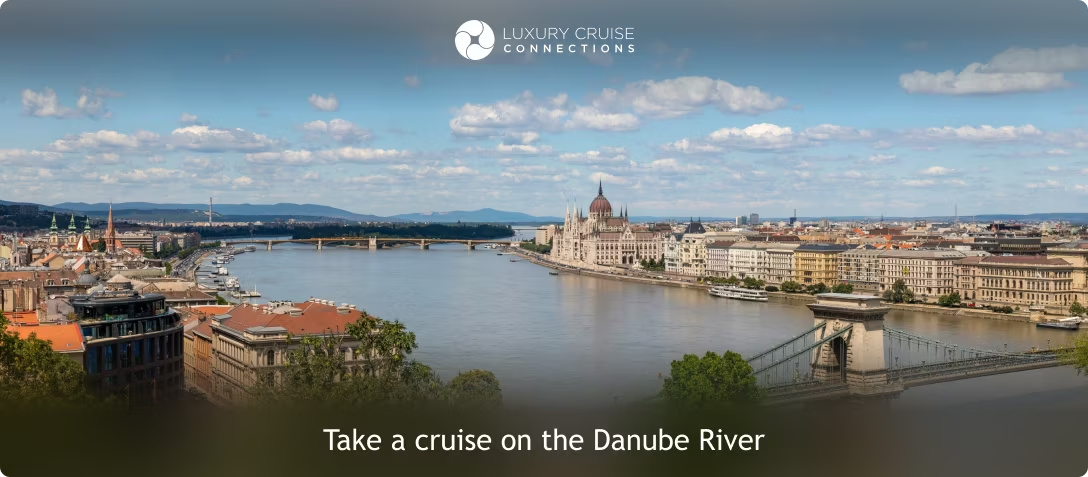
    The Danube River is Europe's second-longest river (2,857 km in length) and a vital artery for Hungary. The Danube River (Duna) flows north to south and divides Hungary into two unequal parts known as the Transdanubia and the Great Plain. Taking a cruise on the Danube River is a recreational and scenic experience that lets cruisers learn how it historically served as a gateway for myriad cultures, merchants, and warriors. Popular cruises on the Danube river include short sightseeing and dinner cruises in Budapest, and multi-day cruise voyages that cross multiple countries.
    Take a cruise on the Danube River

    Highlights of the Danube River include enjoying panoramic views of the UNESCO-listed banks of Budapest, where landmarks like the Chain Bridge and Buda Castle dominate the skyline. Another highlight of taking a cruise on Duna is the chance to cruise past the striking neo-Gothic Hungarian Parliament Building, one of the most photographed buildings in Europe. Another key attraction of the Danube experience is Margaret Island, a green oasis in the middle of the river.

    Cruising the Danube River offers travelers an immersive and peaceful way to see Hungary’s capital and countryside. Visitors board docked boats at piers along Pest’s embankment. They glide past historical bridges, see people strolling riverside promenades, and view the city’s landmarks from open-air decks or indoor lounges. They hear multilingual audio guides, sip drinks, and dine onboard while floating by sights like the Liberty Statue, Matthias Church, and Fisherman's Bastion. The cruise is peaceful, with soft waves, open skies, and sweeping views of both Buda’s hills and Pest’s skyline.

    The best time to take a cruise on the Danube River is from May to September, when the weather is warm, daylight is long, and riverfront landmarks are fully visible.

    River cruise guides and audio narration systems lead tours of the Danube River and provide architectural, cultural, and historical insight into the landmarks and bridges seen from the water.

    Short cruises focused on Budapest cost $12 - $60 USD, depending on the cruise type, duration, and whether meals or live music are included.

  • Discover the Hungarian Parliament Building

    The Hungarian Parliament Building (Országház) is a UNESCO World Heritage Site and one of Europe’s largest legislative buildings. Visiting the Hungarian Parliament Building is a journey into one of the world's most immense and ostentatious examples of neo-Gothic architecture. Országház is located on the eastern bank of the Danube River in Budapest. It was completed in 1904 and designed by Imre Steindl. The Hungarian Parliament Building measures 268 meters long and 96 meters high, matching the height of St. Stephen's Basilica in order to symbolize the equality between secular and religious power.
    Discover the Hungarian Parliament Building

    Highlights of the Hungarian Parliament Building include the impressive central dome, which rises 96 meters high to mark the year Hungary was founded. Another key attraction is the Holy Crown of Hungary, displayed beneath the dome and guarded by ceremonial soldiers. The 20 km staircase of the Hungarian Parliament Building, lined with gold leaf and statues, is another highlight that dazzles visitors. The riverside façade along the Danube offers stunning photo opportunities, especially when illuminated at night. Another Parliament Building highlight is its symmetrical design, meant to reflect political balance and unity.

    Discovering the Hungarian Parliament Building offers visitors a sense of Hungarian national pride and architectural wonder. Visitors start at the main entrance where they join their 45-minute guided tour. They walk through the grand staircase, and pause beneath the majestic central dome to view the Crown of Saint Stephen. Visitors continue through session halls, view stained-glass windows, and admire 242 exterior and interior statues that depict Hungarian rulers and allegorical figures. They walk along interior balconies, gaze across the Danube, and often end their visit at the Parliament Visitor Center, which includes exhibits of stone carvings and the 1956 Revolution.

    The best time to discover the Hungarian Parliament Building is from March to October, when guided tours run more frequently and Budapest’s weather is ideal for viewing the building.

    Certified local guides lead 45-minute timed tours of the Hungarian Parliament Building and provide insight into Hungarian history, architectural symbolism, and the significance of the Crown Jewels.

    Entry to the Hungarian Parliament Building costs $13 - $30 USD, depending on the visitor’s nationality and age.

  • Visit the Fisherman's Bastion for panoramic views

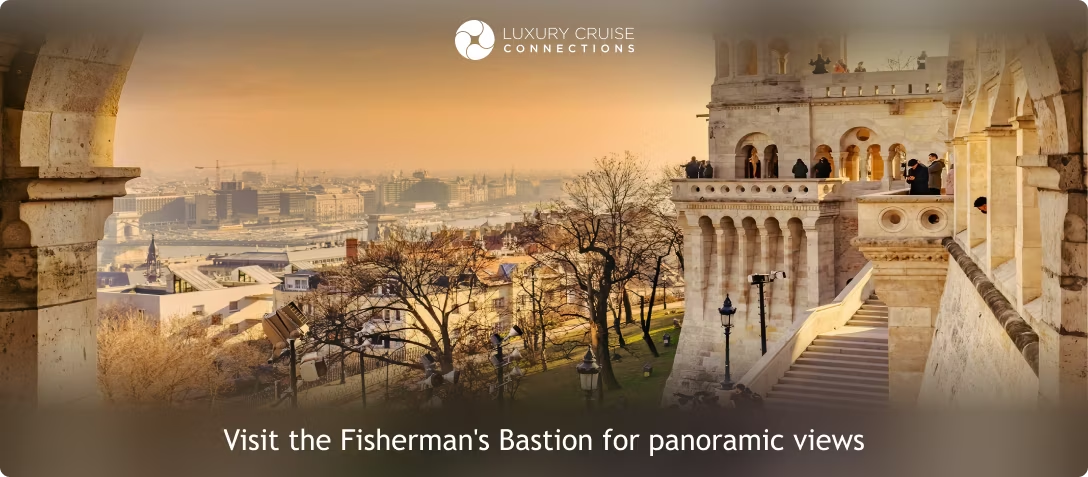
    The Fisherman’s Bastion (Halászbástya) is a neo-Romanesque terrace that celebrates Hungary’s millennial history and honors the fishermen who once protected this part of Buda. Visiting the Fisherman's Bastion’s arcades and towers offers one of the most iconic sightseeing experiences in Hungary. The Fisherman’s Bastion is located on Castle Hill in Budapest, just steps from Matthias Church and overlooking the scenic Danube River. Halászbástya provides a unique vantage point overlooking the Danube, the Hungarian Parliament Building, and the sprawling Pest side of the city. The Halászbástya was designated a UNESCO World Heritage Site in 1987 as part of the Várkerület District.
    Visit the Fisherman's Bastion for panoramic views

    Highlights of the Fisherman’s Bastion include its seven white-stone towers, each symbolizing the seven chieftains of Magyar tribes who founded Hungary in 895. Another highlight of the Fisherman’s Bastion is the upper terrace, which presents stunning views of the Hungarian Parliament Building, the Chain Bridge, and the Pest skyline across the river. Another highlight feature of the Fisherman’s Bastion is the intricate staircase connecting various levels, ideal for scenic walks and photography. The bastion’s proximity to Matthias Church adds a vivid contrast between Romanesque curves and Gothic spires, making it a favored stop on Castle Hill.

    A visit to the Fisherman’s Bastion immerses travelers in Budapest’s architectural charm and sweeping cityscape views. Visitors climb gently sloping stairs and wander beneath colonnades that frame picture-perfect scenes of the Danube. They stop at turret balconies to view 360-degree views of landmarks like Parliament and Gellért Hill. Travelers often pause at the lookout points to photograph the skyline or enjoy a Dobos Torte at Ruszwurm Patisserie. Visitors who stay until sunset enjoy spectacular and romantic views of city lights and Parliament illuminated.

    The best time to visit the Fisherman’s Bastion is April to October, when mild weather and clear skies enhance the views and walking experience.

    Walking tour guides lead visitors through the Fisherman’s Bastion and explain the historical symbolism of its towers, architectural details, and connections to Hungarian nationhood.

    Entry to the lower terrace of the Fisherman’s Bastion is free. Access to the upper terrace costs from $3 - $5 USD, depending on season and visitor category (adult, student, or senior).

  • Explore the Great Market Hall in Budapest

    The Great Market Hall (Central Market Hall) is Budapest's grandest and most historic marketplace, and a central hub for Hungarian food and culture. Exploring the market hall is one of the best things to do in Hungary because it offers visitors a direct connection to local cuisine, craftsmanship, and everyday life. The Central Market Hall is located on Fővám Square at the end of Budapest’s famous Váci Street. Locals and travelers wander this three-story cast-iron market packed with butchers, produce stalls, spice vendors, and souvenir counters
    Explore the Great Market Hall in Budapest

    Highlights of the Great Market Hall in Budapest include the colorful paprika displays and rows of cured meats and sausages that line the ground floor. Another highlight is the mezzanine level, where visitors find embroidered linens, porcelain, and folk art that reflect Hungarian regional traditions. Another highlight of the Central Market Hall is its steel-frame construction and the Zsolnay ceramic roof tiles designed by architect Samu Pecz. Another highlight of the market hall is the upstairs food court, which serves traditional Hungarian dishes like lángos, goulash, and stuffed cabbage.

    Exploring the Great Market Hall in Budapest gives visitors an immersive introduction to Hungarian flavors and culture. Visitors walk beneath massive iron arches into a hall where locals shop for fresh produce, meats, and spices. They find rows of sausages, strings of dried peppers, and jars of goose liver pâté. Travelers shop for souvenirs on the upper floor of the Great Market Hall, where handcrafted dolls, embroidered blouses, and hand-painted ceramics are on display. They dine at food counters, trying hot, crispy lángos and sipping bowls of gulyás in the warm, aromatic air filled with spice and steam.

    The Great Market Hall in Budapest is open and available year-round.

    Culinary guides lead tours of the Great Market Hall and help visitors identify authentic Hungarian ingredients, traditional recipes, and cultural food customs.

    Entry to the Great Market Hall in Budapest is free.

  • Take a walk through Heroes' Square

    Heroes' Square (Hősök tere) is a national monument and civic plaza that serves as one of Hungary’s most significant public spaces and historical sites. Taking a walk through Heroes' Square lets visitors engage with a symbolic centerpiece of Hungarian identity, where key national celebrations and historic commemorations have taken place. Heroes’ Square is located on Andrássy Avenue in Budapest, at the entrance to City Park. Heroes' Square was built in 1896 to commemorate 1,000 years of Hungarian statehood and holds UNESCO World Heritage Site status.
    Take a walk through Heroes' Square

    Highlights of Heroes' Square include its central monument, the Millennium Monument. The Millenium Monument features a towering central column crowned by Archangel Gabriel holding the Hungarian crown and apostolic cross. Another Heroes' Square highlight is the two imposing art museums that flank the plaza: the Museum of Fine Arts and the Hall of Art (Műcsarnok), giving the area additional historical and cultural significance. The open layout of the square makes it a striking ceremonial site and an impressive location for photography.

    A walk through Heroes' Square offers a ceremonial and reflective experience that connects visitors to Hungary’s national legacy. Travelers approach the grand plaza via Andrássy Avenue, arriving at a wide, stone-paved expanse lined with monumental sculptures of the Seven chieftains of the Magyars. They circle the central column and pause to read inscriptions beneath each statue. They step closer to examine the bronze details, then move toward the colonnades where additional figures represent virtues and concepts like peace, knowledge and glory. Visitors continue to visit the Museum of Fine Arts and the Hall of Art (Műcsarnok).

    The best time to take a walk through Heroes' Square is April to October, when the weather is mild and daylight hours are longer.

    Historical and cultural guides lead tours of Heroes' Square and explain the symbolic meaning of each statue, the construction of the Millennium Monument, and its connection to Hungarian national identity.

    Entry to Heroes' Square is free of charge.

  • Visit the medieval town of Eger

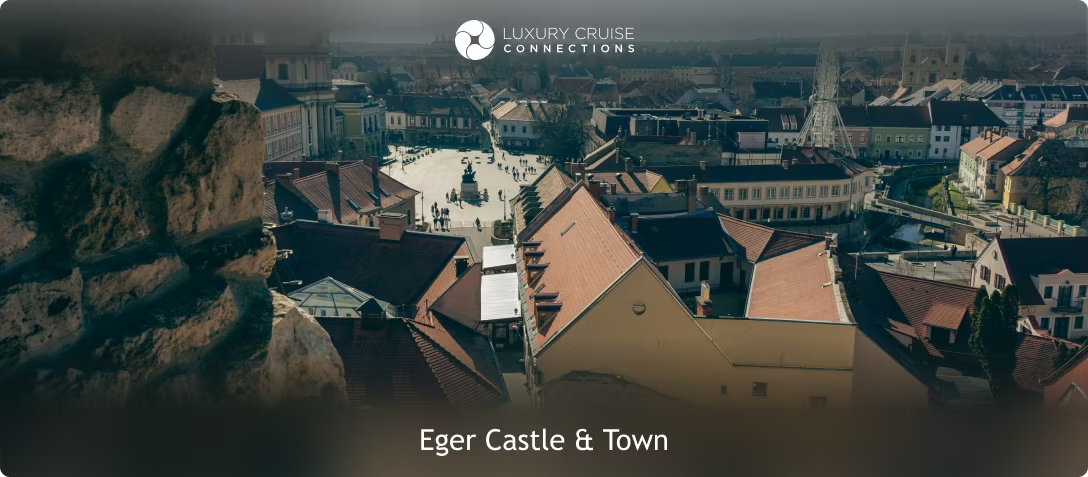
    The medieval town of Eger is a historic 1,000-year-old city in northern Hungary known for its baroque architecture, medieval castle complex, thermal baths, and Ottoman heritage. Visiting Eger offers travelers a well-preserved glimpse into Hungary’s past, anchored by its 13th- century fortress and ecclesiastical structures. The town of Eger is located between the Mátra and Bükk mountains and requires a 1.5-2 hour drive from Budapest. Eger is considered the most attractive and interesting city in northeast Hungary. It is a city defined by a turbulent history, its famous "Bull's Blood" red wine, and a wealth of Baroque architecture.
    Visit the medieval town of Eger

    Highlights of the medieval town of Eger include the Eger Castle (Egri Vár), where Hungarian defenders resisted Ottoman forces in the 16th century. Another Eger highlight is the 40-meter-tall Minaret of Eger, a rare surviving piece of Islamic architecture in Hungary. Another highlight is the Basilica of Eger, one of Hungary’s largest churches with neo-classical columns and frescoes. Another key attraction of Eger is Dobó István Square, the main plaza framed by ornate façades and lively cafés.

    A visit to the medieval town of Eger offers a rich cultural and historical journey through one of Hungary’s most storied regions. Visitors walk through its baroque Old Town, then climb the fortress walls of Eger Castle for sweeping views of the valley. They descend into historic cellars to sample the region’s famed Bull’s Blood wine (Egri Bikavér). Travelers tour the ornate interiors of the Minorite Church, rest in shaded squares like Dobó István tér, and shop for local crafts along narrow lanes.

    The best time to visit the medieval town of Eger is May to October, when the weather is warm and outdoor cafes and wine cellars are in full swing.

    Local history guides lead tours of the medieval town of Eger and offer insights into its castle battles, baroque heritage, and long winemaking traditions.

    Most public spaces in the medieval town of Eger are free to visit

  • Relax at Lake Balaton, Central Europe's largest lake

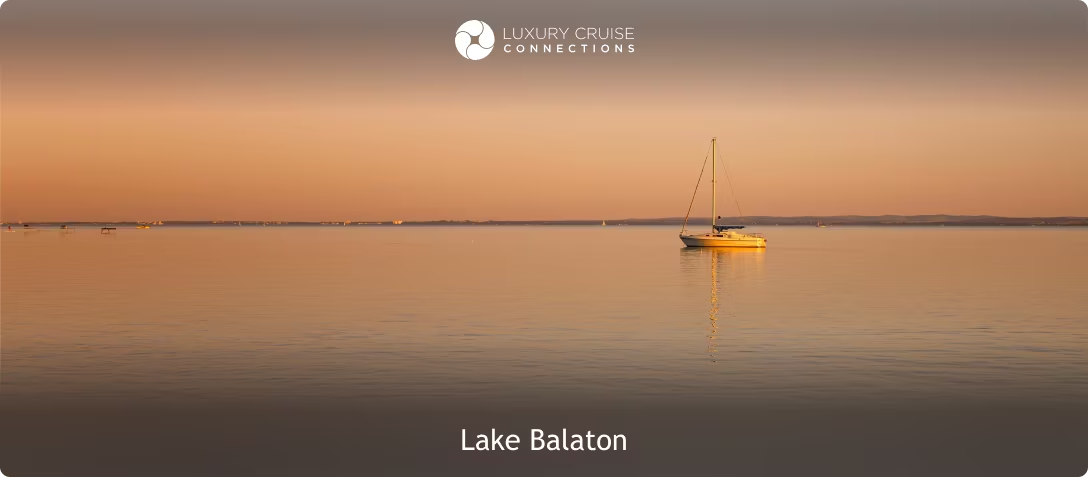
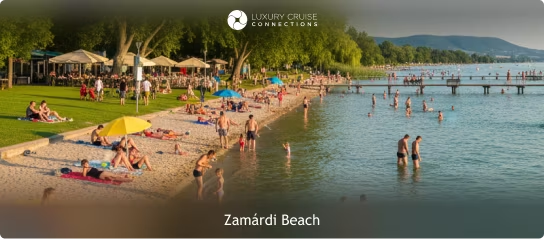
    Lake Balaton, often called the Hungarian Sea, is the largest body of inland water in Central Europe and a popular relaxing lakeside escape. Lake Balaton spans 231 sq miles and is 48 miles long. Lake Balaton remains one of Hungary's most vital tourist attractions and is renowned for its picturesque landscapes and diverse water-focused recreational opportunities. Lake Balaton is located in western Hungary, stretching across the Transdanubian region. Visitors come here to swim, sunbathe, and unwind at beach resorts, especially in towns like Siófok, Balatonfüred, and Keszthely.
    Relax at Lake Balaton, Central Europe's largest lake

    Highlights of Lake Balaton include its long shoreline of family-friendly beaches and resorts. Siófok beach on Lake Balaton is popular for nightlife. Balatonfüred resort town on Lake Balaton is known for 19th-century villas and Tagore Promenade walks. Another key attraction of Lake Balaton is Tihany Peninsula, with its Benedictine Abbey and sweeping views over the water. Another Lake Balaton highlight is the Badacsony wine region, where its basalt slopes are famous for producing respectable white wines like Sylvaner and Riesling. Visitors also enjoy ferry rides, sailing, thermal spas in Hévíz, and peaceful lakeside biking trails that follow the northern and southern coasts.

    Relaxing at Lake Balaton offers a laid-back experience centered on sun, water, and Hungary’s regional charm. Visitors swim in the shallow, warm lake; sunbathe on grassy and sandy beaches; and stroll tree-lined promenades in towns like Balatonfüred. Visitors explore Tihany’s hilltop abbey, view sailboats crossing the lake, and dine at lakefront restaurants serving fish soup (halászlé). Travelers sip local wines in vineyard cellars, join summer festivals, or ride bikes past reed beds and rolling hills. Calm breezes, chirping cicadas, and evening sunsets complete the experience of unwinding in Hungary’s summer capital.

    The best time to relax at Lake Balaton is June to August, when the weather is warm and the lake’s water is ideal for swimming and sailing.

    Local tour guides lead visits around Lake Balaton and provide insights into its historic towns, vineyard culture, and local traditions across both coasts.

    Entry to Lake Balaton is free, but beach access costs $3 - $6 USD, depending on location and facilitie

  • Experience the Hungarian National Museum in Budapest

    The Hungarian National Museum (Magyar Nemzeti Múzeum) is a neoclassical museum and cultural institution widely considered the most important museum in Budapest. Experiencing the Hungarian National Museum is a way to explore the nation’s rich political, cultural, and artistic heritage. The museum is located on Múzeum körút in central Budapest and housed in an 1847 building designed by Mihály Pollack. The museum’s grand staircase, ornate frescoes, and classical columns reflect its national significance as Hungary's oldest public museum.
    Experience the Hungarian National Museum in Budapest

    Highlights of the Hungarian National Museum in Budapest include the permanent exhibition “Hungarians in the Carpathian Basin,” which traces the nation’s evolution from the 9th century onward. Another highlight is the coronation mantle of King Stephen I, a 1031 Byzantine silk vestment decorated with gold embroidery and one of the most revered artifacts in Hungary’s history. Visitors also admire the classical-style façade that evokes classical antiquity and the grand interior staircase that creates a majestic atmosphere. Another key attraction of the Hungarian National Museum is its 65,000 Roman-era collection of mosaics and medieval relics.

    A visit to the Hungarian National Museum in Budapest offers a deep immersion into Hungarian national identity through art, architecture, and history. Visitors enter through a portico supported by Corinthian columns and ascend a monumental staircase before touring chronological exhibits that span prehistory, medieval Hungary, the Ottoman era, and modern revolutions. They view items like royal garments, military flags, Gothic altars, and handwritten historical documents. Guests pause in echoing halls beneath frescoed ceilings and later walk through the museum garden, where plaques and statues commemorate Hungary’s cultural icons

    The best time to experience the Hungarian National Museum in Budapest is spring (April to May) or autumn (September to October), when the weather is mild for enjoying both indoor exhibits and the surrounding garden.

    Museum guides and historical interpreters lead tours of the Hungarian National Museum in Budapest and provide detailed narratives about Hungary’s cultural milestones, artifacts, and the building’s architectural symbolism.

    Admission to the Hungarian National Museum in Budapest costs $11 - $20 USD, depending on the running exhibitions (temporary or permanent). The surrounding museum gardens are free to access.


What are the Most Popular Tourist Attractions in Hungary?

The most popular tourist attractions in Hungary are listed below.

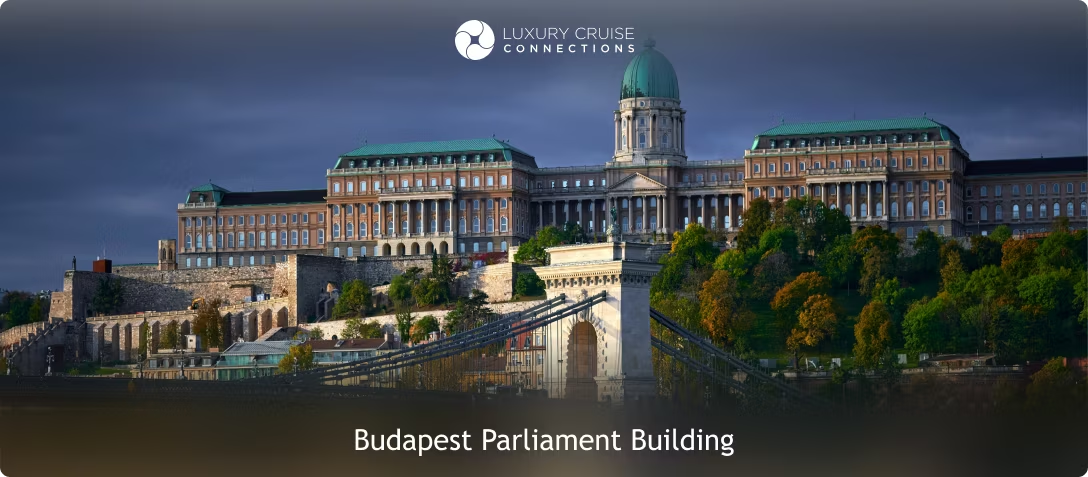
  • Budapest Parliament Building
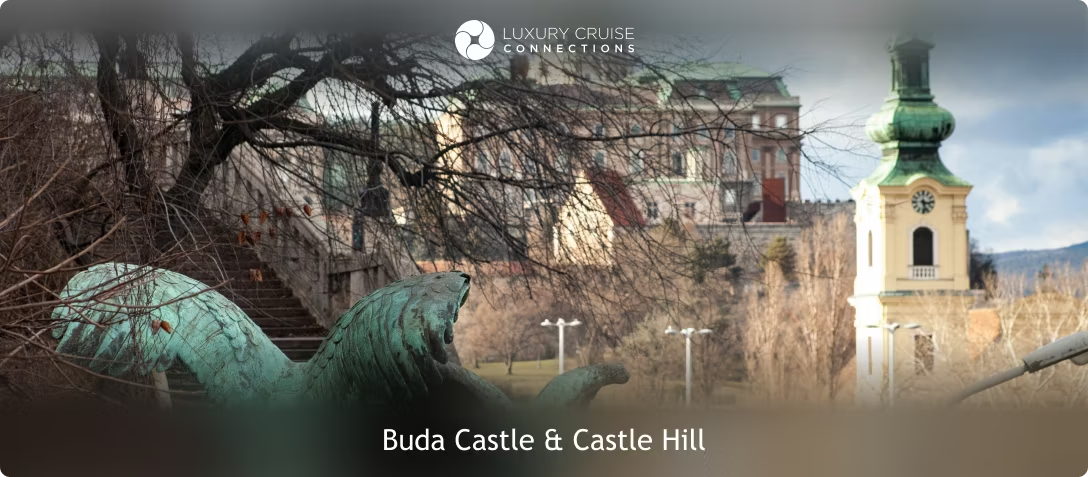
  • Buda Castle & Castle Hill
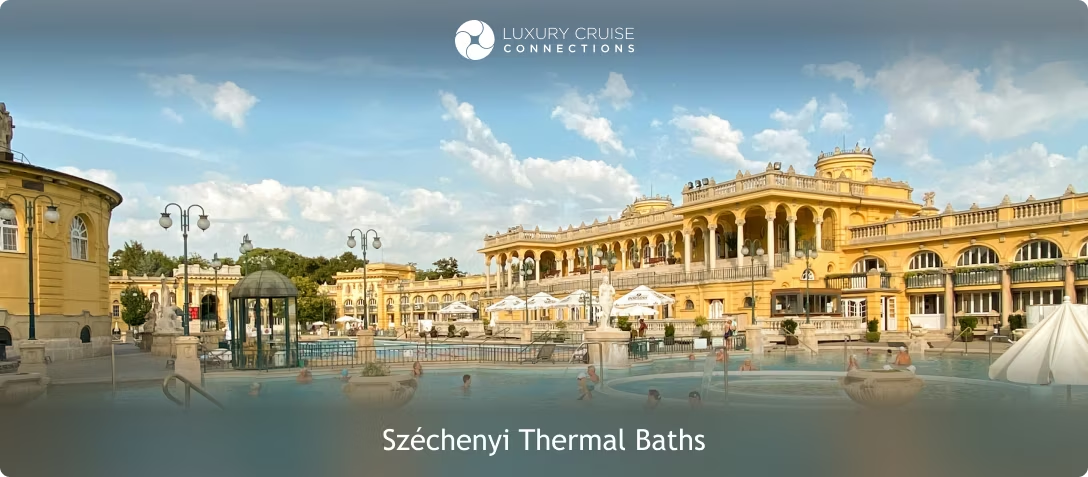
  • Széchenyi Thermal Baths
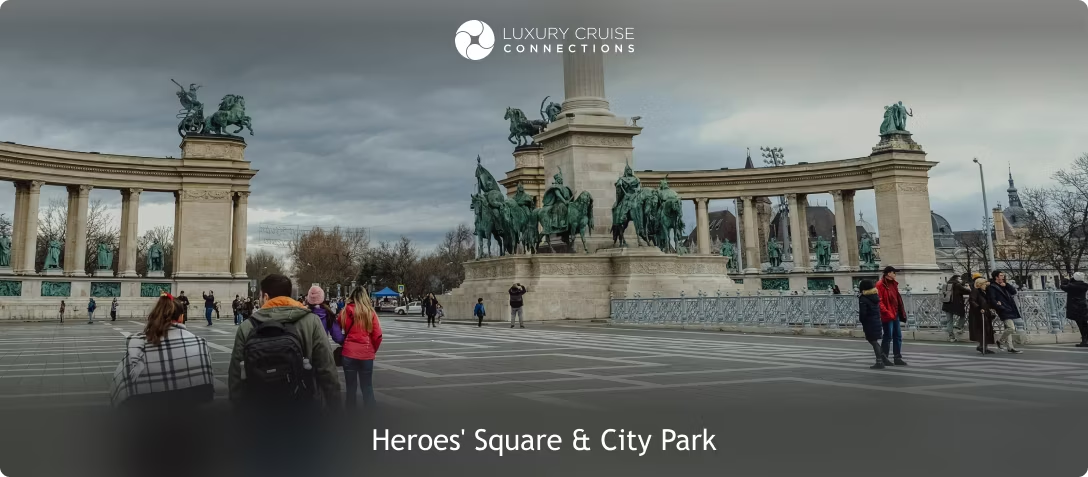
  • Heroes' Square & City Park
  • Lake Balaton
  • Eger Castle & Town
  • Szentendre
  • Budapest Parliament Building

    The Budapest Parliament Building is a Neo-Gothic legislative landmark on the Danube River in Hungary and one of the largest parliament buildings in Europe. The Budapest Parliament Building draws millions of tourists annually for its informative tours, riverside setting and ornate dome.
    Budapest Parliament Building
  • Buda Castle & Castle Hill

    Buda Castle & Castle Hill is a UNESCO World Heritage district in Hungary that includes the Royal Palace, medieval streets, and historic monuments overlooking the Danube. Buda Castle & Castle Hill attracts tourists for its panoramic city views, museums, cobbled courtyards, and concentration of nationally significant landmarks.
    Buda Castle & Castle Hill
  • Széchenyi Thermal Baths

    Széchenyi Thermal Baths in Budapest is one of the largest spa complexes in Europe. Széchenyi Thermal Baths is popular among tourists for its outdoor pools, medicinal mineral waters, and grand Neo-Baroque architecture.
    Széchenyi Thermal Baths
  • Heroes' Square & City Park

    Heroes' Square & City Park is a monumental public space in Budapest, Hungary, commemorating key figures and events in Hungarian history. Heroes' Square & City Park draws tourists for its Millennium Monument, surrounding museums, ceremonial layout, and proximity to green spaces.
    Heroes' Square & City Park
  • Lake Balaton

    Lake Balaton in western Hungary is the largest freshwater lake in Central Europe. Lake Balaton attracts domestic and international tourists for its beaches, sailing culture and summer festivals.
    Lake Balaton
  • Eger Castle & Town

    Eger Castle & Town is a historic fortress and Baroque-era city in northern Hungary, known for its role in resisting Ottoman forces. Eger Castle & Town appeals to tourists for its preserved ramparts, wine culture centered on Egri Bikavér, and compact historic center filled with churches and plazas.
    Eger Castle & Town
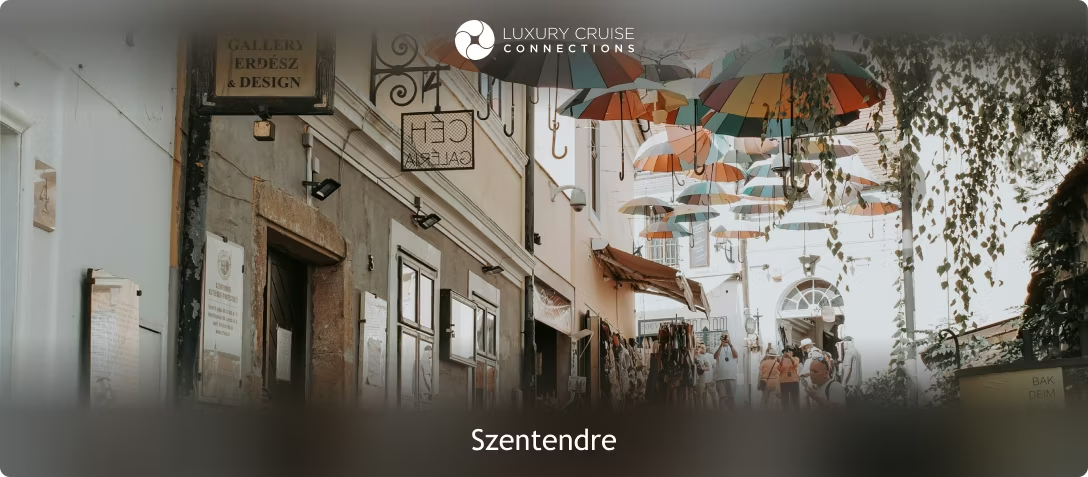
  • Szentendre

    Szentendre is a Hungarian riverside town that is popular for its colorful architecture and artistic heritage. Szentendre draws tourists for its art galleries, museums, Mediterranean-style streets, and relaxed atmosphere that offers an easy cultural escape from the capital.
    Szentendre


Which Vacation Spots in Hungary Are Best for Beach Lovers?

The vacation spots in Hungary that are best for beach lovers are listed below.


What are the Best Things to Do in Hungary for First-Time Visitors?

The best things to do in Hungary for first-time visitors are listed below.

The Hungarian Parliament Building is a Neo-Gothic legislative landmark on the Danube River in Hungary and one of the largest parliament buildings in Europe. Visiting the Hungarian Parliament Building gives first-time visitors a clear introduction to Hungary’s political history and architecture through an informative guided tour.
Buda Castle and Castle Hill is a UNESCO World Heritage district that includes the Royal Palace, medieval streets, and panoramic terraces. Exploring Buda Castle and Castle Hill allows first-time visitors to Hungary to see historic architecture, museums, and sweeping city views in one compact area.
The Danube River Cruise is a sightseeing journey along Hungary’s most important river. Taking a Danube River Cruise helps first-time visitors to Hungary understand the layout of Buda and Pest while enjoying views of major landmarks from the water.
The medieval town of Eger is a historic city in northern Hungary known for its castle, baroque architecture, and wine heritage. Visiting the medieval town of Eger allows first-time visitors to Hungary to combine fortress history, thermal baths, and regional wine tasting in a manageable day trip.
The Great Market Hall is Budapest’s largest indoor market in Hungary and a central hub of Hungarian food culture. Exploring the Great Market Hall helps first-time visitors to Hungary sample local dishes, observe daily life, and purchase traditional products and unique souvenirs in one location.

What makes Hungary a Beautiful Country to Visit?

Hungary is a beautiful country to visit for three reasons. The first reason is Hungary’s spectacular landscapes and river terrain. A visit to Hungary reveals the Danube River, rolling hills in Transdanubia, volcanic buttes near Lake Balaton, vineyard-covered slopes, thermal lakes like Hévíz and broad plains of the Great Hungarian Plain. The second reason Hungary is a beautiful country to visit is the architectural character of its cities and towns. Hungary presents Neo-Gothic landmarks like the Parliament Building, Baroque centers in Eger, and Art Nouveau façades across Budapest and Szeged. Visitors walk through castle districts, cathedral squares, and riverside promenades that preserve centuries of design.

The third reason Hungary is a beautiful country to visit is its thermal water culture. Hungary contains more than 1,000 natural springs and many historic bath complexes built during Roman and Ottoman periods. Visitors relax in outdoor pools at Széchenyi Baths and admire domed bathhouses such as Rudas that combine wellness with architecture.

How can I experience Local Culture in Hungary?

You can experience local culture in Hungary by observing daily routines in Hungary, tasting regional cuisine, exploring historic districts, and attending traditional festivals. Firstly, observe everyday life in Hungary by walking through neighborhood markets and residential streets in Budapest, Debrecen, and Szeged. Visitors watch locals shop for paprika and fresh produce, gather in cafés, and commute along tram lined boulevards. Secondly, eat traditional Hungarian food in family-run restaurants and market halls. Dishes such as gulyás, pörkölt, and chimney cake reflect rural traditions and are served with local wines or fruit brandy known as pálinka. Thirdly, visit local thermal baths and historic coffee houses to understand Hungary’s social customs. Local bathhouses such as Széchenyi and Rudas function as community spaces where generations meet. Local historic cafés in Budapest preserve intellectual traditions linked to writers and composers. Finally, attend local folk festivals and national celebrations like the Busójárás festival in Mohács and Saint Stephen’s Day.

Are there Activities in Hungary Perfect for Families with Children?

Yes, there are activities in Hungary perfect for families with children because the country combines interactive museums, open green parks, shallow swimming areas, and hands-on food experiences. Families visiting Budapest explore Buda Castle and ride the historic funicular while enjoying wide views over the Danube. Visiting the Hungarian National Museum offers chronological exhibits and large halls that make history accessible to young learners. In City Park, families walk through Heroes' Square and Botanical Garden. They paddle boats on the park lake near Vajdahunyad Castle and visit the Budapest Zoo located within City Park. Families explore the Great Market Hall to see colorful paprika stalls, taste sweet pastries, and sample traditional snacks that introduce children to Hungarian flavors. Lake Balaton provides shallow southern shores and calm waters that support family-friendly swimming and beginner sailing. The lakeside cycling paths allow families to ride between beaches and small resort towns in a safe and secure setting.

Are there Fun Things to Do in Hungary for Outdoor Adventures?

Yes, there are fun things to do in Hungary for outdoor adventures because the country’s rivers, lakes, hills, and national parks support active exploration in every season. Lake Balaton offers sailing, windsurfing, open water swimming, and long distance cycling along its 200km shoreline path. The Danube River supports kayaking through the Danube Bend, canoe touring near Szentendre, and riverside hiking above Visegrád Castle. In northern Hungary, hikers climb through Bükk National Park and follow marked forest trails across limestone ridges and caves. Aggtelek National Park offers fun guided caving tours inside the Baradla Cave system with vast chambers and stalactite formations. In the Mátra Mountains, outdoor enthusiasts summit Kékestető, Hungary’s highest peak. Mátraszentistván and Dobogókő offer fun winter activities like skiing and snowboarding.

Best Things to Do Around the World

Discover the best activities, landmarks, and experiences in every cruise destination and port of call.

Europe Western, Central & Mediterranean
America North, Central, South & Caribbean
Africa & Asia Oceania & Antarctica