10 Best Things to Do in Greece

The 10 best things to do in Greece include visiting the Acropolis of Athens, exploring the Ancient City of Delphi, relax...

add

The 10 best things to do in Greece include visiting the Acropolis of Athens, exploring the Ancient City of Delphi, relaxing on the beaches of Mykonos, discovering the National Archaeological Museum in Athens, and taking a cruise to Santorini. Other Greece highlights include visiting the Temple of Olympian Zeus, experiencing the monasteries of Meteora, going hiking on Mount Olympus, visiting the Palace of Knossos in Crete, and enjoying the lively Plaka district in Athens.

Greece is a European country with ancient history, stunning islands, and fresh Mediterranean cuisine. The range of things to do in Greece includes touring archaeological sites, joining island-hopping cruises, swimming at beaches, and exploring lively neighborhoods. Travelers researching what to do in Greece plan activities like museum visits, guided hikes, boat trips between islands, and partying at the beach. Visitors curious about things to see in Greece find attractions like classical temples, cliffside monasteries and Cycladic villages spread across mainland Greece and Greek islands

  • Visit the Acropolis of Athens
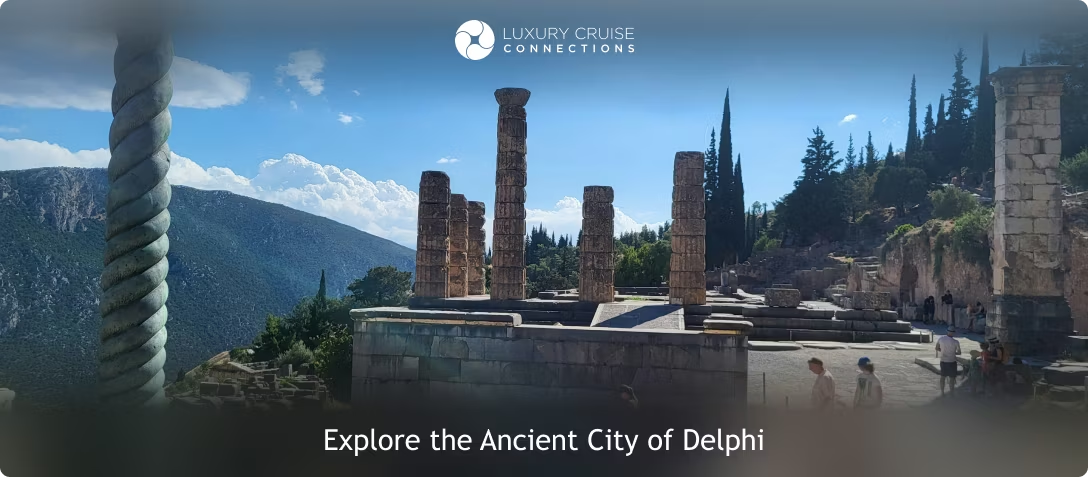
  • Explore the Ancient City of Delphi
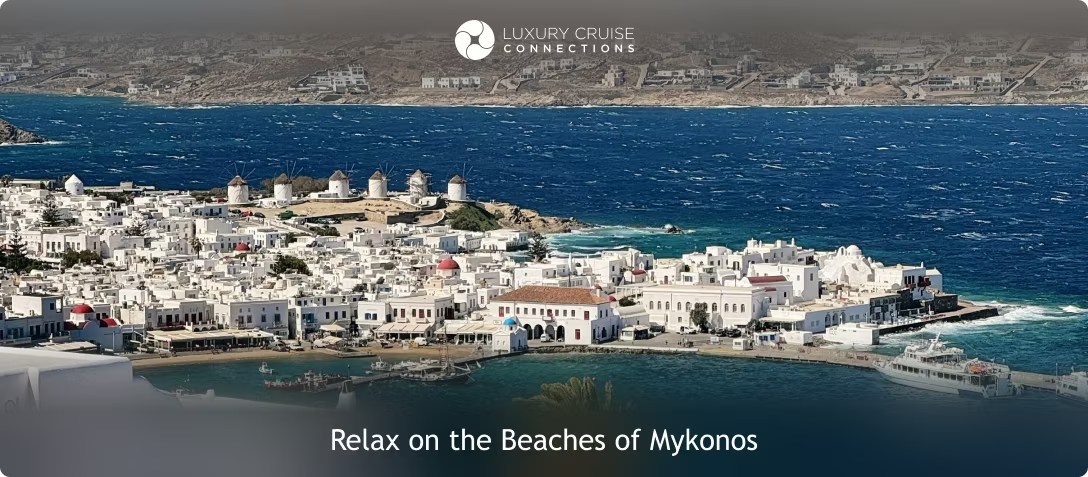
  • Relax on the Beaches of Mykonos
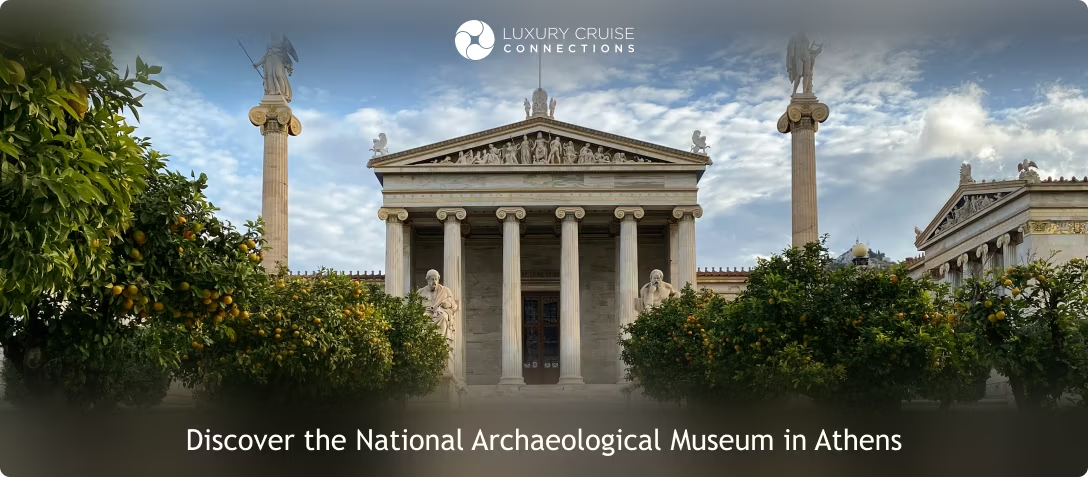
  • Discover the National Archaeological Museum in Athens
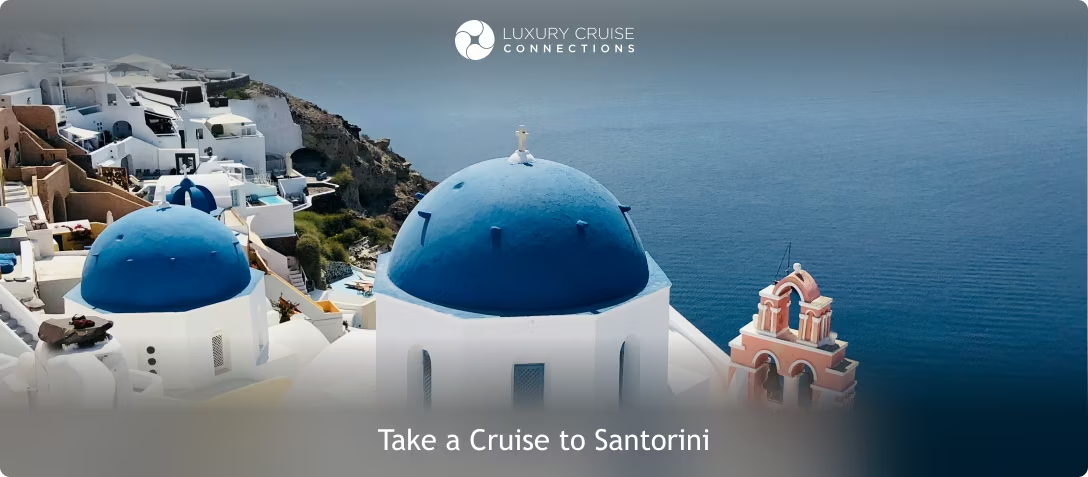
  • Take a Cruise to Santorini
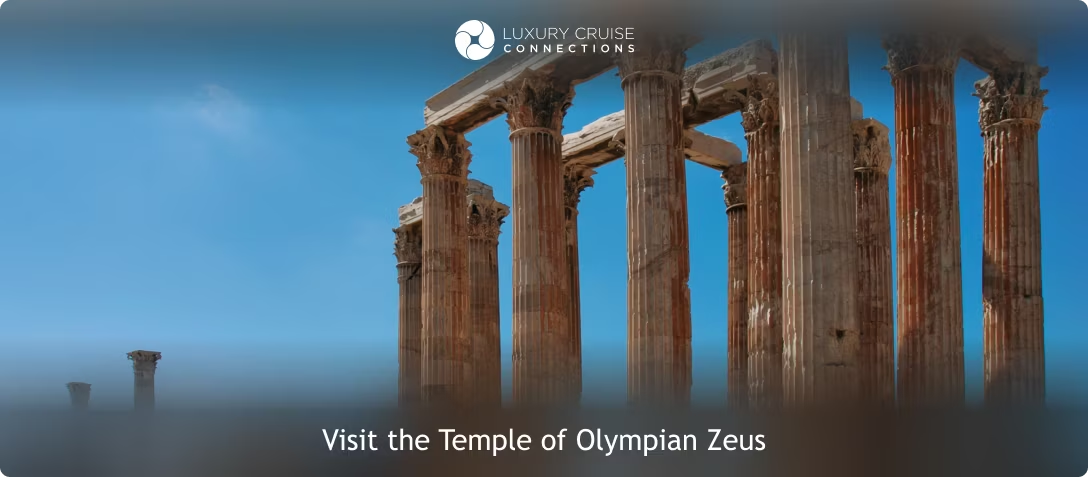
  • Visit the Temple of Olympian Zeus
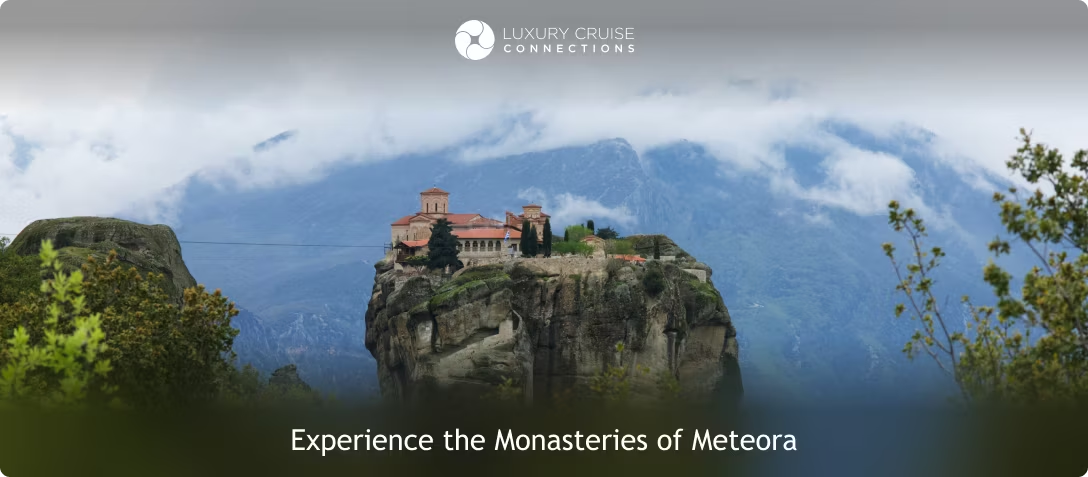
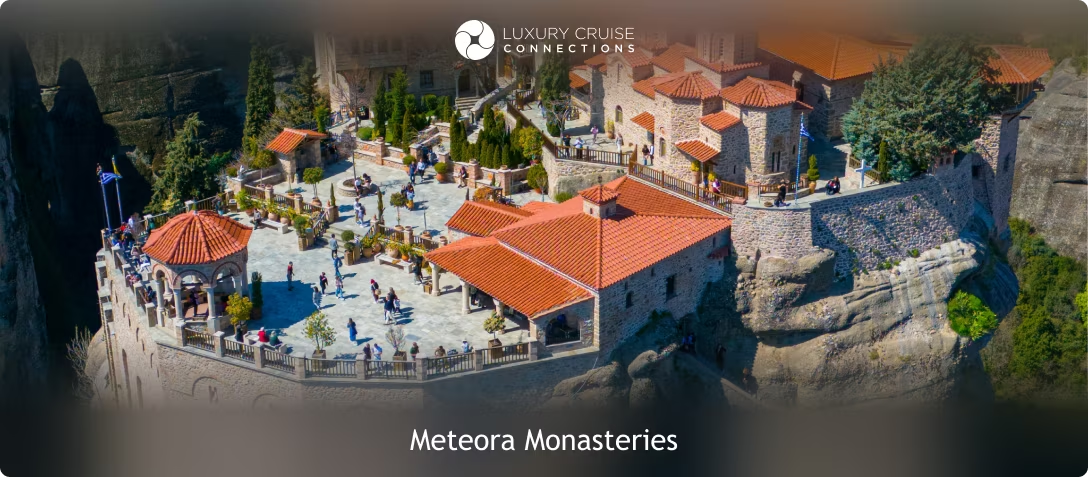
  • Experience the Monasteries of Meteora
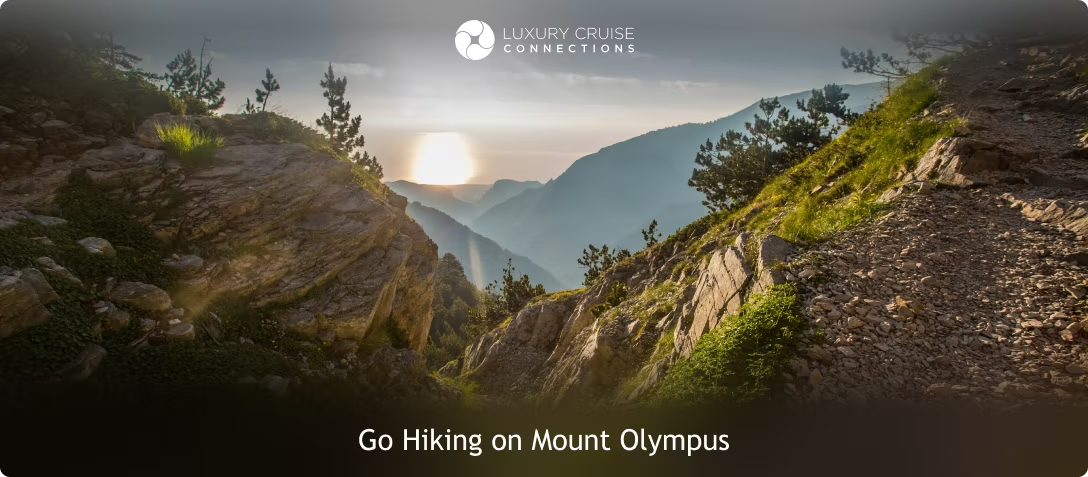
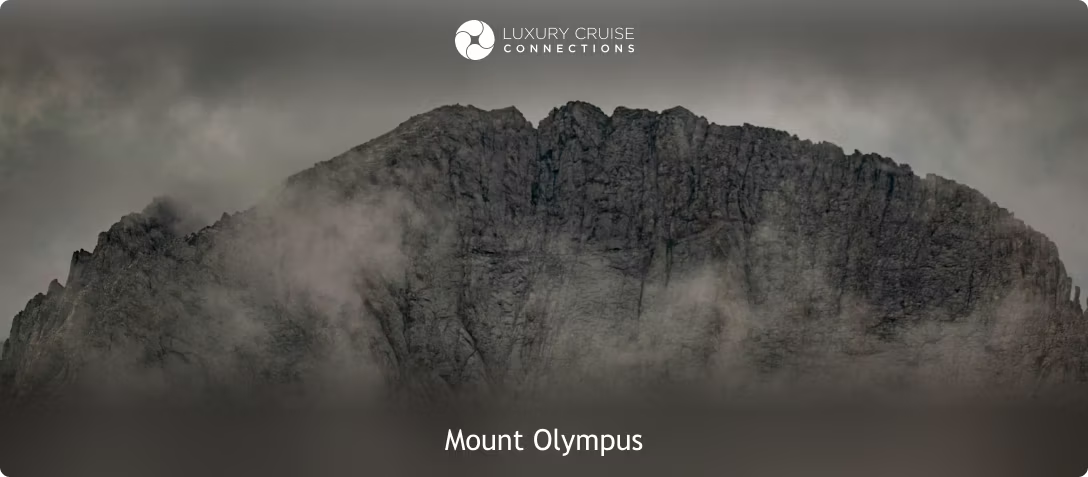
  • Go Hiking on Mount Olympus
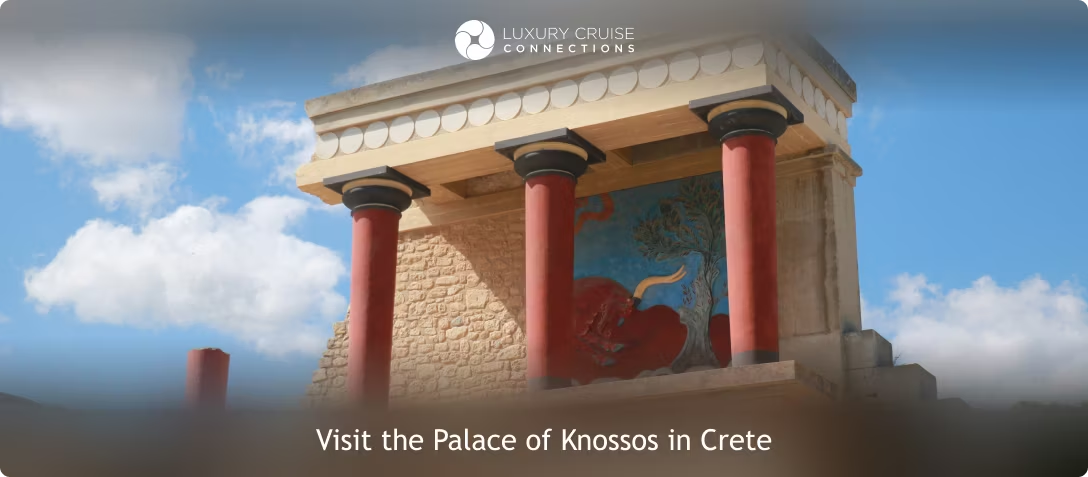
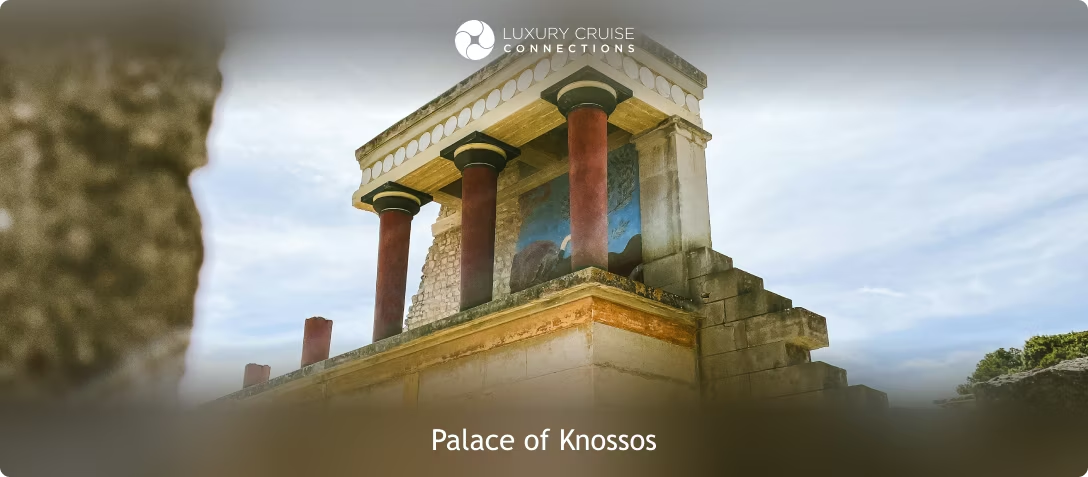
  • Visit the Palace of Knossos in Crete
  • Enjoy the Lively Plaka District in Athens
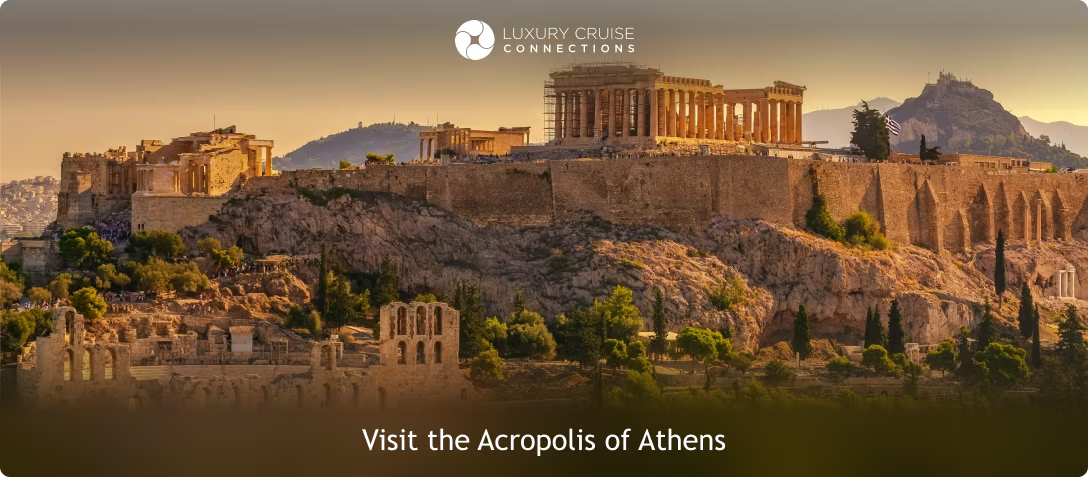
  • Visit the Acropolis of Athens

    The Acropolis of Athens is a fortified limestone hill in central Athens and Greece’s most important ancient site. The Acropolis represents the height of classical architecture and symbolises the birthplace of democracy. The Acropolis’s citadel preserves fifth-century marble structures and stands above modern Athens. The Parthenon and other temples in the Acropolis rest on its summit. The Acropolis holds UNESCO World Heritage status and remains the enduring architectural and cultural emblem of ancient Greece.
    Visit the Acropolis of Athens

    Highlights of the Acropolis include the Parthenon temple. The Parthenon was built to honour Athena and features fluted columns and sculpted friezes. Another Acropolis highlight is the Erechtheion, an Ionic temple known for its asymmetrical plan and six Caryatid figures. Another key attraction is the Propylaea, a monumental marble gateway with restored Doric and Ionic elements. Another highlight of the Acropolis is the Temple of Athena Nike which sits on a bastion overlooking ancient battle routes.

    Visiting the Acropolis is an unforgettable experience that showcases Greece’s classical legacy. Visitors walk uphill past olive trees and reach the Acropolis’s marble entry stair. They pass through the Propylaea gateway into the central plateau. Visitors spend 2-3 hours walking around the Acropolis’s temples and taking in wide views of Athens from the summit of the Acropolis. Tour guides explain the impressive architectural methods used to construct the Parthenon and its sculpted metopes. Visitors typically end their visit at the Acropolis Museum where they admire preserved artefacts and learn about the Acropolis’s original colours.

    The best time to visit the Acropolis in Greece is spring (April-June) and autumn (September-October), when mild weather supports comfortable walking.

    Local archaeological guides lead walking tours in the Acropolis that explain Greek mythology, temple construction, and political history.

    Entry to the Acropolis complex costs $17-35 USD depending on the season, and includes entry to Parthenon, the Erechtheion and the slopes. Guided tours of the Acropolis start from $52 per group. Combination tickets for major Athens sites, including the Acropolis, cost $35 USD.

  • Explore the Ancient City of Delphi

    The Ancient City of Delphi is a mountainside archaeological site in central Greece and an important relic of the ancient world. Delphi served as an ancient religious centre where leaders consulted the Oracle of Apollo. Today, Delphi functions as a major archaeological site for visitors to learn about ancient Greek ritual and prophecy. Delphi’s sacred terraces descend the slopes of Mount Parnassus and offer views over the Pleistos Valley. The ruins of Delphi include temples, treasuries, and a theatre cut into the rock.
    Explore the Ancient City of Delphi

    Highlights of Delphi include the Temple of Apollo where priestesses delivered prophetic messages (oracles) inside a stone chamber. Another Delphi highlight is the Athenian Treasury with sculpted metopes that marked military victories. Another key attraction is Delphi’s ancient theatre that is set above the sanctuary with valley views. Another Delphi highlight is the Tholos of Athena, a circular ruin located at the lower sanctuary.

    Exploring the Ancient City of Delphi allows visitors to follow the route of ancient pilgrims that sought oracles. Visitors begin on the Sacred Way trail and walk past monument bases and preserved treasury walls. They reach the Temple of Apollo and listen to guides explain Delphi’s ancient process of consultation and religious ceremony. Visitors continue uphill to Delphi’s Ancient Theatre and take photos of the stunning view. They visit the Ancient Stadium, stop at inscriptions carved in stone, and drink water from the sacred Castalian Spring where pilgrims once purified themselves. Visitors stop by the Delphi Archaeological Museum to admire the bronze Charioteer, marble statues, and oracle-related artifacts.

    The best time to explore the Ancient City of Delphi is spring (April-June) and autumn (September-October), when mild weather supports sightseeing.

    Local archaeological guides lead tours in the Ancient City of Delphi and provide additional context about key ruins, Greek mythology, cult practices, and regional politics.

    Entry to the Ancient City of Delphi costs $24 USD.

  • Relax on the Beaches of Mykonos

    The beaches of Mykonos are among Greece’s most popular summer destinations. Mykonos’ beaches line the southern coast of Mykonos island and offer the most developed seaside areas in the Cyclades. Mykonos is known for its golden sand, turquoise water, and beachside service that combines natural beauty with modern comfort. Visitors choose from a wide variety of beaches in Mykonos, from full-service party beaches like Psarou and Paradise to calm bays like Agios Sostis and Fokos.
    Relax on the Beaches of Mykonos

    Highlights of the beaches of Mykonos include Psarou Beach, known for calm swimming and luxury beach clubs. Another highlight is Paradise Beach which features DJ sets, cocktails, and a party atmosphere. Another key attraction is Agios Sostis, a quiet undeveloped bay in Mykonos popular for its clear water and relaxed setting. Another highlight is Platis Gialos, with full services and direct water taxi links to other Mykonos beaches.

    Relaxing on the beaches of Mykonos gives visitors an idyllic experience of Greek island life. Visitors swim in clear bays, paddleboard on still water, or snorkel along rocky edges. Some join short boat cruises to Delos or Rhenia for sunset views and swimming. Families build sandcastles, wade in shallow areas, or walk to the nearby windmills. Beach bars serve iced coffee, seafood, and fresh fruit on shaded loungers. At Paradise Beach, guests listen to DJs and join afternoon parties that continue into sunset.

    The best time to visit the beaches of Mykonos is from late May to mid-September, when sea temperatures support swimming.

    Local operators lead boat tours that visit multiple Mykonos beaches and offer transport, timing, and local knowledge. Licensed guides lead snorkeling and diving trips near Mykonos beaches (Lia Beach, Kalafatis Beach, Anna II shipwreck) and provide equipment, safety briefings, and site information.

    Entry to Mykonos beaches is free.

  • Discover the National Archaeological Museum in Athens

    The National Archaeological Museum in Athens is Greece’s largest museum. The museum is housed in a neoclassical building near Omonia Square in central Athens. The National Archaeological Museum is home to the world’s most important collection of ancient Greek artifacts and displays over 11,000 objects from across the Hellenic world. Visitors walk through dozens of marble halls arranged by chronology and region. Athen’s National Archaeological Museum reveals the artistic and material history of Greece from the Neolithic to late Roman periods.
    Discover the National Archaeological Museum in Athens

    Highlights of the National Archaeological Museum in Athens include its five major permanent collections, including “The Collection of Prehistoric Antiquities”, “The Sculpture Collection”, and “Egyptian and Near Eastern Antiquities Collection”. Another highlight is the Mask of Agamemnon, a gold funerary mask from Mycenae. Another highlight is the bronze statue of Poseidon with arms extended mid-throw. Another key attraction is the Antikythera Mechanism, an ancient astronomical device recovered from a shipwreck.

    Discovering the National Archaeological Museum in Athens allows visitors to trace the evolution of Greek art and culture. Visitors walk around labelled galleries and observe artefacts. They learn about the evolution of ancient Greek sculpture from the 7th-century BC to the 5th-century AD. They observe kouroi statues carved in the Archaic period and painted vases from Athens’ golden age. Before leaving, visitors relax at the museum’s garden cafe and shop for souvenirs at the museum gift shop.

    The National Archaeological Museum in Athens is open and enjoyable year-round.

    Certified local guides offer curated tours of the National Archaeological Museum in Athens, focusing on themes like archaeology, sculpture, religion, and burial practices.

    Entry to the National Archaeological Museum in Athens costs $23 USD.

  • Take a Cruise to Santorini

    A cruise to Santorini offers scenic access to the volcanic island of Santorini. Santorini is one of Greece’s most iconic islands and is famous for whitewashed cliffside villages, blue-domed churches, and panoramic caldera views. Santorini is located in the southern Aegean Sea and is typically reached by a 5-9 hour cruise from Athens or nearby islands, depending on the vessel and departure point. Cruise ships to Santorini anchor offshore and tender visitors to the port below Fira. Santorini combines geological history with Cycladic architecture and remains a premier stop on Aegean cruise itineraries.
    Take a Cruise to Santorini

    Highlights of a Santorini cruise include sailing across clear blue Aegean waters under steady sun and mild breezes. Another highlight is the view as the cruise ship approaches Santorini’s caldera cliffs rising 300 metres above sea level. Another highlight is visiting Oia in Santorini, known for narrow streets, white houses, and sunset views. Another key attraction is the archaeological site of Akrotiri, where volcanic ash preserved a Bronze Age town. Another highlight is Perissa beach, which offers black sand, easy shoreline access and Aegean views.

    Taking a cruise to Santorini begins with sailing through open Aegean waters, with wide sea views and steady breezes. Passengers relax on deck as Santorini’s cliffs come into view. Visitors transfer by tender to Fira Port and ride buses or cable cars to Santorini’s clifftop towns. They explore streets lined with art galleries, wine bars, and small churches. Guided tours in Santorini visit Akrotiri, local vineyards, and caldera viewpoints. Visitors swim at volcanic beaches and dine at tavernas overlooking the sea. Cruise passengers return by sunset for their ship departure.

    The best time to take a cruise to Santorini is from late April to early October, when seas are calm and views are clear.

    Local guides lead cruises to Santorini and organize shore excursions that include visits to archaeological sites, local wineries, and caldera viewpoints.

    A day cruise to Santorini costs between $80 - $500 USD depending on the vessel type, group size, tour duration, and inclusions. Shore excursions in Santorini cost between $50 and $160 USD per person depending on activity, group size, tour duration, and inclusions.

  • Visit the Temple of Olympian Zeus

    The Temple of Olympian Zeus is a monumental Corinthian temple ruin and one of Greece’s largest ancient structures. The Temple of Olympian Zeus (also known as Olympieion, or Columns of the Olympian Zeus) is located in central Athens near the Acropolis. Temple construction began in the sixth century BC under Athenian tyrant Peisistratus and took seven centuries to complete. The temple honoured Zeus, king of the Olympian gods. Today, visitors walk among ruins and towering columns that once supported a roof over 100 metres long. Olympieion remains a major archaeological site and reflects how the cult of Zeus shaped both civic and imperial identity in Greece.
    Visit the Temple of Olympian Zeus

    Highlights of the Temple of Olympian Zeus include 16 preserved Corinthian columns that are each over 17 metres tall and feature fluted shafts and ornate capitals. Another highlight is the Olympieion temple’s grand scale, which originally included 104 columns that formed a vast rectangular colonnade. Another key attraction is the Arch of Hadrian nearby, a Roman monument marking the boundary between ancient Athens and its imperial quarter. Another highlight are the nearby ruins of the Themistoclean Wall.

    Visiting the Temple of Olympian Zeus introduces visitors to one of the greatest masterpieces of the ancient Greek world. Visitors typically spend an hour at the Olympieion site and combine it with a visit to nearby sites, like the Acropolis. They walk between immense columns and photograph temple ruins with the Acropolis visible in the background. Visitors marvel at the ‘Stone Chronicle’ carvings on the columns that once marked noteworthy events like natural disasters. Tour groups at the Temple of Olympian Zeus listen to guides tell stories about the temple’s long construction, Greek mythology, and Roman patronage

    The best time to visit the Temple of Olympian Zeus is spring (April-June) and autumn (September-October), when mild weather supports exploring outdoor ruins.

    Local archaeological guides lead tours of the Temple of Olympian Zeus and provide details on its construction, scale, and role in religious life.

    Entry to the Temple of Olympian Zeus costs $5-$10 USD depending on the season. Combination tickets for major Athens sites, including the Temple of Olympian Zeus cost $35 USD.

  • Experience the monasteries of Meteora

    The monasteries of Meteora are a group of medieval Eastern Orthodox complexes built on tall sandstone pillars. Visiting Meteora is a rare chance to see how Orthodox monks in Greece built places of worship in extreme isolation. Meteora is a UNESCO World Heritage Site and remains a working spiritual centre. The Meteora site once held 24 monasteries built between the 14th and 16th centuries. Only six monasteries remain active and open to visitors today. The Meteora monasteries are located near the town of Kalambaka and combine spectacular views, geology and Byzantine religious architecture. Visitors climb staircases cut into rock and enter chapel interiors filled with frescoes, relics, and icons.
    Experience the monasteries of Meteora

    Highlights of the monasteries of Meteora include the Holy Monastery of Great Meteoron, the largest and oldest complex with a vaulted refectory and museum. Another highlight is Varlaam Monastery, known for its preserved tower and painted dome. Another key Meteora attraction is the Holy Trinity Monastery, reached by footpath and known for its dramatic setting used in film. Another highlight of Meteora is Rousanou Monastery, popular for its easier access and floral courtyards.

    Experiencing the monasteries of Meteora is a mix of spiritual discovery, scenic walking, and Greek religious history. Visitors drive through the Thessalian plains to reach towering rock spires above Kalambaka. They marvel at the views of Meteora’s monasteries that appear to float in the air above vertical cliffs. They climb worn stone steps carved into the rock to reach each monastery. Visitors enter chapels filled with frescoes and browse small museums with manuscripts, vestments, and religious relics. They pause at viewpoints along cliff paths to photograph Meteora’s unique peaks and valleys. Adventure-seekers hike Meteora’s old footpaths and explore hidden hermit caves and former monks' cells.

    The best time to visit the monasteries of Meteora is spring (April-June) and autumn (September-October), when weather is pleasant for walking and views are clear.

    Local guides lead walking tours of the monasteries of Meteora and explain their history, geology and spiritual significance.

    Entry to the monasteries of Meteora costs $6 USD per monastery, paid in cash.

  • Go Hiking on Mount Olympus

    Mount Olympus is Greece’s highest mountain and the mythological home of the 12 Olympian gods. Mount Olympus rises along the eastern mainland and borders the regions of Thessaly and Macedonia. Mount Olympus is 2,917 metres high and has three main summits: Mytikas, Stefani and Skolio. Visitors go hiking on Mount Olympus’s marked trails through rare alpine ecosystems like forested ridges, alpine meadows, and rocky summits. Mount Olympus lies within Olympus National Park and remains Greece’s most iconic trekking destination.
    Go Hiking on Mount Olympus

    Highlights of hiking Mount Olympus in Greece include the Enipeas Gorge trail, which passes waterfalls and wooden bridges. Another highlight is Skala Peak, a wide ridge at 2,866 metres with panoramic views and steep drop-offs. Another key attraction is Mytikas, the highest summit of Mount Olympus that is reached by scrambling from Skala Peak. Another highlight is reaching the Plateau of the Muses, surrounded by high cliffs and refuge huts. Another highlight is the alpine zone with rare wildflowers, kestrels, and rock formations.

    Going hiking on Mount Olympus is a rewarding experience that combines outdoor adventure with Greek mythology. Visitors start their Mount Olympus hiking experience from the town of Litochoro, where they take a vehicle up to Prionia. Hikers ascend the scenic E4 trail through pine forests, streams and deep gorges. They pause at refuges like Spilios Agapitos for basic lodging and meals. Trekkers rest at shelters before sunrise climbs to Skolio or Mytikas. From the summit, visitors view the Aegean coast and Thessalian plain. Hikes in Mount Olympus range from single-day summits to three day hikes.

    The best time to hike Mount Olympus is from mid-June to late September when trails are dry and snow-free.

    Local guides lead hikes on Mount Olympus and provide safety briefings, gear and summit planning. Trek guides also explain terrain features, weather shifts, and Olympian mythology.

    Entry to Mount Olympus is free. Guided hikes of Mount Olympus cost between $170 - $1000+ USD depending on the hike duration (single day or multi-day), route, and group size.

  • Visit the Palace of Knossos in Crete

    The Palace of Knossos is a Bronze Age archaeological site and the largest Minoan palace in Crete, Greece. The Palace of Knossos is famous for its association with the Greek myth of the Minotaur, a half-man, half-bull creature imprisoned in a maze by King Minos. Visitors are able to explore Knossos’ labyrinth-like corridors, chambers and restored frescos. The Knossos Palace served as a political and ceremonial centre for the Minoan civilisation, which flourished from 2000 to 1400 BC. Knossos offers insight into Europe’s earliest advanced society and remains the most visited site on the island of Crete.
    Visit the Palace of Knossos in Crete

    Highlights of The Palace of Knossos include its labyrinthine layout that inspired the myth of Theseus and the Minotaur. Another highlight of Knossos is the Throne Room, with a carved stone seat and restored wall frescoes. Another Knossos highlight is the Grand Staircase that links upper and lower levels with red-painted columns. Another key attraction is the Queen’s Megaron, with dolphin frescoes and ceramic bathtubs. Another highlight of The Palace of Knossos is the Central Court, once used for public ceremonies and surrounded by administrative wings.

    A visiting to the Palace of Knossos combines myth, mystery and archaeological wonder. Visitors follow maze-like paths between the Knossos’ reconstructed rooms and open courtyards. Licensed guides at Knossos explain Minoan symbols, building techniques, and the palace’s rediscovery by Arthur Evans. Visitors examine painted frescoes, storage jars, and plumbing systems that show early urban planning in Greece. They browse the exhibits at the Heraklion Archaeological Museum to view the artifacts of Knossos.

    The best time to visit the Palace of Knossos is spring (April-June) and autumn (September-October), when mild weather supports exploring archaeological sites.

    Local guides lead tours of the Palace of Knossos that explain Minoan mythology, palace layout, and archaeological interpretations of key spaces.

    Entry to the Palace of Knossos costs $23 USD per adult.

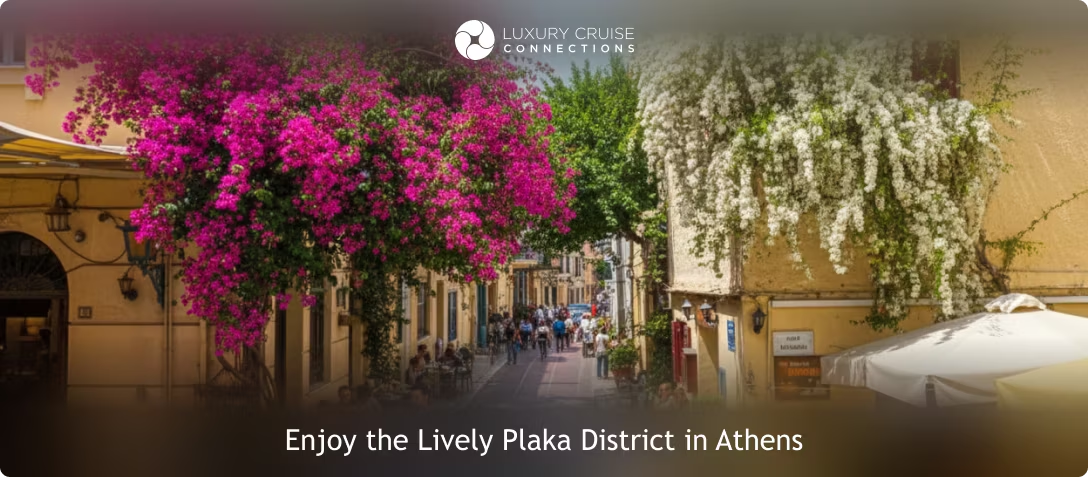
  • Enjoy the lively Plaka district in Athens

    The Plaka district is the oldest neighbourhood in Athens and known as “Neighborhood of the Gods” because of its close proximity to the Acropolis. Plaka offers a lively mix of cafes, tavernas, squares, flower-lined alleys, and small shops in a compact pedestrian setting. It also preserves narrow stone streets, ancient ruins, neoclassical houses, and Byzantine churches. Visitors wander through Plaka’s shaded alleys and open terraces with views of the Parthenon. The Plaka district blends Greek daily life with layers of history, making it one of the most engaging areas in Athens to explore on foot.
    Enjoy the lively Plaka district in Athens

    Highlights of the Plaka district include Anafiotika, a hillside area of whitewashed houses and flower-lined alleys. Another highlight is Plaka’s range of museums, including the Museum of Greek Folk Art, the Museum of Greek Children's Art, and the Museum of Greek Folk Musical Instruments. Another key attraction is Plaka’s Byzantine churches like Aghia Ekaterini. Another Plaka highlight is the nearby Roman-era sites, including the Roman Agora, Hadrian’s Library, and the Tower of the Winds.

    Enjoying the lively Plaka district in Athens involves wandering through a vibrant district of food, music, and shops. Visitors explore Plaka’s narrow alleys lined with local craft stores selling olive oil and handmade jewellery. They stop at tavernas and dine on grilled meats, local wine, and traditional desserts. Street musicians perform in Plaka’s public squares while people gather at outdoor tables. Visitors also stop at small museums that focus on folk art, children’s artwork, and musical instruments. In the evening, the Plaka district stays active with lit terraces, live music, and bustling restaurant patios.

    The best time to visit the Plaka district in Athens is spring (April-June) and autumn (September-October), when daytime temperatures are pleasant for wandering outdoors.

    Local guides lead walking tours of the Plaka district in Athens and provide additional context on its history, architecture, and religious sites.

    Entry to the Plaka district in Athens is free. Entry to Plaka’s small museums costs between $2-5 USD per entry, depending on the museum.


What are the Most Popular Tourist Attractions in Greece?

The most popular tourist attractions in Greece are listed below.

  • Acropolis of Athens
  • Oia Village in Santorini
  • Delphi
  • Meteora Monasteries
  • Palace of Knossos
  • Mount Olympus
  • Acropolis of Athens

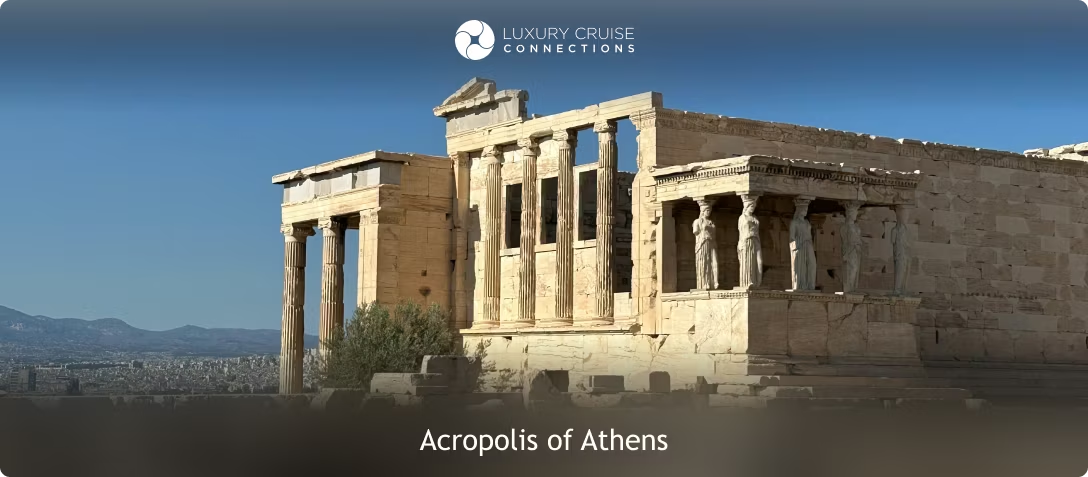
    The Acropolis of Athens is an ancient citadel on a rocky hill in Greece’s capital city. The Acropolis attracts millions of tourists for its well-preserved fifth-century BC temples (the Parthenon, the Erechtheion, the Temple of Athena Nike) which symbolize the height of classical Greece.
    Acropolis of Athens
  • Oia Village in Santorini

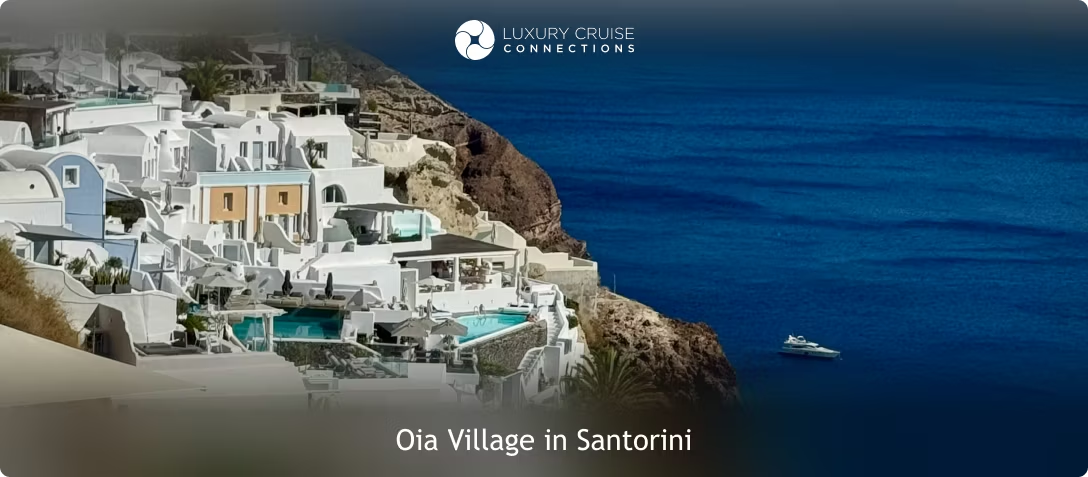
    Oia is a traditional village on the Greek island of Santorini. Oia attracts tourists for its whitewashed buildings, blue-domed churches, and its dramatic location perched on cliffs overlooking the volcanic caldera.
    Oia Village in Santorini
  • Delphi

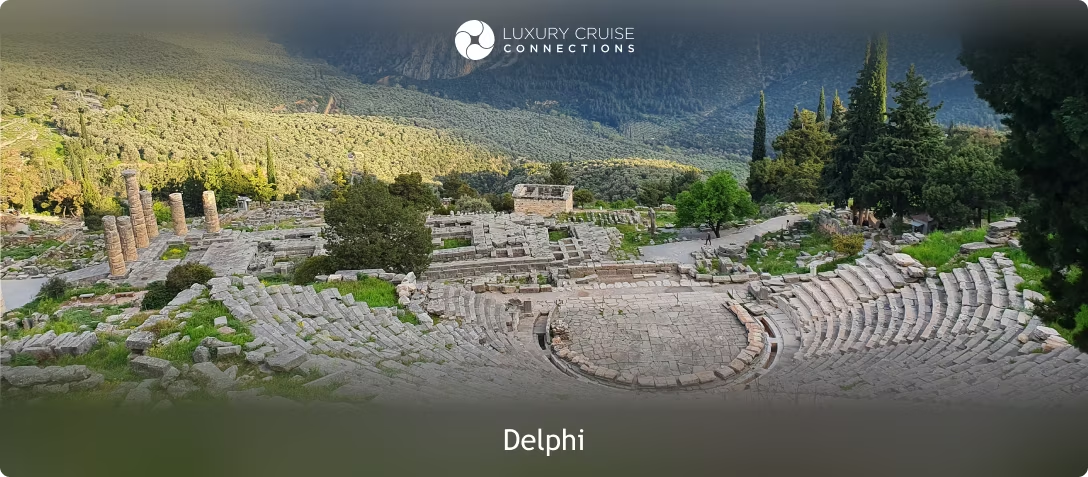
    Delphi is an archaeological site on the slopes of Mount Parnassus in central Greece. Delphi is a popular tourist attraction because it was once considered the religious center of the ancient Greek world and the home of the Oracle of Apollo.
    Delphi
  • Meteora Monasteries

    The Meteora Monasteries are a group of medieval Eastern Orthodox monasteries built atop sandstone rock pillars in central Greece. Meteora is one of Greece’s most visited UNESCO sites and famous for its spiritual tradition, striking architecture, and panoramic views.
    Meteora Monasteries
  • Palace of Knossos

    The Palace of Knossos is a Bronze Age archaeological site and the most significant monument of Minoan civilisation in Greece. The Palace of Knossos attracts tourists for its partially restored frescoes, labyrinthine layout, and connection to the Greek myth of the Minotaur.
    Palace of Knossos
  • Mount Olympus

    Mount Olympus is the highest mountain in Greece and the mythological home of the Olympian gods. Mount Olympus draws hikers, climbers, and mythology enthusiasts.
    Mount Olympus


Which Vacation Spots in Greece Are Best for Beach Lovers?

The vacation spots in Greece that are best for beach lovers are listed below.


What are the Best Things to Do in Greece for First-Time Visitors?

The best things to do in Greece for first-time visitors are listed below.

The Acropolis is an ancient citadel in the center of Athens and one of the most important historical landmarks in Greece. Visiting the Acropolis is a must for first-time visitors because it offers direct insight into Greece’s classical past and is home to the Parthenon, one of the most famous monuments in the world.
Oia is a village on the Greek island of Santorini, known for its white buildings, blue domes, and views over the Aegean Sea. Watching the sunset in Oia is a top experience for first-time visitors because it shows the scenic beauty and calm atmosphere that make Greece’s islands so special.
Greece has a large network of islands connected by ferry routes that travel across the Aegean and Ionian seas. Taking a ferry between Greece’s islands is a great activity for first-time visitors because it offers a simple and scenic way to explore multiple islands in one day.
Delphi is an ancient archaeological site in mainland Greece that was once home to the Oracle of Apollo. Exploring Delphi is ideal for first-time visitors because it combines impressive ruins with mountain scenery and offers a strong connection to Greek mythology and religion.
Crete is the largest island in Greece and features beaches with soft sand and clear water. Relaxing on a beach in Crete is a great way for first-time visitors to enjoy the warm climate and laid-back pace of Greek island life.
Taverns are small restaurants found across Greece that serve local dishes in a casual setting. Visiting a traditional taverna is a great choice for first-time visitors because it introduces authentic Greek food culture in a welcoming atmosphere.
Meteora is a complex in central Greece where monasteries sit on top of tall rock pillars. Touring Meteora is a unique experience for first-time visitors because it combines Greek Orthodox history, unusual landscapes, and panoramic views

What makes Greece a Beautiful Country to Visit?

Greece is a beautiful country to visit for three main reasons. The first reason is Greece’s unique natural environment. Greece offers thousands of island destinations with clear blue water, sandy beaches, and steep cliffs. On mainland Greece, visitors explore pine-covered mountains, olive groves in Crete, dramatic rock formations of Meteora and the volcanic shores of Santorini. The second reason Greece is beautiful to visit is its ancient architecture and archaeological sites. Visitors find spectacular temples, theatres, and sanctuaries from classical Greek times. Sites like the Acropolis in Athens, Delphi in the mountains, and the Palace of Knossos in Crete show Greece’s deep historical roots. The third reason is Greece’s traditional villages across its islands and mountains. Visitors find charming whitewashed homes, narrow alleys, tavernas and churches in Oia, Nafplio and Lindos.

Albania tourism has been growing steadily, attracting tourists interested in experiencing authentic local culture and natural beauty. Albania offers a more budget-friendly option compared to the expensive, overcrowded tourist spots in Croatia and Greece. Travelers enjoy unique things to do in Albania, including Ksamil or hiking in the Albanian Alps. Albania’s combination of history, scenic views, and affordability makes it an appealing choice for tourists seeking a different kind of Mediterranean experience. Making it a strong alternative to Things to Do in Croatia.

How can I experience Local Culture in Greece?

You can experience local culture in Greece by observing daily life, tasting regional food, visiting heritage sites, and taking part in local festivals and traditions. Firstly, experience everyday Greek life by walking through village squares, local markets (Laiki Agora), and neighborhood cafés. Visitors observe locals gathering at kafeneia, shopping for fresh produce, and attending evening church services in Greek towns like Nafplio, Chania, and Thessaloniki. Secondly, eat traditional Greek meals in small tavernas, bakeries, and family-run restaurants. Local dishes like grilled meats, stuffed vegetables, lentil soups, and regional pies are served with local wine or ouzo. Thirdly, visit ancient ruins, Byzantine churches, and folk museums to understand how Greece’s history shapes daily traditions. Greek attractions like the Acropolis, Meteora, and small island museums reveal the links between place, belief, and local identity. Finally, attend local celebrations to experience Greek culture in a lively and authentic way. Local events in Greece such as Easter processions, summer panigyria (village festivals), and island name-day celebrations bring music, food, and community together in public spaces.

Are there Activities in Greece Perfect for Families with Children?

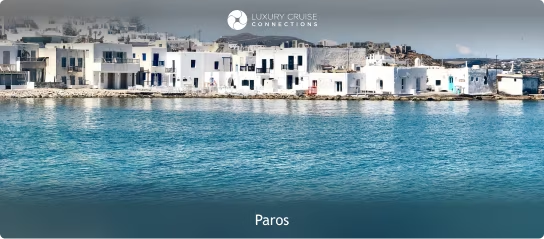
Yes, there are activities in Greece perfect for families with children because the country combines outdoor fun, ancient history, and calm coastal settings. Families visiting Athens explore the Acropolis and listen to stories of Greek gods and heroes. The nearby Acropolis Museum contains child-friendly exhibits that explain ancient Greek life, including a LEGO Acropolis model. In Crete, the Palace of Knossos introduces young travelers to Greek myths such as the Minotaur and the labyrinth. Greece’s Island beaches in Naxos, Paros, and Corfu offer shallow water, soft sand, and family-run tavernas with local food. In Thessaloniki, families with children explore the city's waterfront promenade, science museum, and open-air Byzantine monuments. Boat trips to sea caves in Milos or around Zakynthos give families a close view of the coastline, while older kids try beginner-friendly snorkeling and paddleboarding. Village festivals and small local museums like the Museum of Greek Children's Art offer hands-on learning experiences for all ages.

Are there Fun Things to Do in Greece for Outdoor Adventures?

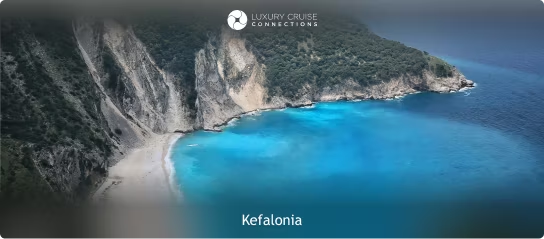
Yes, there are fun things to do in Greece for outdoor adventures because the country offers activities across mountains, gorges, rivers, and open seas. Outdoor adventures in Greece include long gorge hikes in Samaria Gorge on Crete, and Vikos Gorge in Epirus. Mountain regions in Greece support trekking on Mount Olympus from Litochoro, and hiking among the rock pillars of Meteora. Coastal adventure in Greece includes windsurfing and kitesurfing on Naxos, Paros, and Lemnos. Rivers in Greece such as the Voidomatis, Nestos, and Arachthos support rafting and canoeing. Greek islands like Zakynthos, Kefalonia, and Milos support sea kayaking, cave swimming, and scuba diving.

Best Things to Do Around the World

Discover the best activities, landmarks, and experiences in every cruise destination and port of call.

Europe Western, Central & Mediterranean
America North, Central, South & Caribbean
Africa & Asia Oceania & Antarctica