10 Best Things to Do in Germany

The 10 best things to do in Germany include visiting the Brandenburg Gate in Berlin, exploring Neuschwanstein Castle in...

add

The 10 best things to do in Germany include visiting the Brandenburg Gate in Berlin, exploring Neuschwanstein Castle in Bavaria, relaxing at Lake Constance, discovering the Deutsches Museum in Munich, and taking a river cruise on the Rhine River. Other Germany highlights include visiting the Colosseum in Nuremberg, experiencing Black Forest National Park, going on a walking tour of Heidelberg, visiting the Berlin Wall Memorial, and enjoying the Viktualienmarkt in Munich. 

Germany is a central European country with strong regional culture, preserved historical cities, efficient infrastructure, and diverse natural landscapes. The range of things to do in Germany reflects its layered history shaped by medieval heritage and modern creative movements. Travelers planning what to do in Germany explore royal castles, tour major museums, walk historic memorials, and hike through Alpine regions, river valleys, and forested highlands. Visitors seeking the best places to visit in Germany encounter a mix of historic capitals, river valleys, and traditional markets

  • Visit the Brandenburg Gate in Berlin
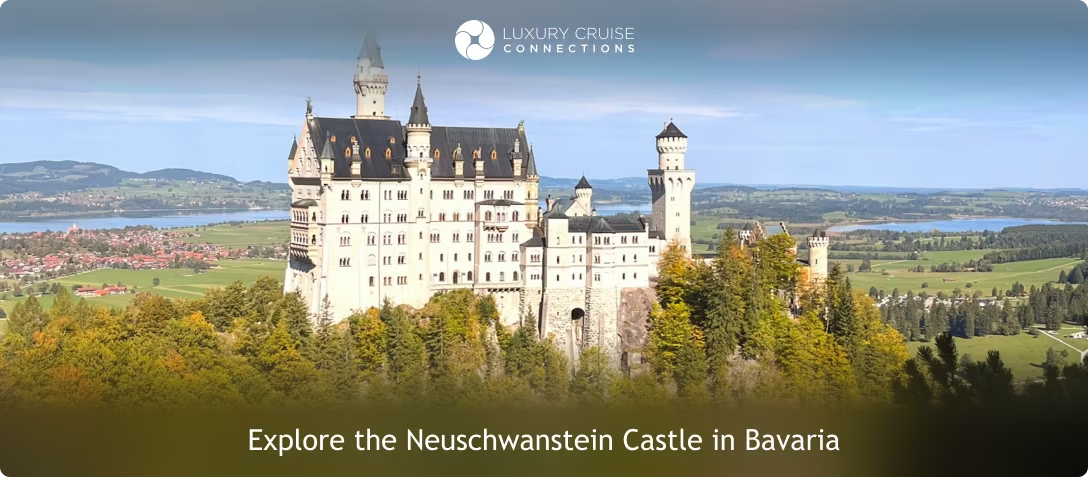
  • Explore the Neuschwanstein Castle in Bavaria
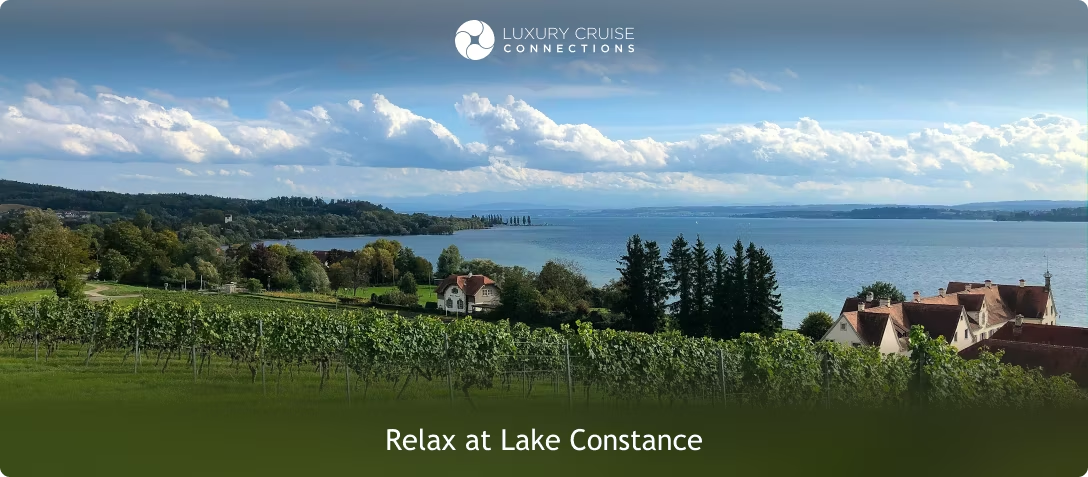
  • Relax at Lake Constance
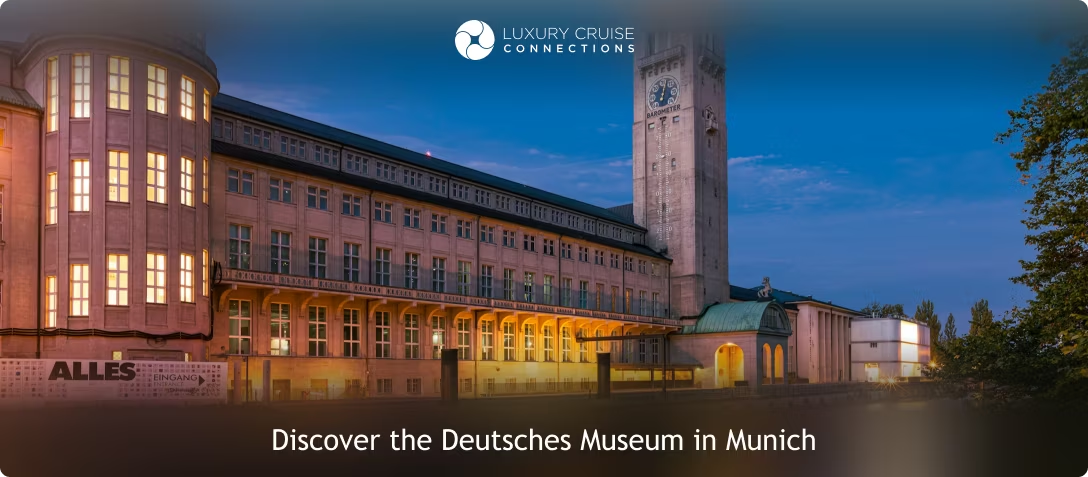
  • Discover the Deutsches Museum in Munich
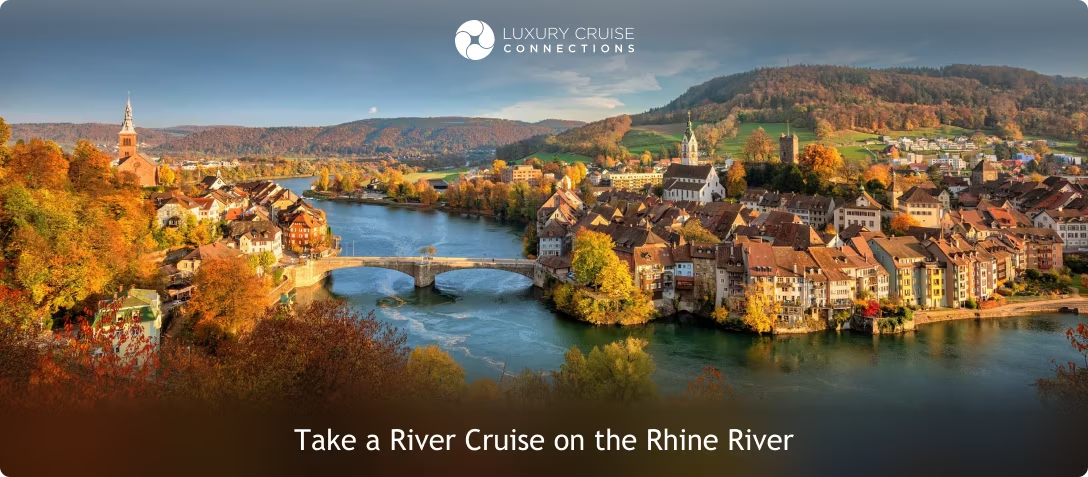
  • Take a River Cruise on the Rhine River
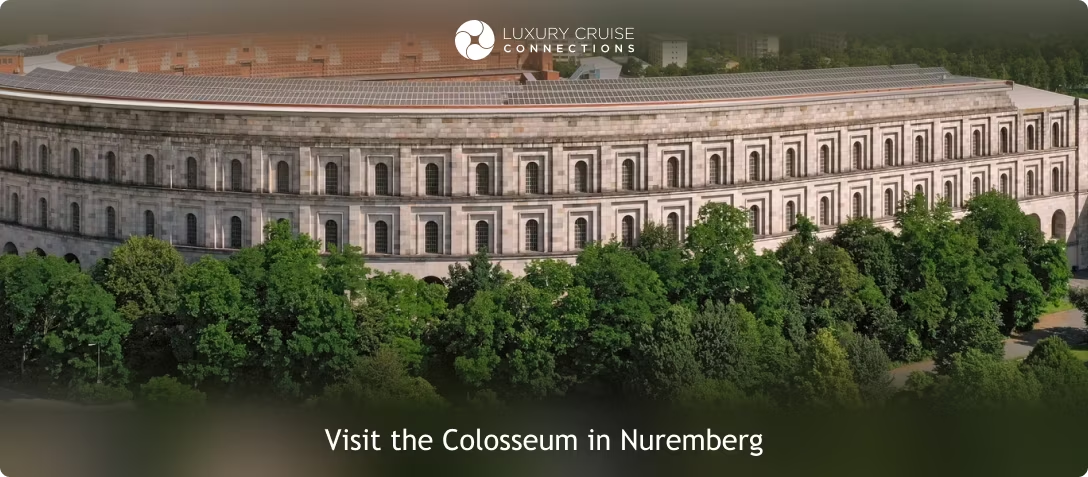
  • Visit the Colosseum in Nuremberg
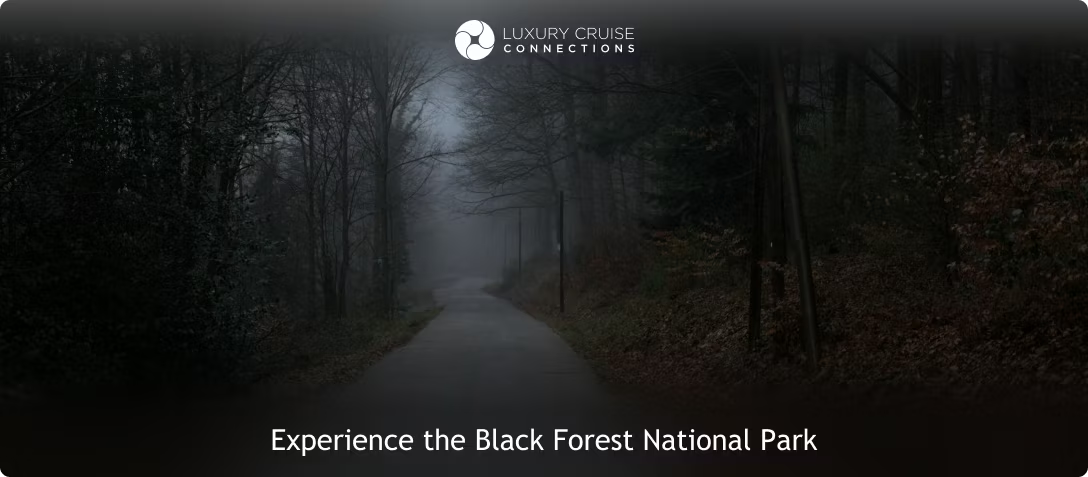
  • Experience the Black Forest National Park
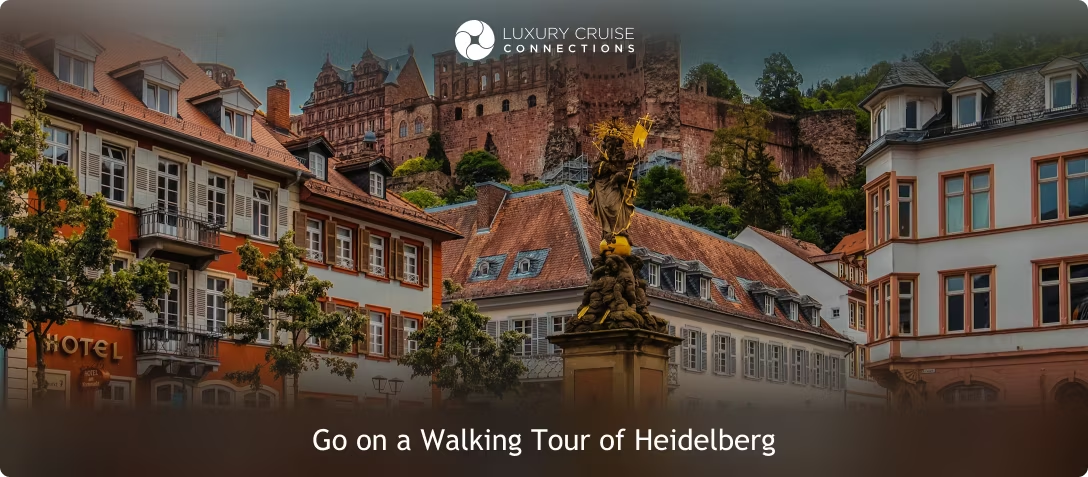
  • Go on a Walking Tour of Heidelberg
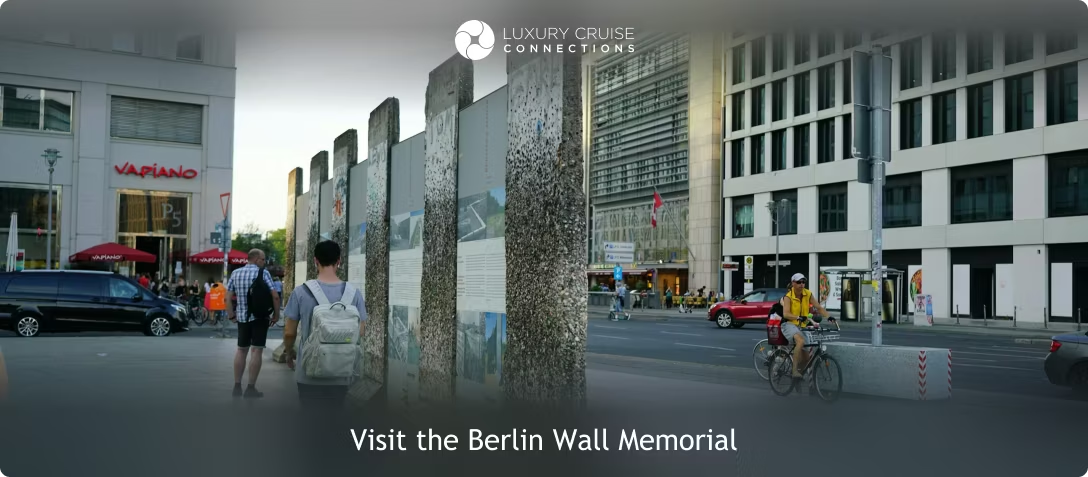
  • Visit the Berlin Wall Memorial
  • Enjoy the lively Viktualienmarkt in Munich
  • Visit the Brandenburg Gate in Berlin

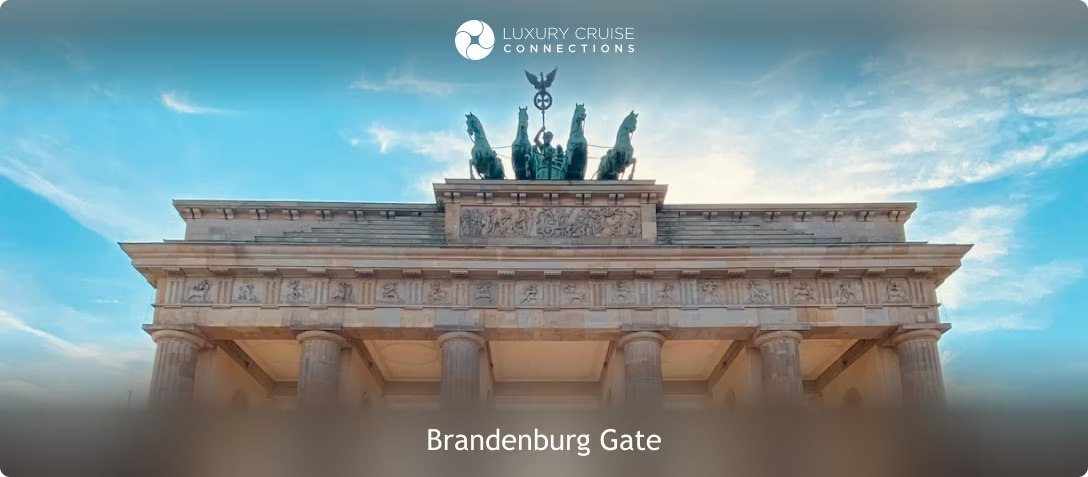
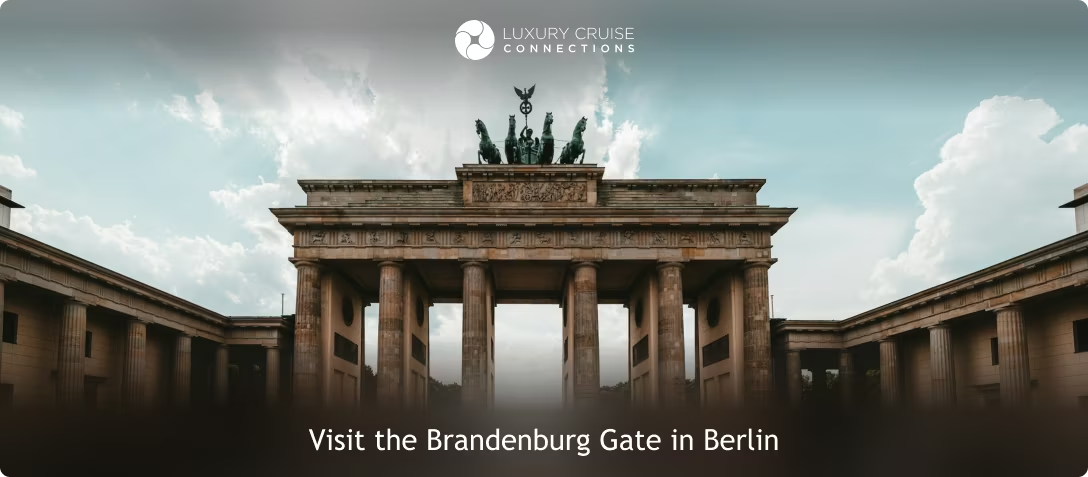
    The Brandenburg Gate is an 18th-century neoclassical monument in Berlin and a well-known national symbol of Germany. Visiting the Brandenburg Gate is a popular thing to do in Germany because of its political and historical significance. Prussian king Frederick William II commissioned the Brandenburg Gate in 1791 as a ceremonial city entrance. The Brandenburg Gate stands at Pariser Platz at the western end of Unter den Linden boulevard. The Brandenburg Gate features twelve Doric columns forming five passageways. The Brandenburg Gate later became part of the border zone between East and West Berlin during the Cold War.
    Visit the Brandenburg Gate in Berlin

    Highlights of the Brandenburg Gate include the rooftop sculpture of a four horse chariot that crowns the Brandenburg Gate. Another highlight of the Brandenburg Gate is Pariser Platz which forms the open ceremonial space in front of the Brandenburg Gate. Another highlight is the Brandenburg Gate’s preserved position along the former Berlin Wall route, marked by plaques and ground lines. The central arch of the Brandenburg Gate also creates one of Berlin’s most recognizable street level views.

    Visiting the Brandenburg Gate connects travelers with a site central to German statehood and reunification. Visitors approach the Brandenburg Gate along the famous Unter den Linden boulevard and enter the open square. They walk beneath the central arch of the Brandenburg Gate which once restricted movement during German division. Visitors pause to read inscriptions by the Brandenburg Gate explaining Napoleonic occupation and Cold War separation. Many then continue on foot from the Brandenburg Gate toward the Reichstag building, Tiergarten park or Holocaust Memorial.

    The best time to visit the Brandenburg Gate is from May to September, when mild weather creates pleasant conditions for walking around the city.

    Licensed local walking guides lead tours of the Brandenburg Gate and explain Prussian history, including events of the Cold War and reunification.

    Access to the Brandenburg Gate is free year-round.

  • Explore the Neuschwanstein Castle in Bavaria

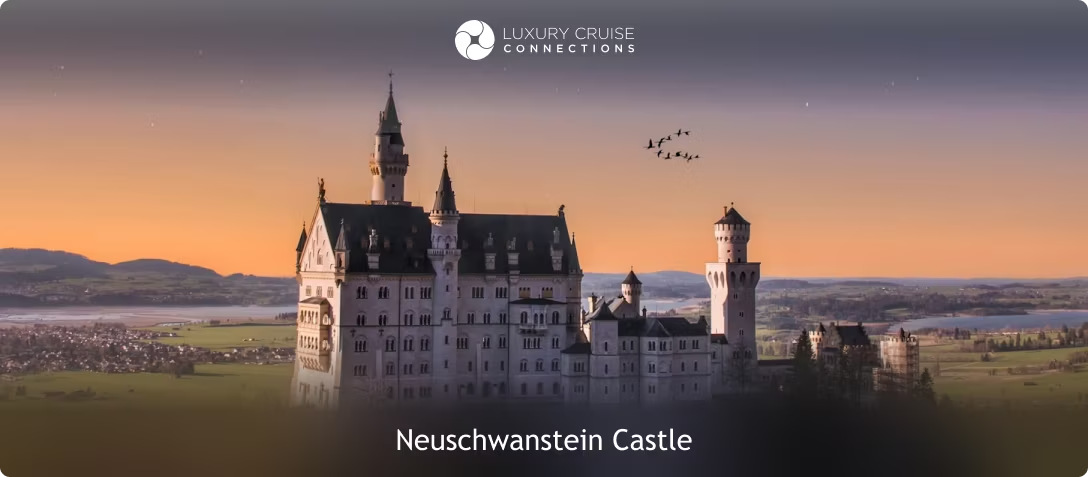
    Neuschwanstein Castle in Bavaria is a famous 19th-century Romanesque Revival palace and one of Germany’s most recognized landmarks. Neuschwanstein Castle is located near the Austrian border in southern Bavaria, Germany. A visit to Neuschwanstein Castle takes visitors on a guided tour through a dramatic hilltop castle. The castle was commissioned in 1869 by King Ludwig II of Bavaria as a personal retreat. Neuschwanstein Castle’s tall towers, ornate interiors, and alpine terraces later influenced the design of fairytale-style castles around the world.
    Explore the Neuschwanstein Castle in Bavaria

    Highlights of Neuschwanstein Castle include its fairytale exterior defined by tall towers, steep roofs, and pale stone walls. Another highlight is the view from Marienbrücke (Mary’s Bridge) which offers the most iconic vantage point over Neuschwanstein Castle. The surrounding Bavarian Alps create a dramatic natural backdrop. Interior highlights of Neuschwanstein Castle include the Singers’ Hall with murals inspired by Wagnerian legends like Tristan and Isolde. Another highlight is the unfinished Throne Hall with its grand Byzantine style design. The richly decorated bedchambers display swan motifs tied to King Ludwig II’s personal symbolism.

    Exploring Neuschwanstein Castle gives visitors access to one of Germany’s most distinctive royal castles. Visitors arrive in the village of Hohenschwangau and walk uphill or ride a shuttle toward Neuschwanstein Castle. Visitors then begin timed guided tours through Neuschwanstein Castle. They move through ornate furnished rooms and learn about King Ludwig II and his vision. After the tour, guests exit the castle and walk to Marienbrücke for panoramic views. Many continue exploring nearby alpine paths or visit Hohenschwangau Castle below.

    The best time to explore Neuschwanstein Castle is from May to September, when mild weather creates pleasant conditions for walking outside the castle.

    Official local guides lead timed tours inside Neuschwanstein Castle and explain royal history, architecture and castle construction.

    Entry to Neuschwanstein Castle costs $25 USD per adult. Children under 18 enter Neuschwanstein Castle free of charge.

  • Relax at Lake Constance

    Lake Constance is a large freshwater lake on Germany’s southern border shared with Austria and Switzerland. Lake Constance is one of Germany’s most important leisure regions and a major destination for domestic travel. Relaxing at Lake Constance combines lakeside leisure with historic towns and alpine scenery. The lake lies at the northern edge of the Alps in the state of Baden Württemberg. Visitors use promenades, ferry routes, and cycling paths to travel along Lake Constance’s shoreline. Medieval towns, island villages, and vineyard slopes line Lake Constance.
     Relax at Lake Constance

    Highlights of Lake Constance include Mainau Island, known for landscaped gardens and seasonal flower displays. Another highlight is Reichenau Island, a UNESCO listed island with early medieval churches. Another highlight is the island town of Lindau, marked by a lighthouse and Bavarian lion statue at the harbor entrance. Another highlight of Lake Constance is Konstanz, which features a preserved old town and historic harbor. Another highlight is Meersburg, home to Germany’s oldest inhabited castle and a medieval streetscape.

    Relaxing at Lake Constance lets visitors slow down and explore Germany’s southern lakeside region at an easy pace. Visitors cruise Lake Constance by ferry to reach Lindau, Konstanz, and Meersburg from the water. Travelers walk through the old town of Konstanz and follow the harbor promenade. Visitors cycle along flat lakeside paths that link towns and vineyard slopes. Guests cross to Mainau Island to explore formal gardens and shaded lakeside paths. Many end the day dining beside Lake Constance with freshwater fish dishes and regional German wines.

    The best time to relax at Lake Constance depends on your preference for activities, and crowd levels. Summer (June-August) is best for swimming and boat trips. Spring and autumn (April-May, September-October) offer mild weather and fewer crowds.

    Local guides lead walking tours of Lake Constance in Konstanz, Lindau, and Meersburg and explain history, art, ecology and local legends. Local cycling guides organize full day routes along Lake Constance’s shoreline.

    Access to Lake Constance promenades and beaches is free.

  • Discover the Deutsches Museum in Munich

    The Deutsches Museum is Germany’s largest science and technology museum and a popular attraction in Munich. The museum is located on Museum Island in the Isar River, close to Munich’s historic center. Visitors explore the Deutsches Museum’s large, interactive exhibitions that explain everyday technologies and scientific ideas in fun ways. The Deutsches Museum also operates the separate Verkehrszentrum, which focuses on cars, trains, and the history of mobility. The Deutsches Museum is popular with families and all travelers seeking an engaging indoor activity in Germany.
    Discover the Deutsches Museum in Munich

    Highlights of the Deutsches Museum include large-scale aviation and space halls with historic aircraft and flight models. Another highlight is the transportation collection in the Verkehrszentrum branch, which traces cars, trains, and mobility systems. Another highlight of the Deutsches Museum is the Chemistry and Physics exhibitions with live demonstrations and working experiments. Another highlight is the Musical Instruments gallery, where visitors observe and test instruments from different cultures. Another highlight of the Deutsches Museum is the Kids’ Kingdom, a hands-on area designed for children aged three to eight.

    Discovering the Deutsches Museum allows visitors to explore Germany’s science and technology heritage through hands-on exhibits. Visitors move between large exhibition halls and choose sections based on interest and time available. They operate working models, observe live demonstrations, and interact with mechanical displays throughout the Deutsches Museum. Families spend time in the Kids’ Kingdom with water play areas and child-friendly experiments. Visitors plan at least half a day, or a full day when combining the main Deutsches Museum with the transportation museum.

    The Deutsches Museum is open and enjoyable year-round.

    Local museum guides at the Deutsches Museum lead tours that cover major exhibitions in about 90 minutes.

    A day ticket to the Deutsches Museum costs $16 USD per adult. A family ticket costs $34 USD and covers two adults and two children (under 18 years of age).

  • Take a River Cruise on the Rhine River

    The Rhine River is one of Germany’s most important waterways and a central travel corridor through western Europe. Taking a river cruise on the Rhine River allows visitors to experience Germany from the water while passing historic cities and countryside. The German stretch of the Rhine flows through regions known for fairytale castles, vineyards, and medieval towns. River cruises follow a calm pace that contrasts with rail or road travel. A cruise on the Rhine River connects visitors to Germany’s countryside, charming medieval towns and modern metropolises
    Take a River Cruise on the Rhine River

    Highlights of a Rhine River cruise include passing through the Upper Middle Rhine Valley, a UNESCO listed stretch known for castles and steep vineyard slopes. Another highlight is passing medieval towns such as Bacharach and Rüdesheim with preserved riverfronts. Another highlight is stopping in major German cities like Cologne to view Cologne Cathedral. Another highlight is passing wine country along the Rhine, where Riesling vineyards line the riverbanks.

    Taking a Rhine River cruise offers visitors a relaxed and immersive Germany travel experience with daily scenery and guided stops. Visitors board a river ship for either a short scenic trip or a multi-day journey down the Rhine. They watch vineyard slopes, hilltop castles, and riverside towns pass from open decks. Visitors step ashore in cities such as Cologne and walk through historic centers with Gothic cathedrals. They explore charming river towns with half-timbered houses and wine cellars. Visitors join guided walks, wine tastings, or short cycling routes during shore stops. They eat regional dishes, pretzels, local beers, and Riesling wines onboard as the ship continues along the Rhine River to their cruise disembarkation point.

    The best time to take a Rhine River cruise is from May to September when mild weather supports deck viewing and shore excursions.

    Local guides lead walking tours, castle visits, and wine tastings during Rhine River cruise shore excursions. Rhine River cruises also feature onboard commentary that highlights landmarks and history along the route.

    Day cruises on the Rhine River cost $20-60 USD per person depending on tour duration, vessel type, and inclusions. Multi-day cruises on the Rhine River cost $300-3,500 USD per person depending on the number of days, vessel type, cabin type, and inclusions.

  • Visit the Colosseum in Nuremberg

    The Colosseum in Nuremberg refers to an unfinished Nazi Congress Hall (Kongresshalle) that was built for mass rallies. The Colosseum stands on the former Nazi Party Rally Grounds on the outskirts of Nuremberg in southern Germany. Visiting the Kongresshalle allows travelers to confront one of the most imposing architectural legacies of the Third Reich. Its Romanesque-inspired stone design was intended to hold fifty thousand people. Construction of the Colosseum in Nuremberg was halted during World War II and the structure has been left deliberately incomplete. Today the Colosseum serves as a place of historical documentation and reflection for anyone visiting Germany.
    Visit the Colosseum in Nuremberg

    Highlights of the Colosseum in Nuremberg include viewing the vast interior of the Congress Hall, where visitors grasp the intended scale of Nazi propaganda architecture. Another highlight is the Documentation Center Nazi Party Rally Grounds which is housed within the structure and which informs visitors about the Nazi reign of terror. Another highlight is the suspended viewing platform that looks out across the interior of the Congress Hall. Another highlight is walking the surrounding rally grounds, including the Great Road and Zeppelin Field remains.

    Visiting the Colosseum in Nuremberg offers a reflective experience focused on Germany’s Nazi-era history. Visitors walk through the unfinished Congress Hall and view its massive stone structure. Inside the Colosseum’s Documentation Center, they follow the permanent exhibition from the rise of the Nazi Party to the Nuremberg Trials. The experience includes original film footage, documents, and personal accounts. From the viewing platform, visitors observe the scale of the space. They continue outside to walk the former rally grounds and view remaining structures like the Great Road and Zeppelin Field.

    The best time to visit the Colosseum in Nuremberg is from May to September when the weather is most comfortable for walking around the outdoor rally grounds.

    Official museum guides lead a variety of walking tours around the Colosseum in Nuremberg. Guides explain selected areas of the exhibitions and provide historical context to the Kongresshalle’s design.

    Entry to the Colosseum in Nuremberg is free. Entry to the Documentation Center within the Colosseum costs $9 USD per adult

  • Experience the Black Forest National Park

    The Black Forest National Park is a protected nature reserve in Baden-Württemberg, southwest Germany. It lies within the larger Black Forest region and is known for dense pine forests, mountain ridges, and spa towns. Experiencing the Black Forest National Park is one of the best things to do in Germany for visitors who enjoy nature, hiking, and regional culture. Black Forest National Park features wild valleys, glacial lakes, and quiet walking trails. Traditional spa towns, forest hamlets, and local workshops near the park continue Germany’s long heritage of woodland living, craftwork, and thermal bathing.
     Experience the Black Forest National Park

    Highlights of the Black Forest National Park include extensive hiking trails through spruce and fir forests. Another highlight is the Baumwipfelpfad Schwarzwald treetop walk near Bad Wildbad with views above the forest canopy. Another highlight is Triberg Waterfalls, one of Germany’s highest waterfall systems. Another highlight is Lake Titisee, which offers boat rides and lakeside paths. Another highlight is the nearby city of Freiburg with its cathedral square and Schlossberg views.

    Visiting the Black Forest National Park is a nature-focused experience that combines forest trails, mountain scenery, and traditional culture. Hikers walk marked paths through spruce and fir forests near Feldberg, Mummelsee, and Ravenna Gorge. They stop at the treetop walk in Bad Wildbad or follow scenic sections of the Black Forest High Road. Families ride mountain coasters or visit open-air museums like Vogtsbauernhof. Others unwind in thermal baths in spa towns such as Baden-Baden or Titisee. Visitors often stop at self-service farm stands, visit waterfalls like Triberg, and enjoy Black Forest cake in village cafés throughout the region.

    The best time to experience the Black Forest National Park is from May to September when trails are clear and weather is mild. The best time to experience snowshoeing and cross country skiing in Black Forest National Park is during Winter (December - February).

    Local guides in the Black Forest National Park lead walks focused on forest ecology and wildlife. In towns like Freiburg and Baden-Baden, local guides offer cultural tours covering history, architecture, and spa traditions.

    Entry to the Black Forest National Park is free. Attractions within Black Forest National Park cost $5-25 USD per activity.

  • Go on a Walking Tour of Heidelberg

    Heidelberg is a historic city in southwest Germany, located on the Neckar River in the state of Baden-Württemberg. Going on a walking tour of Heidelberg is one of the best things to do for travelers interested in Germany’s old towns, river views, and university history. The city’s historic center (Altstadt) stretches beneath the ruins of Heidelberg Castle and links squares, churches, and academic buildings within a walkable area. Heidelberg University (Ruprecht-Karls-Universität Heidelberg) is Germany’s oldest university and gives the city a lively and international atmosphere.
    Go on a Walking Tour of Heidelberg

    Highlights of going on a Heidelberg walking tour include crossing the Alte Brücke for views of the river and castle. Another highlight is visiting Marktplatz with the Church of the Holy Spirit at the center of the Old Town. Another highlight is walking Hauptstraße and nearby alleys filled with shops and cafés. Another highlight is visiting the Old Heidelberg University and the historic Student Prison with its preserved graffiti. Another highlight is the Philosopher’s Walk, which is a route that offers elevated views over Heidelberg and the Neckar Valley.

    Going on a walking tour of Heidelberg is a scenic cultural experience that leads visitors through one of Germany’s most historic university towns. Walking tours typically begin in Heidelberg’s Old Town. Travelers visit the Marktplatz (market square), charming alleyways, and baroque façades and cross the Old Bridge to photograph Heidelberg Castle from the river. Visitors enter university buildings and learn about student traditions in the historic Student Prison. Certain walking tours continue uphill to the Philosopher’s Walk for elevated views across the Neckar Valley. Walking tours of Heidelberg often end at river cafés or local taverns beneath the castle.

    The best time to go on a walking tour of Heidelberg is from May to September when mild weather supports pleasant outdoor exploration.

    Local guides lead a variety of walking tours of Heidelberg, including classic Old Town tours, night tours, and castle walks. Guides provide historical context, assist navigation and tell stories that connect landmarks to Heidelberg’s academic and cultural life.

    Group walking tours in Heidelberg range from free tip-based options to $200 USD per person, depending on tour duration, group size, and any included activities like winetasting.

  • Visit the Berlin Wall Memorial

    The Berlin Wall Memorial (Gedenkstätte Berliner Mauer) is Germany’s central site for remembering the division of Berlin during the Cold War. Visiting the Berlin Wall Memorial allows travelers to see an original section of the former border between East Berlin and West Berlin. The memorial stretches along Bernauer Straße where the Wall once cut through Berlin’s homes and streets. The Berlin Wall Memorial site highlights how political events in Germany shaped the lives of individuals during Berlin’s division.
    Visit the Berlin Wall Memorial

    Highlights of the Berlin Wall Memorial include the preserved wall segment and former death strip (the no-man's land) along Bernauer Straße. Another highlight is the observation tower with views over the reconstructed border fortifications. Another highlight is the Documentation Center, which explains the construction and fall of the Wall through exhibitions and media. Another highlight is the Chapel of Reconciliation, built on the site of a destroyed church. Another highlight is the Window of Remembrance, which honors victims who died attempting to cross the Wall.

    Visiting the Berlin Wall Memorial is a reflective experience that guides visitors through the original setting of the border along Bernauer Straße. Visitors begin at the Visitor Center, where they receive an overview of the memorial grounds and watch an introductory film about the Wall’s history. They walk the outdoor exhibition that explains how the Wall affected daily life. Visitors climb the observation tower for a panoramic view of the preserved border strip and former death strip. They continue into the Documentation Center to explore exhibits and media detailing the construction, division, and fall of the Wall. Visitors finish at the Chapel of Reconciliation and the Window of Remembrance, where the stories of victims are presented in a quiet and contemplative space.

    The best time to visit the Berlin Wall Memorial is from May to September, when mild weather creates comfortable conditions for walking around the outdoor exhibition.

    Local guides lead free public tours that introduce the Berlin Wall Memorial and explain its history. Specialized tours focus on educating visitors on life at Bernauer Straße after the Berlin Wall was built.

    Entry to the Berlin Wall Memorial, Documentation Center, and observation tower is free.

  • Enjoy the lively Viktualienmarkt in Munich

    The Viktualienmarkt is a famous central open-air food market based in Munich, Germany. Enjoying the Viktualienmarkt allows visitors to experience Bavarian food culture within a vibrant historic setting. The Viktualienmarkt market sits beside Marienplatz in Munich’s historic center, near St. Peter’s Church. Viktualienmarkt features over one hundred stalls selling fresh produce, local specialties, and international foods. The Viktualienmarkt also features a central beer garden that reflects Germany’s brewing traditions.
    Enjoy the lively Viktualienmarkt in Munich

    Highlights of exploring the Viktualienmarkt include browsing food stalls selling Weisswurst, pretzels, Leberkäse sandwiches, and Bavarian cheese. Another highlight is the central beer garden, which serves beer from Munich’s major breweries on a rotating basis. Another highlight is browsing stalls with flowers, spices, honey, and specialty products. Another highlight is the decorated maypole and character fountains that mark the center of the market.

    Visiting the Viktualienmarkt offers a lively food and culture experience in Germany’s food capital. Visitors stroll between market stalls selling fresh flowers, regional cheeses, pickles, and hot snacks. Visitors try Bavarian dishes like Weißwurst with sweet mustard, Leberkäsesemmel, or potato pancakes. They relax at shared tables in the central beer garden, where beers rotate by local brewery. Visitors see the colorful maypole, pause at the comedian fountains, and shop for gifts or edible souvenirs. Travellers finish by visiting nearby landmarks like St. Peter’s Church or the Heilig-Geist-Kirche before continuing through the Old Town.

    The best time to visit Viktualienmarkt depends on your preference for weather, atmosphere, and crowd levels. Visit Viktualienmarkt from Spring to Autumn (May to September) for sunny days, beer garden meals, and peak seasonal produce. Visit Viktualienmarkt from December to January for festive stalls and mulled wine.

    Local guides lead culinary walking tours through the Viktualienmarkt, explaining Bavarian dishes, ingredients and market traditions.

    Entry to the Viktualienmarkt is free. Guided food tours usually cost $40-120 USD per person depending on tastings included.


What are the Most Popular Tourist Attractions in Germany?

The most popular tourist attractions in Germany are listed below.

  • Brandenburg Gate
  • Neuschwanstein Castle
  • Cologne Cathedral
  • The Black Forest
  • Heidelberg Castle
  • The Berlin Wall Memorial
  • Europa-Park
  • Brandenburg Gate

    The Brandenburg Gate is an 18th-century neoclassical monument that is one of the most iconic symbols of Germany. The Brandenburg Gate attracts tourists with its grand columns, rich historical significance, and central location near key Berlin landmarks.
    Brandenburg Gate
  • Neuschwanstein Castle

    Neuschwanstein Castle in Germany is a 19th-century palace nestled in the Bavarian Alps near the town of Füssen. Neuschwanstein Castle is popular for its fairy-tale appearance, alpine views, and its inspiration for Disney’s Sleeping Beauty Castle.
    Neuschwanstein Castle
  • Cologne Cathedral

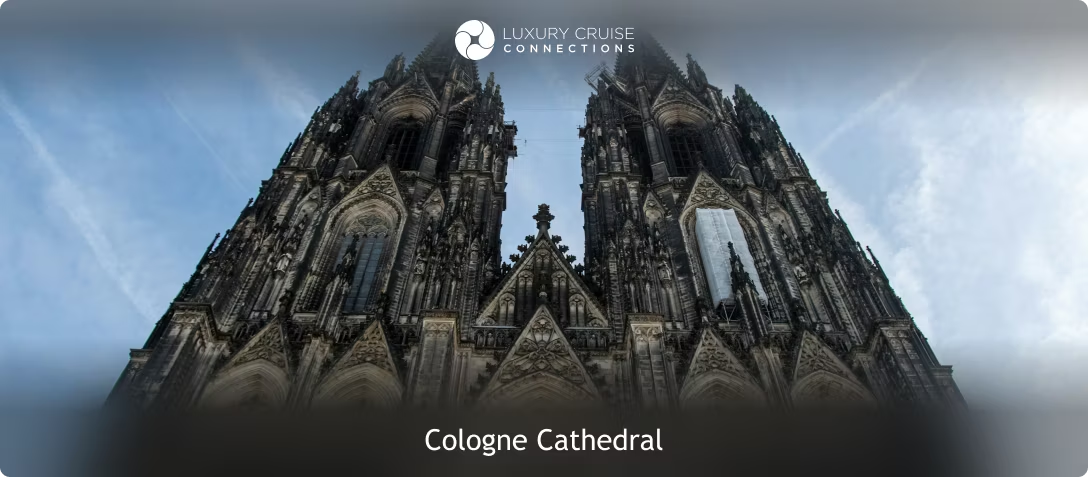
    Cologne Cathedral is a UNESCO-listed Gothic cathedral located in the heart of Cologne, Germany. Cologne Cathedral impresses tourists with its twin spires, medieval stained glass, and immense scale.
    Cologne Cathedral
  • The Black Forest

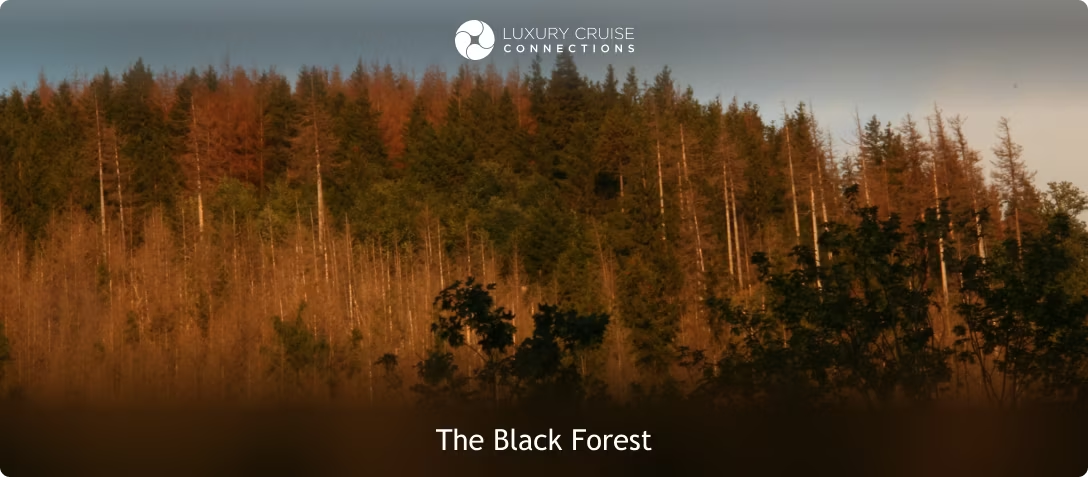
    The Black Forest is a vast woodland region in southwestern Germany known for its scenic hiking trails and folkloric charm. The Black Forest draws tourists with its lush landscapes, traditional villages, and ties to German fairy tales.
    The Black Forest
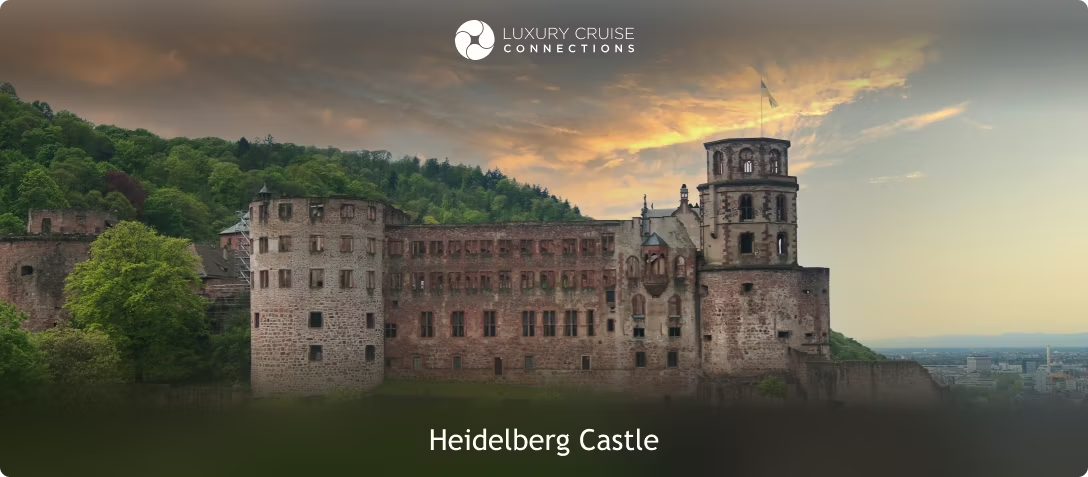
  • Heidelberg Castle

    Heidelberg Castle is a romantic hilltop ruin overlooking the Neckar River in the historic university town of Heidelberg, Germany. Heidelberg Castle captivates tourists with its Renaissance architecture, panoramic views, and sense of poetic decay.
    Heidelberg Castle:
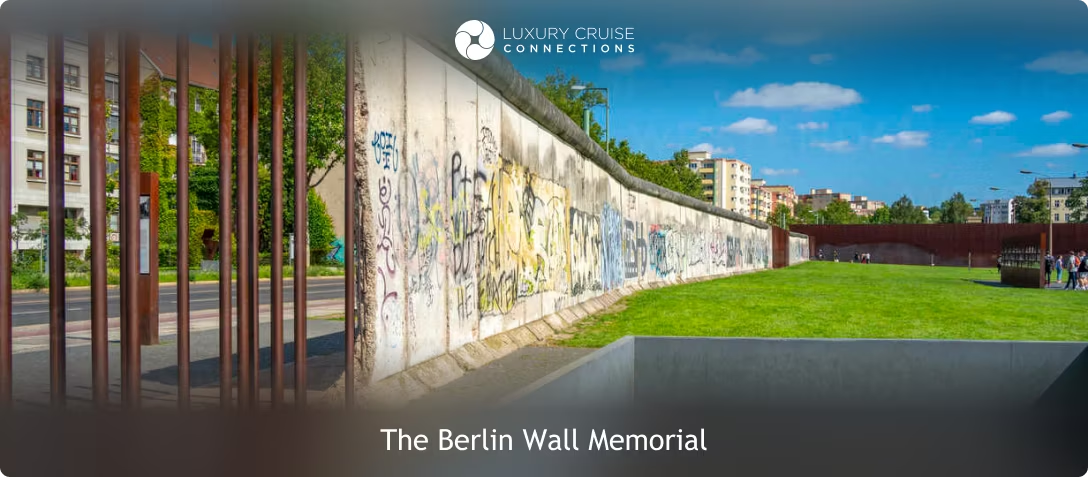
  • The Berlin Wall Memorial

    The Berlin Wall Memorial is an open-air historical site in central Berlin that preserves a stretch of the original Cold War barrier. The Berlin Wall Memorial offers insight into Germany’s divided past through preserved segments, watchtowers, and exhibitions.
    The Berlin Wall Memorial
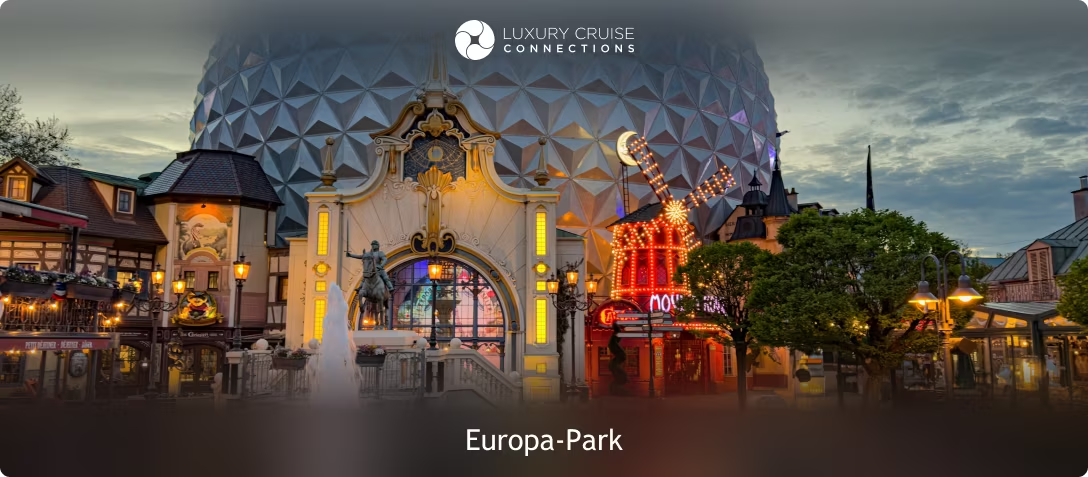
  • Europa-Park

    Europa-Park is Germany’s largest theme park, located in Rust near the German-French border. Europa-Park is popular with families for its European-themed zones, rollercoasters, and live entertainment shows.
    Europa-Park


Which Vacation Spots in Germany Are Best for Beach Lovers?

The vacation spots in Germany that are best for beach lovers are listed below.


What are the Best Things to Do in Germany for First-Time Visitors?

The best things to do in Germany for first-time visitors are listed below.

Berlin’s historic center includes iconic landmarks like the Brandenburg Gate, Reichstag, and Holocaust Memorial. Walking Berlin’s historic center offers first-time visitors a powerful introduction to Germany’s modern history and vibrant capital city.
The Rhine River is one of Germany’s most scenic waterways, passing castles, vineyards, and medieval towns. A Rhine cruise offers first-time visitors a relaxed way to see quintessential German landscapes and heritage.
Neuschwanstein Castle is Germany’s most famous castle, set in the Bavarian Alps. First-time visitors love Neuschwanstein Castle’s fairy-tale design, breathtaking views, and storybook setting.
Munich is known for its beer halls, like Hofbräuhaus, which serve local brews and Bavarian dishes in a lively setting. Visiting a traditional beer hall gives first-time travelers a fun, cultural taste of German hospitality.
The Romantic Road is a scenic route linking castles, medieval towns, and countryside views in southern Germany. Driving or touring the Romantic Road route offers first-time visitors a varied and picturesque introduction to Germany’s past.
The Black Forest is a wooded region known for hiking, spa towns, and traditional villages. First-time visitors enjoy the Black Forest’s blend of nature, folklore, and regional cuisine.
The Dachau Concentration Camp Memorial is located near Munich and preserves the site of the first Nazi concentration camp. Visiting the Dachau Concentration Camp Memorial gives first-time travelers an impactful encounter with Germany’s WWII history.

What makes Germany a Beautiful Country to Visit?

Germany is a beautiful country to visit for four reasons. The first reason is Germany’s natural diversity. Germany features a striking range of landscapes, including snow-covered Bavarian Alps, flat marshes and beaches along the North and Baltic Seas. Travelers hike through forested highlands, cruise scenic river valleys, or relax by peaceful lakes within one visit to Germany. The second reason Germany is a beautiful country to visit is the presence of historic towns and striking architecture. Germany holds over 50 UNESCO World Heritage Sites, including Roman remains, Baroque palaces and historic centers.

The third reason Germany is a beautiful country to visit is the changing seasons. Each season in Germany brings a distinct visual atmosphere, from spring blossoms and green vineyards to golden autumn forests and snow-dusted towns in winter. The fourth reason is the blend of natural and urban beauty. Germany’s major cities integrate parks, rivers, historic buildings, and walkable neighborhoods into its urban design. Visitors enjoy the scenic riverbanks of Berlin, the English Garden in Munich, and baroque squares in Dresden within the city.

How can I experience Local Culture in Germany?

You can experience local culture in Germany by participating in everyday life, engaging with regional traditions, exploring cultural heritage sites, and joining seasonal events and festivals. Firstly, experience daily life in Germany by walking through residential neighborhoods, town squares, and local markets. Cities like Munich, Leipzig, and Freiburg offer relaxed pedestrian zones where visitors observe routines like morning coffee breaks, bike commutes, and market shopping. Secondly, eat traditional German food in small taverns, bakeries, or countryside Gasthäuser. German meals (Swabian spätzle, Bavarian pretzels, Rhineland sauerbraten) are served with beer or regional wines and enjoyed in a communal atmosphere. Thirdly, visit museums, castles, and historic city centers to see how Germany’s layered history shapes its modern culture. Finally, attend local festivals and seasonal events to experience German culture in its most vibrant form. Celebrations like Oktoberfest in Munich, Karneval in Cologne, and Christmas markets across Germany allow travelers to enjoy local music, food and costumes.

Are there Activities in Germany Perfect for Families with Children?

Yes, there are activities in Germany perfect for families with children, with options spread across cities, theme parks, and nature regions. In Munich, families with kids explore the Deutsches Museum and enjoy interactive science exhibits. Englischer Garten in Munich offers families open space, playgrounds, and paddle boat rentals. In Berlin, families visit the Berlin Zoo, explore the Natural History Museum, and walk around Tiergarten Park. In theme parks like Europa-Park and LEGOLAND Germany, families enjoy roller coasters, themed lands, and shows designed for all age groups. Smaller parks like Ravensburger Spieleland focus on younger children, with gentle rides and hands-on games. In the Black Forest and Bavarian Alps, families ride summer toboggans, visit open-air farm museums, and walk short scenic trails. At Lake Constance, children enjoy boat rides, flower-filled islands like Mainau, and beaches with safe swimming spots.

Are there Fun Things to Do in Germany for Outdoor Adventures?

Yes, there are fun things to do in Germany for outdoor adventures because the country supports active travel across varied terrain. Outdoor adventures in Germany include mountain hiking and climbing in the Bavarian Alps. Forest regions in Germany, such as the Black Forest, support cycling, long distance walking, and river rafting through dense woodland and narrow valleys. Central Germany offers sandstone hiking and climbing in Saxon Switzerland where rock towers rise above deep gorges. Northern Germany adds coastal outdoor adventure through sailing, kitesurfing, and beach walking along the North Sea and Baltic Sea. Winter adds a different layer of outdoor adventure in Germany through snow-based and cold-weather activities. Snowfall in the Bavarian Alps and Harz Mountains supports skiing, snowboarding, and winter hiking.

Best Things to Do Around the World

Discover the best activities, landmarks, and experiences in every cruise destination and port of call.

Europe Western, Central & Mediterranean
America North, Central, South & Caribbean
Africa & Asia Oceania & Antarctica