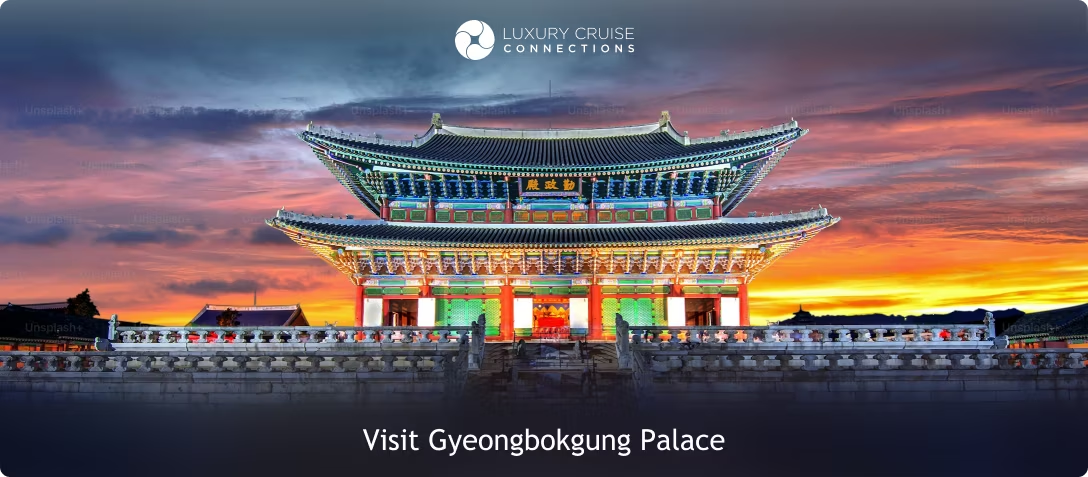
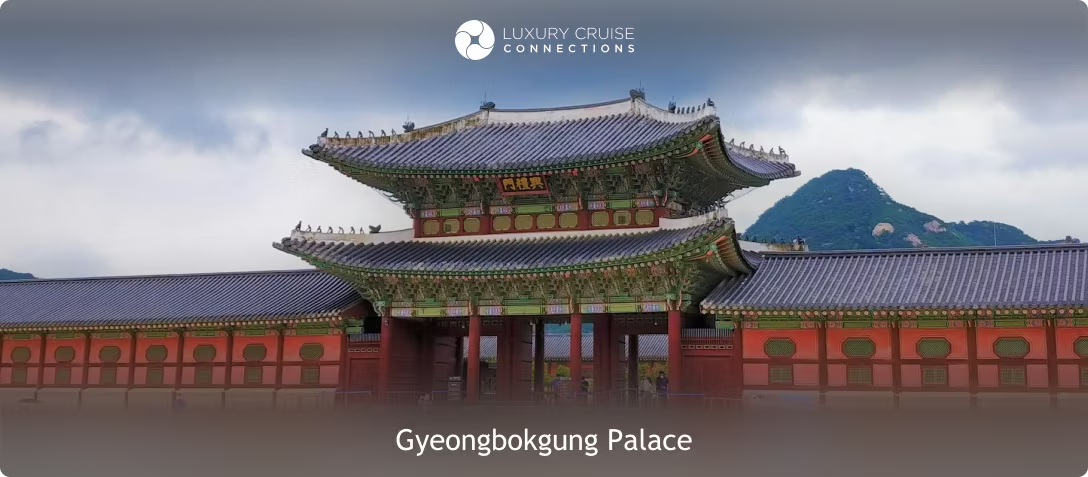
Highlights of Gyeongbokgung Palace include Geunjeongjeon Hall, the main throne hall that is elevated on a double-tiered stone platform and used for royal ceremonies and foreign envoys. Another highlight is Gyeonghoeru Pavilion, a graceful banquet hall set on 48 stone pillars rising from a lotus pond. Another highlight is the main, and largest, southern gate called Gwanghwamun Gate. The changing of the royal guard ceremony at Gwanghwamun Gate recreates Joseon military protocols with traditional uniforms and instruments.
Visiting Gyeongbokgung Palace offers a direct encounter with Korea’s dynastic history and architectural order. Visitors pass through Gwanghwamun Gate and enter vast stone courtyards framed by painted wooden eaves. They walk toward Geunjeongjeon and observe carved dragons beneath the throne canopy. Travelers cross quiet paths to Hyangwonjeong Pavilion and pause by reflective ponds. Many rent hanbok, tour the National Palace Museum of Korea, and view the mountain backdrop that frames the palace grounds.
The best time to visit Gyeongbokgung Palace is April to June and September to October, when spring blossoms or autumn foliage frame the palace roofs and the weather remains mild.
Cultural heritage guides lead tours of Gyeongbokgung Palace and explain Joseon court rituals, Confucian symbolism, and its restoration after Japanese occupation damage.
Entry to Gyeongbokgung Palace costs [$3].
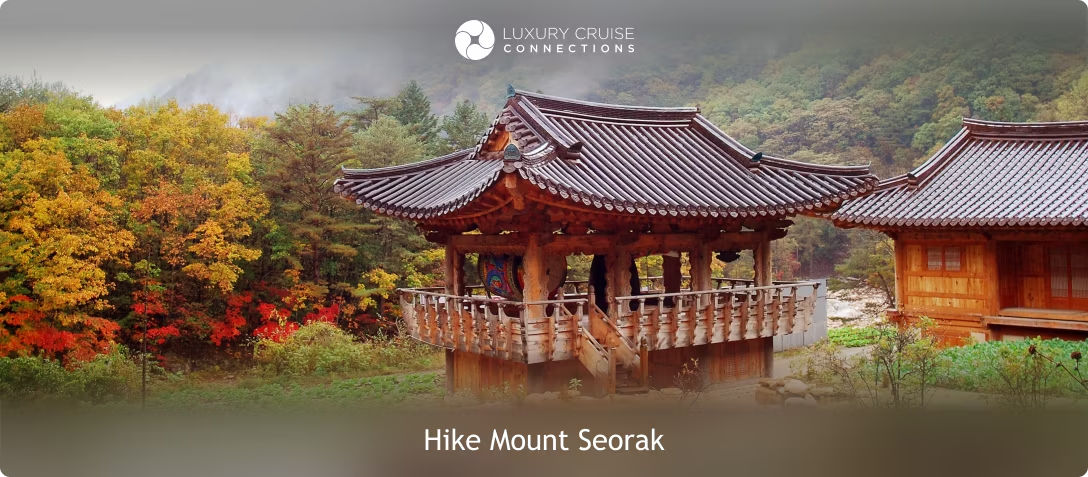
Highlights of Mount Seorak include the breathtaking summit of Daecheongbong Peak. The peak represents the highest point in the Taebaek mountain range and reveals views of layered ridges and distant coastline. Another highlight is Ulsanbawi Rock, a cluster of six dramatic granite peaks reached by climbing nearly 900 metal steps. Another highlight is the Seoraksan Cable Car. The cable car carries visitors toward Gwongeumseong Fortress for panoramic views without a full summit trek.
Hiking Mount Seorak offers visitors a rewarding encounter with South Korea’s rugged alpine terrain and spiritual landmarks. Travelers enter through Seoraksan National Park and walk well-signposted and shaded forest trails lined with maple and pine. They cross stone bridges, waterfalls, and mountain streams and breathe crisp mountain air. Many hikers stay overnight at shelters along the trail like Yangpok Shelter and Huiungak Shelter. They reach the top of Mount Seorak and enjoy spectacular views of rock formations.
The best time to hike Mount Seorak is Autumn (September to October) and Spring (April to May) when temperatures are mild and foliage is most scenic. Autumn foliage turns the mountainside into vivid shades of red and gold, while Spring offers blooming azaleas.
Park guides lead tours of Mount Seorak and provide route navigation, ecological insight, and historical context about Sinheungsa Temple and Gwongeumseong Fortress.
Entry to Seoraksan National Park is free. The Seoraksan Cable Car costs [$8 - $12].
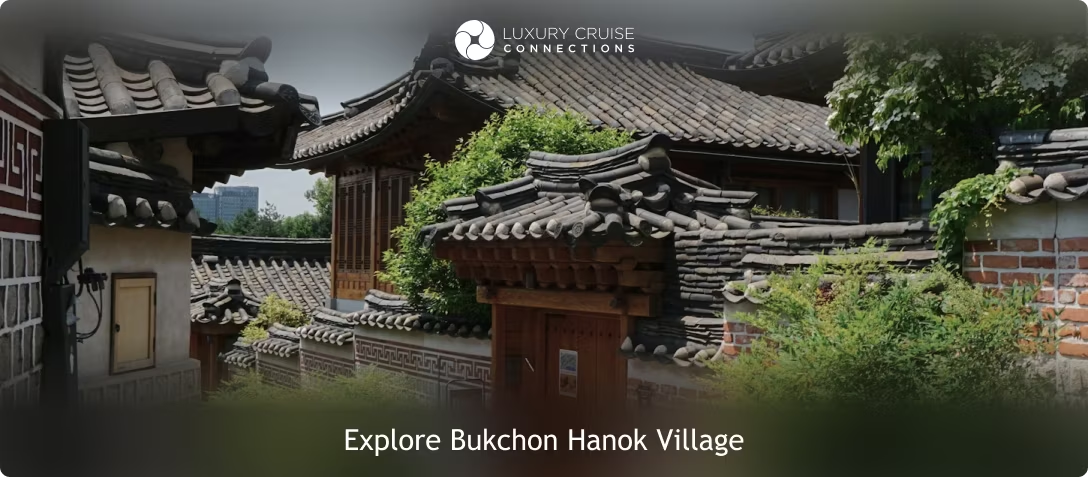
Highlights of Bukchon Hanok Village include its dense cluster of over 900 hanok homes that form one of the largest surviving traditional residential areas in Seoul. Another highlight is the Bukchon Cultural Center, where visitors learn about hanok construction techniques like ondol heating systems and timber joinery without nails. Another Bukchon highlight is the elevated observatory streets, especially Bukchon-ro 11-gil, which frame sweeping views of tiled rooftops against nearby palace grounds. Traditional tea houses and craft studios offer hanji paper art and knot-tying (maedeup) workshops.
Exploring Bukchon Hanok Village lets visitors experience Korea’s heritage within a functioning urban neighborhood. Visitors walk uphill along stone-paved lanes and pass wooden gates carved with family emblems. They step inside cultural centers to view exhibits on Joseon-era housing customs. They try on hanbok attire for photographs against tiled roofs. They pause in tea houses to sip omija tea while seated on heated ondol floors. The quiet alleyways, filtered sunlight, and distant palace rooftops create a peaceful atmosphere rarely found in central Seoul.
The best time to explore Bukchon Hanok Village is April to June and September to October, when mild temperatures and clear skies make walking the hillside alleys comfortable and the surrounding foliage especially scenic.
Local cultural guides lead tours of Bukchon Hanok Village and explain Joseon Dynasty social hierarchy, hanok architectural principles, and proper etiquette.
Entry to Bukchon Hanok Village is free. Guided walking tours typically cost [$25 - $50] depending on group size and whether workshops (hanbok rental or craft sessions) are included.
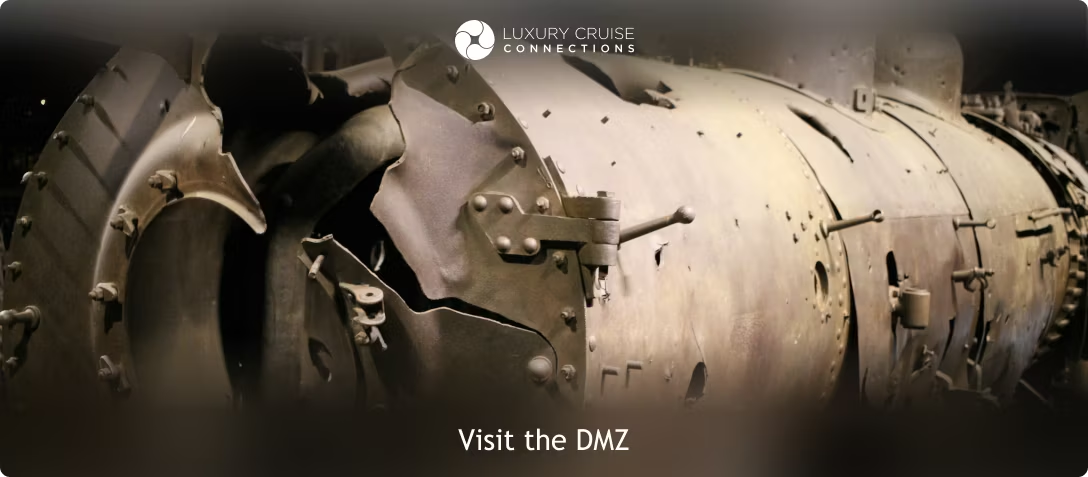
Highlights of DMZ include the Joint Security Area (JSA) at Panmunjom, where blue conference buildings straddle the Military Demarcation Line and soldiers from both sides stand face-to-face. Another highlight is the Third Infiltration Tunnel, discovered in 1978, which visitors descend to see a passage large enough to move thousands of troops per hour. Another highlight of the DMZ is Dora Observatory, where travelers use binoculars to look into North Korean villages and propaganda sites.
Visiting the Korean DMZ offers a direct encounter with the physical reality of Korea’s division and the unresolved legacy of the Korean War. Visitors board a registered tour bus in Seoul and travel north toward the Civilian Control Line. They pass military checkpoints, walk through exhibition halls explaining the 1950 - 1953 Korean War, and descend into a narrow infiltration tunnel carved through granite. Travelers stand inside the blue JSA conference room and view North Korean territory through telescopes at Dora Observatory.
The best time to visit the DMZ is April to June and September to October, when mild temperatures and clear skies improve visibility at observatories and outdoor sites.
Official government-approved guides lead tours of the DMZ and provide historical context about the Korean War, armistice terms, and inter-Korean relations while ensuring visitors follow strict security protocols.
Tours of the DMZ cost [$40 to $80] depending on whether the itinerary includes the Joint Security Area and transportation from Seoul.
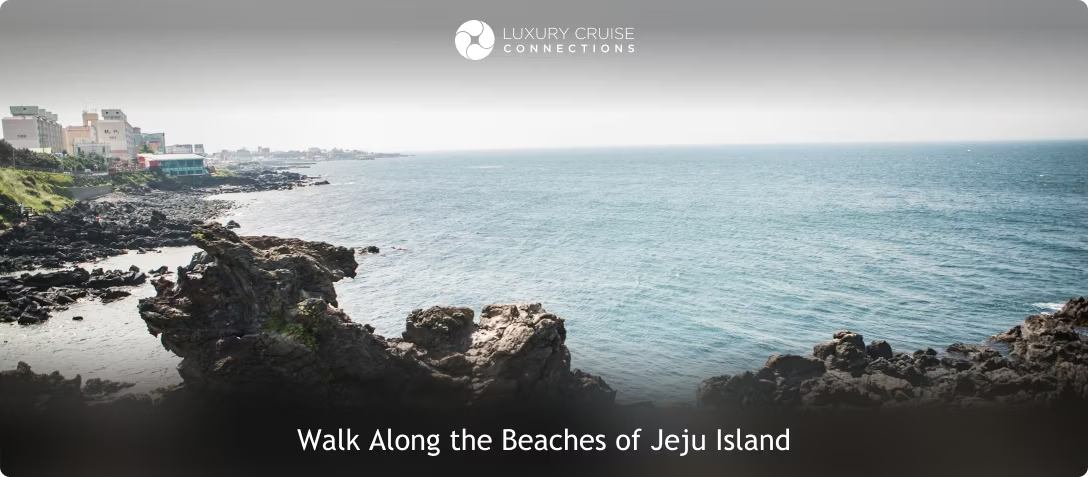
Highlights of Jeju Island include Hamdeok Beach’s shallow, turquoise water and wide arc of pale sand framed by low cafés and pine groves. Another highlight is Hyeopjae Beach, which features fine white sand, black basalt stones and views of Biyangdo Islet. Another highlight is Saekdal Beach in Jungmun, known for consistent surf breaks. Jeju’s coastline also reveals Seongsan Ilchulbong Tuff Cone and segments of the 437 km Olle Trail.
Walking along the beaches of Jeju Island is one of the most scenic coastal experiences in South Korea. Travelers drive Jeju Island’s coastal road, stop at Hamdeok, and wade into calm water. They continue west to Hyeopjae, relax on bright sand, and view basalt outcrops. Surfers gather at Saekdal to ride rolling waves. Hikers follow the well-marked Olle Trail and collect stamps for their “Olle Passport”. Many watch the sun set from the cafés overlooking Hyeopjae Beach.
The best time to enjoy the beaches of Jeju Island is April to June and September to October, when temperatures are mild, skies are clear, and humidity is lower.
Local nature and Olle Trail guides lead tours of Jeju Island and provide geological context while guiding visitors along safe walking routes.
Entry to Jeju Island’s public beaches is free.
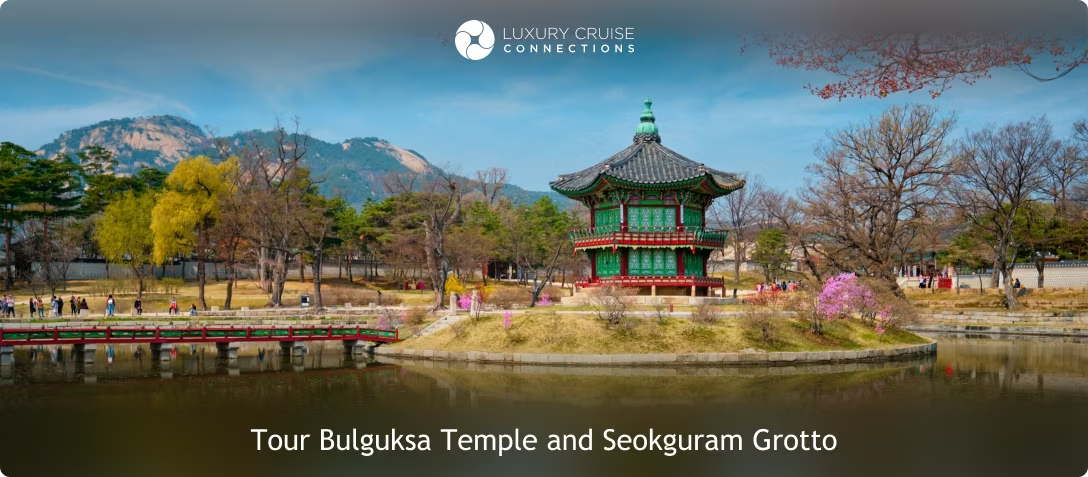
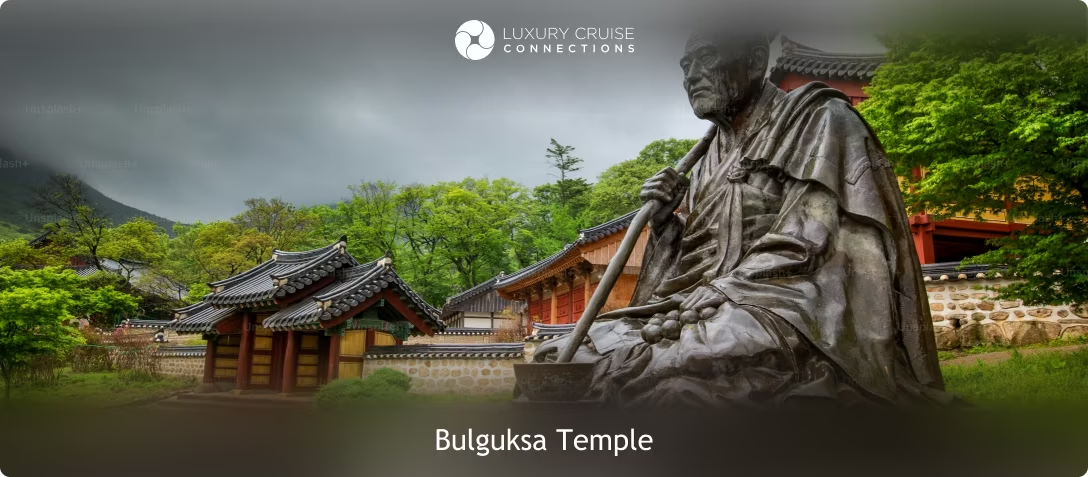
Highlights of the Temples of Bulguksa and Seokguram Grotto include the ornate Dabotap (Pagoda of Many Treasures) and the austere Seokgatap (Pagoda of Sakyamuni). Another highlight is the Cheongungyo and Baegungyo stone bridges, constructed without mortar to represent ascent into the Buddha’s realm. Another highlight is the 3.5-meter-tall white-granite seated Buddha in Seokguram set beneath a lotus-domed ceiling of precisely fitted stone slabs.
Visitors tour Bulguksa’s main gate, climb the stone stair-bridges, and view gilded Buddha statues inside Daeungjeon Hall. They photograph Dabotap and Seokgatap, then ride a bus or hike a forested trail uphill. At Seokguram, travelers enter the domed grotto, observe the serene granite Buddha facing the East Sea, and absorb the quiet mountain air.
The best time to tour the Temples of Bulguksa and Seokguram Grotto is April to June and September to November, when temperatures are mild and the temples are framed by spring cherry blossoms or autumn foliage.
Cultural heritage guides lead tours of the Temples of Bulguksa and Seokguram Grotto. They explain Silla Dynasty symbolism, construction techniques, and the Buddhist iconography carved into pagodas and relief panels
Entry to Bulguksa Temple and Seokguram Grotto is free of charge.
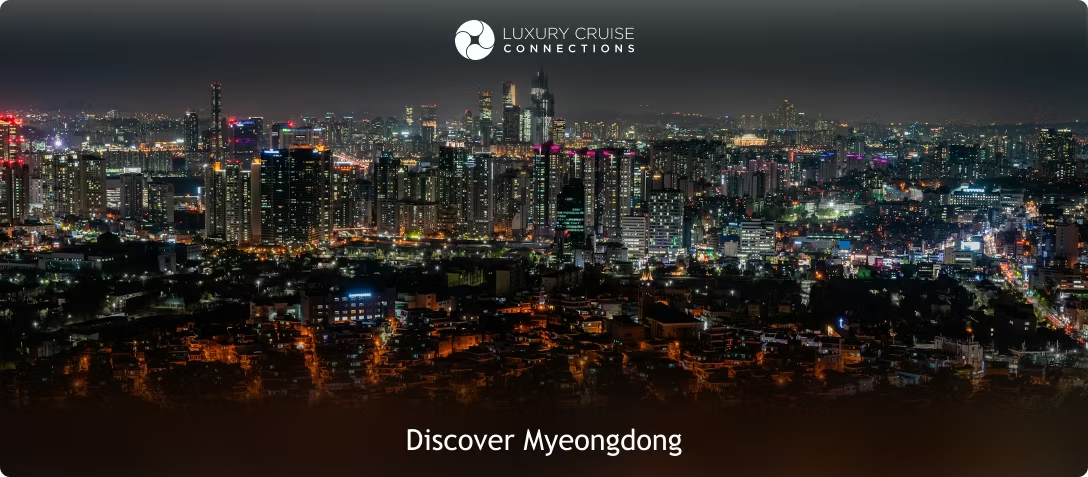
Highlights of Myeongdong include dense rows of K-beauty flagship stores such as Innisfree and Olive Young, where staff hand out generous product samples. Another highlight is the evening street market atmosphere, with vendors grilling lobster tails, frying tornado potatoes, and simmering spicy tteokbokki in wide iron pans. Another Myeongdong highlight is its retail scale, four-story brand stores (Lotte Department Store, Noon Square Mall). An underground shopping center connected to the subway creates layers of commerce above and below ground.
Discovering the streets of Myeongdong gives visitors an energetic introduction to modern Seoul through fashion, food, and K-pop culture. Visitors step out of Myeongdong Station and walk past neon-lit storefronts. They browse Olive Young and Etude House for skincare, then shop for accessories at NYUNYU. Travelers stop at stalls to try odeng skewers and hotteok fresh off the griddle. They explore the underground arcade, watch a NANTA performance, and pause at cafés like Stylenanda Pink Hotel before returning to the glowing main avenue.
The best time to discover Myeongdong for shopping and street food is April to June and September to October, when mild weather makes walking comfortable and evening food stalls operate at full scale.
Guides Local food and cultural guides lead tours of Myeongdong, introduce visitors to traditional snacks, and help navigate underground shopping corridors.
Entry to Myeongdong is free. Guided food tours typically cost [$50 to $300] depending on group size, tasting inclusions, and tour duration.
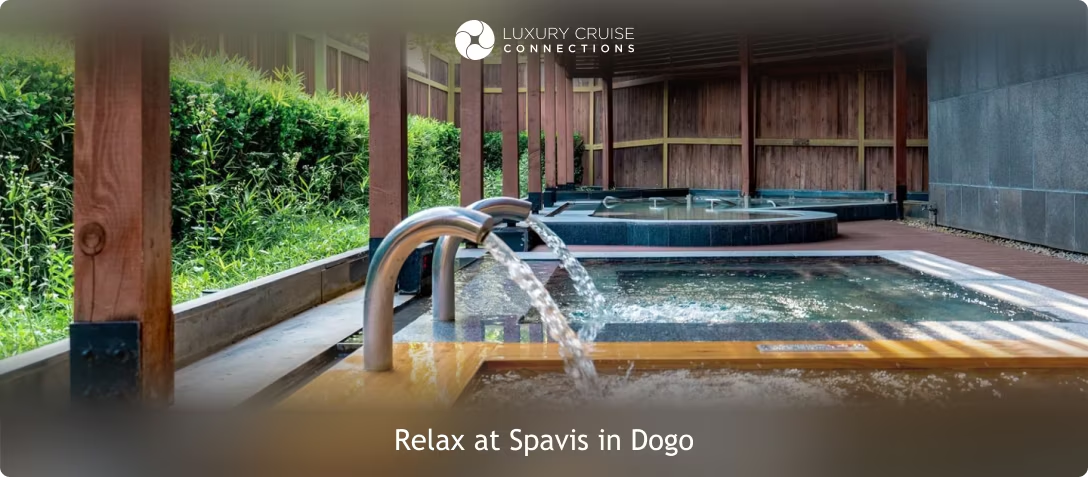
Highlights of the hot springs of Spavis include massive year-round outdoor thermal pools that remain open even in winter, when steam rises against cold mountain air. Another highlight is the 75-meter wave pool and heated water slides, which transform the resort into a thermal water park during warmer months. Another key attraction is the glass-ceilinged main bathhouse, designed with a pyramid-style roof that floods the steam-filled interior with natural light. The themed event baths (such as tangerine, rose, and herb) add seasonal fragrance and visual appeal to the bathing experience.
Relaxing at this thermal resort gives visitors a restorative pause within one of Korea’s historic hot spring regions. Guests enter the spacious bathhouse, change in gender-separated facilities, and step into warm mineral pools beneath a high glass roof. They move between bade pools fitted with hydrotherapy jets, then soak in outdoor baths where steam drifts across open-air terraces. Families ride the wave pool and slides, while others unwind in loess and clay saunas before resting in quiet lounge areas.
The best time to relax in the Hot Springs of Spavis is December through February, when soaking in steaming outdoor pools contrasts with crisp winter air. Asan Spavis is open and enjoyable year-round.
On-site wellness staff guide visitors through spa facilities and explain the benefits of mineral pools, hydrotherapy jets, and themed baths to help guests use each zone effectively.
Admission to Asan Spavis costs [$25 - $40] depending on weekday or weekend entry and whether it includes access to water park facilities
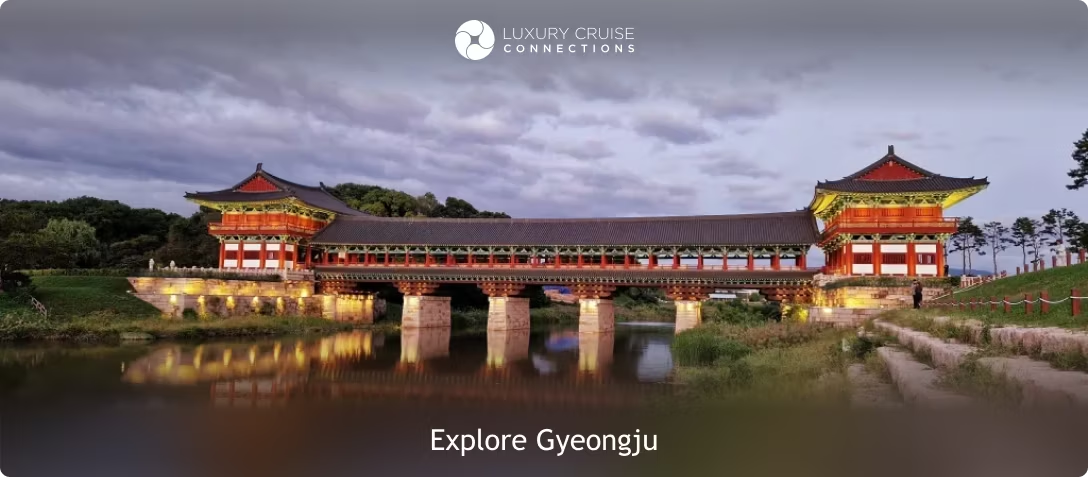
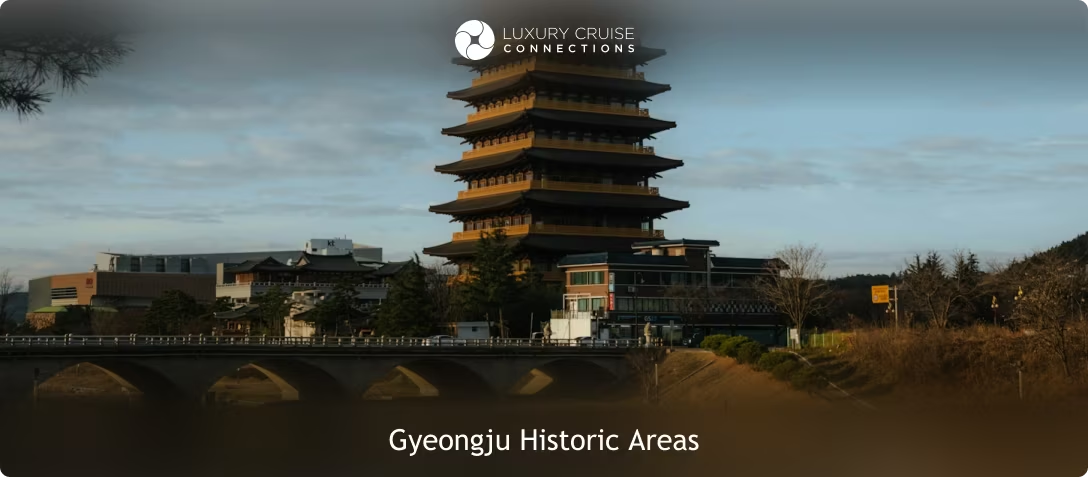
Highlights of the City of Gyeongju include the Daereungwon Tomb Complex, where massive grass-covered burial mounds from the 5th-6th century rise up to 23 meters high. Another highlight is the Cheonmachong Tomb, the only excavated chamber open to the public. Another highlight is Donggung Palace and Wolji Pond, where illuminated pavilions reflect across still water at night. Another key attraction is Cheomseongdae, a 7th-century stone observatory built with 362 stacked granite stones symbolizing the lunar year. Yangdong Folk Village also stands out for its preserved Joseon-era hanok homes set against forested hills.
Exploring the Ancient City of Gyeongju gives visitors direct access to Korea’s earliest royal history. Visitors stroll through Daereungwon Park and circle towering earthen mounds that once held gold crowns and jewelry. They step inside Cheonmachong to view reconstructed burial chambers and artifacts. They walk toward Cheomseongdae observatory and examine its bottle-shaped granite structure. At dusk, they tour Donggung Palace and watch lantern light shimmer across Wolji Pond. Many rent hanbok, cycle between sites, and sample sweet Gyeongju bread filled with red bean paste
The best time to explore the City of Gyeongju is April to June and September to October, when cherry blossoms or autumn foliage frame the royal tombs and temple grounds.
Licensed cultural heritage guides lead tours of the ancient city of Gyeongju and explain Silla burial practices, Buddhist symbolism at Bulguksa, and the astronomical function of Cheomseongdae.
Entry to the Daereungwon Tomb Complex costs [$2 to $3]. Bulguksa Temple charges [$5]. Certain outdoor historic sites within the Ancient City of Gyeongju are free to visit
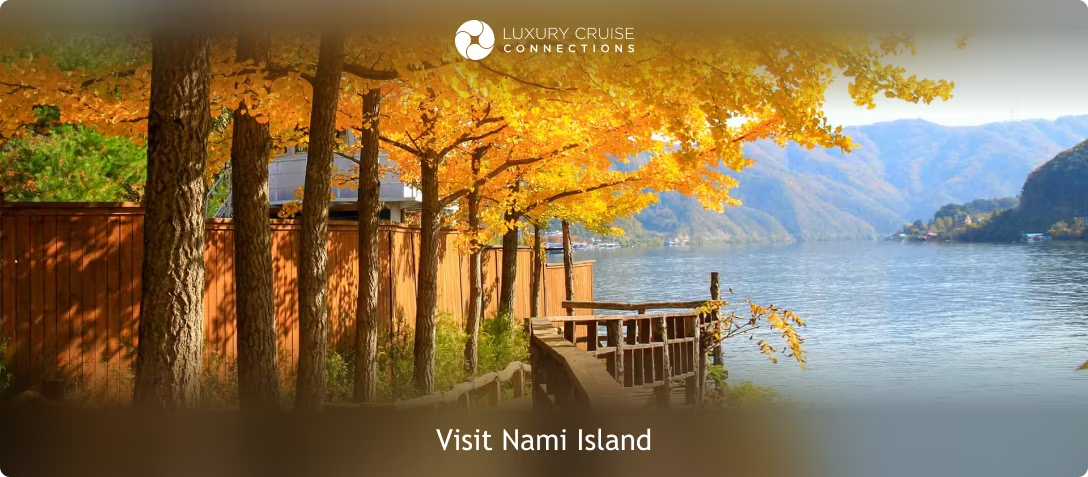
Highlights of Nami Island include the iconic Metasequoia Lane, where tall, evenly spaced dawn redwoods create a cathedral-like corridor that changes color with each season. Another highlight is Ginkgo Tree Lane, which turns vivid gold in autumn and draws photographers from around the world. Another highlight is the statue of the Winter Sonata characters, marking the island’s role in the Korean Wave. The riverside cycling paths and open lawns add to its reputation as a romantic, nature-centered destination.
Taking a ferry to Nami Island offers visitors a calm escape into one of South Korea’s most cinematic landscapes. Travelers board the short ferry across the Bukhan River or take the 940-meter zip wire. They walk beneath towering Metasequoias and ginkgo trees. Many rent bicycles and ride past the Maple Garden. Families feed rabbits, observe ostriches, and visit the Song Museum and Picture Book Playground. Couples pause at the lakeside, cycle through tree tunnels, dine at local cafés, and take photos at the First Kiss Glass Bridge.
The best time to take a ferry to Nami Island and enjoy the peaceful natural surroundings is October to November, when the ginkgo and maple trees turn bright yellow and red, creating dramatic foliage displays. Nami Island is open and enjoyable year-round.
Local cultural and park guides lead tours of Nami Island and explain its environmental design, K-drama filming history, and themed gardens.
Entry to Nami Island costs [$13] and includes the round-trip ferry ride.
The reasons why Korea is becoming a popular Cruise Destination are listed below.
The five main cruise ports in Korea are Busan Port, Incheon Port (Seoul), Jeju Port, Yeosu Port, and Sokcho Port. Busan Port is located in southeastern Korea in the city of Busan. Busan Port is Korea’s busiest cruise gateway and a major commercial shipping center with modern passenger terminals. Incheon Port is located on Korea’s northwest coast and is the primary cruise gateway to Korea’s capital city, Seoul. Jeju Port is located on Jeju Island off Korea’s southern coast. Jeju Port is a leisure-focused port known for receiving international cruise ships visiting the island’s volcanic landscapes.
Yeosu Port is located along Korea’s southern coastline in South Jeolla Province. Yeosu Port is recognized for its scenic harbor setting with facilities supporting mid-sized cruise vessels. Yeosu serves as a gateway to Odongdo Island and the Dadohae Marine National Park. Sokcho Port is located on Korea’s northeast coast in Gangwon Province. Sokcho Port is smaller than Busan or Incheon but is strategically positioned near Seoraksan National Park. Together, these five Cruise Ports connect travelers to Korea’s major cities, UNESCO-listed heritage sites, volcanic islands, and national parks.
The cruise ports that are best to visit in Korea are Busan Port, Incheon Port and Jeju Port. Visiting Busan Port gives cruisers access to landmarks like Haeundae Beach, Jagalchi Fish Market, Beomeosa Temple and Gamcheon Culture Village. Shore excursions from Busan Port focus on coastal scenery, seafood markets, and urban viewpoints. Visiting Incheon Port gives cruisers access to Seoul and major attractions like Gyeongbokgung Palace, Bukchon Hanok Village, and the DMZ. Shore excursions from Incheon Port focus on royal history, modern city districts, and geopolitical tours. Visiting Jeju Port gives cruisers access to attractions on the volcanic island of Jeju, including Hallasan Mountain and Seongsan Ilchulbong. Shore excursions from Jeju Port focus on waterfalls, lava tubes, coastal cliffs, and local citrus (hallabong) farms.
The best time to visit South Korea on a cruise is spring (April to June) and autumn (September to October). Spring and autumn bring mild temperatures, lower humidity, and clear skies. Daytime averages during these months range from 59 to 77°F (15 to 25°C), offering comfortable conditions for excursions like city tours, coastal exploration, and cultural visits. In spring, bright cherry blossoms bloom across port cities such as Busan and Seoul and create a striking seasonal backdrop. In autumn, crisp air and vibrant foliage in mountain and temple regions enhance the natural scenery surrounding historic sites and national parks. Spring and autumn align with Korea’s peak cruising season and avoids the humidity or cold of summer and winter. These balanced seasonal advantages make spring and autumn the ideal time to book a Luxury Cruise Experience experience in Korea.
Yes, Korea is a good Asian cruise destination because it combines beautiful coastal scenery with the historic depth and culinary refinement associated with leading Asian itineraries. Korea’s capital city, Seoul (population 9.6 million) is a dynamic cultural hub of royal palaces, traditional hanok districts, and contemporary design neighborhoods. Korea holds 17 UNESCO World Heritage properties, and Jeju carries triple recognition as a UNESCO Global Geopark, Biosphere Reserve, and World Natural Heritage site. Short sailing distances between Busan and Jeju (approximately 300 kilometers) allow efficient multi-port programming within a single cruise itinerary. Cruising couples experience ancient royal palaces, romantic volcanic landscapes on Jeju Island shaped by Hallasan (1,950 meters), and sunset beaches in Busan within short sailing distances. Cruise passengers also enjoy traditional tea ceremonies, temple stays, romantic spas, and seafood dining that position Korea within Asia’s established cultural landscape.
A cruise trip to Korea ranges from [$700 to $4,500] per person, depending on the cruise line, cabin type, and length of the voyage. Shorter 5 to 7-day cruises to Korea start at around [$700 to $1,500] per person, while longer cruises of 10 days or more cost [$1,500 and $4,500] per person. Prices fluctuate based on the cruise season, with higher rates during Korea’s peak travel months (spring for cherry blossoms and autumn for foliage) and lower rates during the off-season (summer and winter). Luxury cruises with premium cabins, exclusive shore excursions, or all-inclusive packages tend to charge higher rates. Cruise prices do not include shore excursions, drinks, or gratuities, which all increase the total trip cost of the cruise to Korea.
The most historic sites in Korea to explore are listed below
Some fun things to do in Korea are listed below.
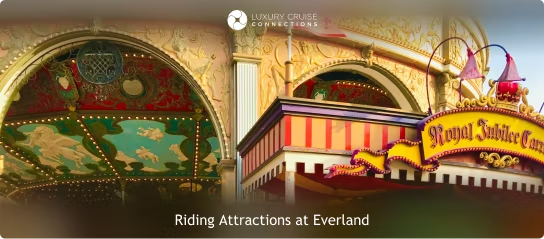
Riding attractions at Everland in Yongin delivers high-speed roller coasters, exciting themed zones, and seasonal festivals. Visitors spend a full day moving between thrill rides, safari experiences, and live performances within Korea’s largest amusement park.

Singing in a noraebang (private karaoke room) is one of Korea’s most popular social activities. Groups rent soundproof rooms by the hour and sing late into the night, making it a lively and distinctly Korean entertainment experience.

Taking a K-pop dance class in Seoul allows visitors to learn choreography from professional instructors in studio settings. Participants practice routines made famous by Korean pop groups and experience a hands-on introduction to modern Korean pop culture.
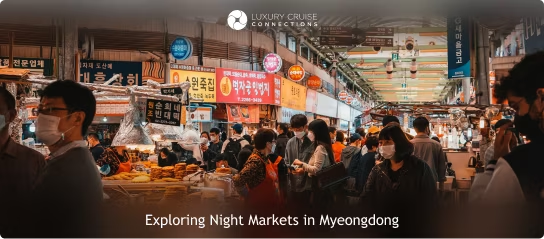
Exploring night markets in Myeongdong combines street food tasting with shopping in a neon-lit pedestrian district. Visitors try skewers, fried chicken, and sweet pancakes while browsing cosmetics and fashion stalls.
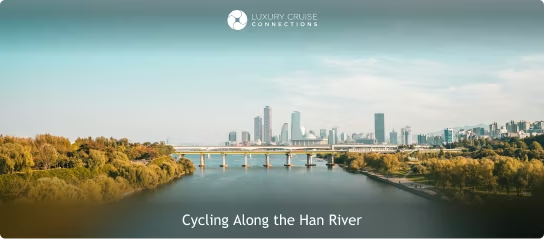
Cycling along the Han River in Seoul provides wide bike paths, riverside parks, and skyline views. Visitors rent bicycles, ride past bridges and green spaces, and stop at convenience stores for casual picnic breaks.
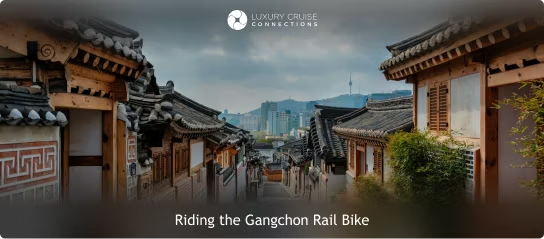
Riding the Gangchon Rail Bike in Gangwon Province involves pedaling along a converted railway track through tunnels and riverside scenery. Couples and friends share four-seat bikes and move at a relaxed pace through mountain landscapes.
The best spots for snorkeling and scuba diving in Korea are listed below.
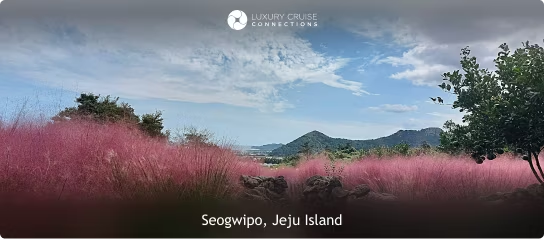
Seogwipo on Jeju Island is Korea’s most-developed warm-water dive destination, shaped by volcanic lava formations and influenced by the Tsushima Current. Divers descend along dramatic basalt walls near Beomseom and Seopseom to observe colorful soft corals, nudibranchs, and reef fish.
Attributes: lava rock walls, offshore islet dives, soft coral forests, warm current influence, advanced boat dives
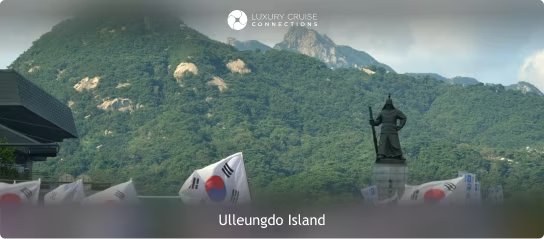
Ulleungdo Island in the East Sea offers some of Korea’s clearest waters and steep underwater drop-offs formed by volcanic activity. Divers encounter large rock pinnacles, kelp forests, and occasional pelagic species in a remote setting with minimal coastal development
Attributes: high visibility, deep drop-offs, kelp forests, pelagic sightings, remote offshore island
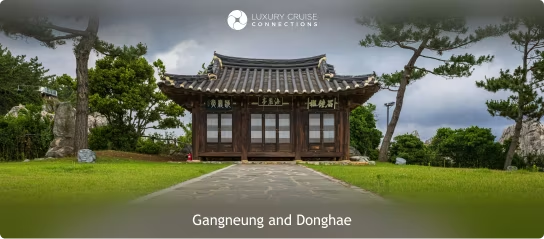
Gangneung and Donghae on Korea’s east coast are known for wreck and artificial reef diving in cooler, clear waters. Divers explore submerged reef systems and offshore wreck sites (Stella wreck) where pollock and rockfish gather. The area is especially suited to intermediate and technical divers seeking deeper structured dives.
Attributes: wreck diving, artificial reefs, cooler East Sea water, structured dive sites, technical depth options
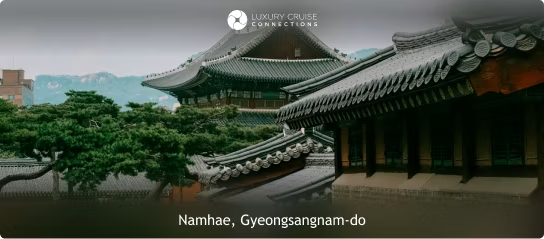
Namhae lies within a southern archipelago of over 70 islands where nutrient-rich currents support dense marine ecosystems. Divers explore rocky reefs and underwater valleys inside protected coastal zones. Rare sightings of finless porpoises add to its ecological distinction.
Attributes: island archipelago, protected marine zones, strong biodiversity, porpoise sightings, southern current system
The top cultural festivals and events to attend in Korea are listed below.
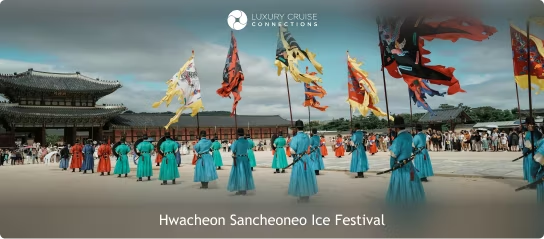
Hwacheon Sancheoneo Ice Festival takes place each January in Hwacheon County. Hwacheon Sancheoneo centers on ice fishing for mountain trout in frozen river channels. Visitors participate in ice drilling, bare hand fishing, and snow activities.
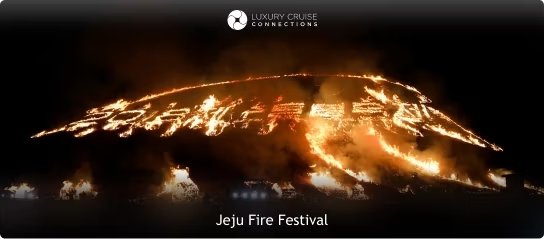
Jeju Fire Festival occurs each March on Saebyeol Oreum. Fields in Jeju are set alight to mark the traditional practice of clearing old grass for a new harvest. The event combines agricultural ritual, fireworks, and community celebration rooted in Jeju’s rural heritage.
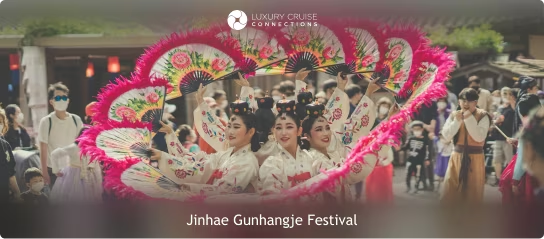
Jinhae Gunhangje Festival is held each April in Jinhae and is Korea’s largest cherry blossom celebration. Visitors walk beneath rows of blooming trees along Yeojwacheon Stream and Gyeonghwa Station.
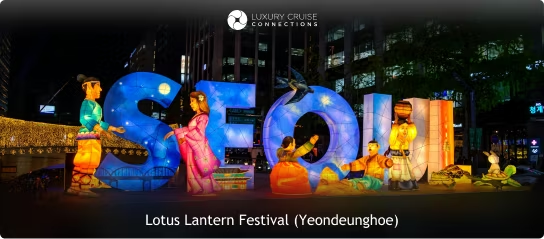
Lotus Lantern Festival, known as Yeondeunghoe, takes place in April or May to celebrate Buddha’s Birthday. Large-scale lantern parades move through central Seoul. Yeondeunghoe is recognized by UNESCO as Intangible Cultural Heritage.

Boryeong Mud Festival is held each July on Daecheon Beach and is internationally known for mud-based activities and seaside entertainment. Visitors join mud wrestling, mud slides, concerts, and fireworks.
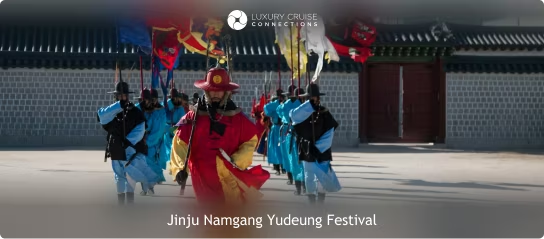
Jinju Namgang Yudeung Festival is held each October along the Namgang River in Jinju and features thousands of illuminated lanterns displayed on water and riverbanks. The festival commemorates a historic battle from the Imjin War.
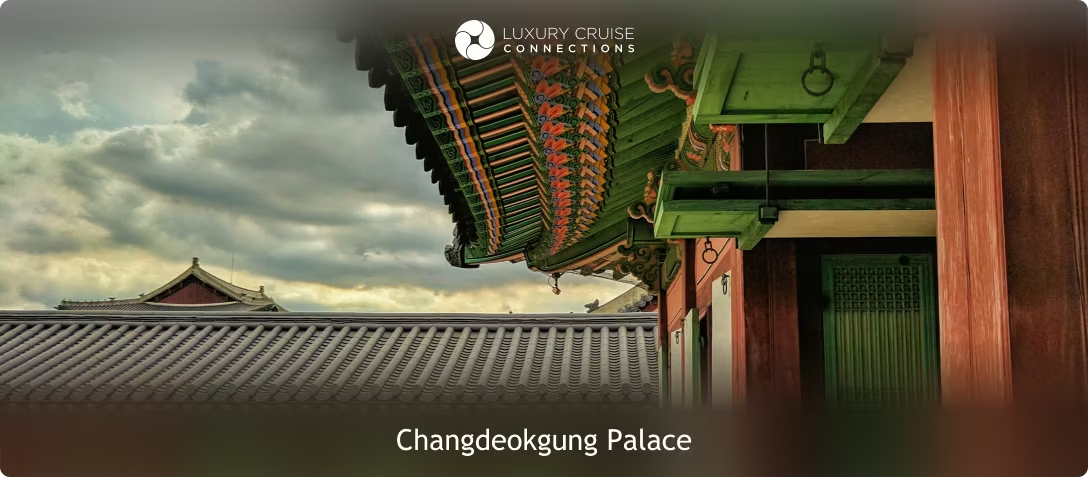
Korea is a beautiful country to visit for three reasons. The first reason is Korea’s geographic contrast within a compact area. Korea features granite mountain ranges, forested national parks, rocky coastlines, sandy beaches, and volcanic landscapes (Jeju Island). The second reason Korea is a beautiful country to visit is the presence of preserved historic architecture. Korea holds multiple UNESCO World Heritage Sites, including royal palaces in Seoul, Buddhist temples in Gyeongju, fortress walls in Suwon, traditional hanok villages and Confucian shrines. The third reason is Korea’s distinct seasonal change. Spring in Korea brings cherry blossoms across cities and riverbanks (Yeouido in Seoul, Jinhae in Busan). Summer in Korea highlights green mountain valleys (Seoraksan National Park). Autumn in Korea colors national parks and tree-lined paths in red, gold, and ginkgo yellow (Naejangsan, Nami Island). Winter in Korea covers tiled palace roofs in snow (Gyeongbokgung Palace, Changdeokgung Palace).
Yes, there are good spa and wellness options near Korean cruise ports such as Busan Port, Incheon Port, and Jeju Port. Busan Port provides access to Spa Land Centum City, one of Korea’s largest modern jjimjilbang complexes with thermal pools and salt rooms. Incheon Port connects easily to Seoul where visitors access premium bathhouses and hotel spas in Gangnam and central districts. Jeju Port offers resort spas and ocean-facing wellness centers that focus on volcanic stone treatments and herbal therapies
You can experience local culture in Korea by engaging with daily routines, participating in traditional customs, and joining seasonal festivals. Firstly, experience daily life in Korea by walking through neighborhood markets (Mangwon Market in Seoul and Seomun Market in Daegu) and residential streets. Secondly, eat traditional Korean food in local restaurants and family-run eateries. Dishes such as bibimbap, kimchi stew, and bulgogi reflect regional flavors. Thirdly, attend Korea’s seasonal festivals and cultural events that highlight music, dress, and ritual. Events such as the Jinju Lantern Festival, Andong Mask Dance Festival, and spring cherry blossom celebrations let you experience traditional performances and communal gatherings.
Yes, there are fun things to do in Korea for outdoor adventures, ranging from mountain summits to winter sports and coastal water activities. On Jeju Island, visitors summit Hallasan, South Korea’s highest peak (1,950m), and explore lava tubes shaped by volcanic eruptions. In Seoraksan National Park, hikers climb granite ridges and follow forested trails to panoramic viewpoints. Along the east coast in Yangyang, surfers ride waves at Jukdo and Surfyy Beaches. In winter, travelers ski and snowboard at resorts in Pyeongchang, a former Winter Olympics host region. In Danyang, paragliders launch from mountain platforms and glide above river valleys for aerial views of central Korea. For gentler outdoor experiences, travelers cycle and stroll beneath tree-lined paths on Nami Island. At Han River, locals and travelers gather for picnics, riverside walks, and casual bike rides with skyline views.
Discover the best activities, landmarks, and experiences in every cruise destination and port of call.
Europe & World Cruises
Western, Central & Mediterranean
America
North, Central, South & Caribbean
Africa & Asia
Oceania & Antarctica
