- Luxury Cruises vacations
- Planning Your Cruise
- Do Cruise Lines Check Your Luggage?
Do Cruise Lines Check Your Luggage?

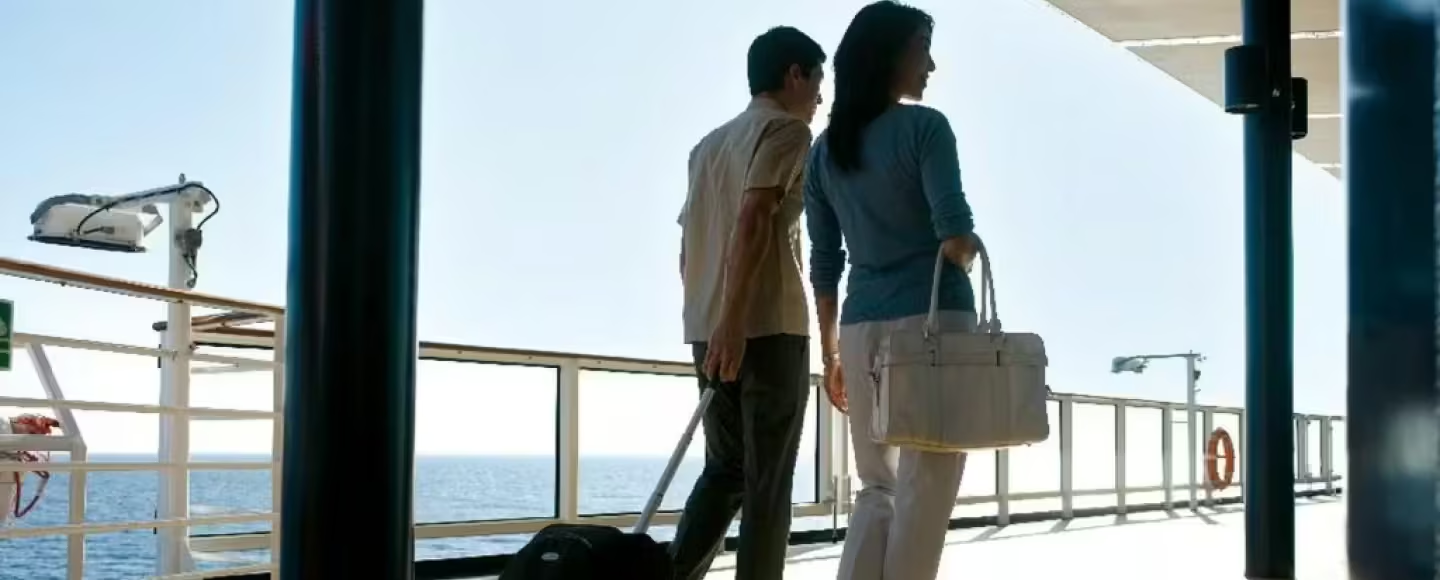
Security personnel review scans for weapons, illegal substances, flammable materials, irons, and outside alcohol exceeding allowed limits. Pack carefully according to the cruise line’s luggage policy, place prescription medications in original containers in carry-on bags, clearly label all items, and arrive early at the terminal to allow adequate time for screening.
| Category | Royal Caribbean | Carnival Cruise Line | Norwegian Cruise Line | Princess Cruises |
| Luggage Policy Summary | Comprehensive screening with reasonable limits is standard, followed by Royal Caribbean for safe embarkation. | Standard security with flexible baggage allowance | Modern screening with guest-friendly policies ensures safety on Norwegian Cruise Line. | Thorough security with standard allowances is maintained on Princess Cruises. |
| Checked Luggage Allowance and Restrictions | No official weight limit per bag, recommend 50 pounds or less, no limit on the number of bags | No weight or size restrictions, recommend 50 pounds per bag, unlimited quantity | Recommend 50 pounds per bag, multiple bags allowed | Recommend 50 pounds per bag, no official limit on pieces |
| Carry-On and Handbag Policy | Unlimited carry-on bags allowed | Carry-on bags permitted, reasonable size and quantity | Unlimited carry-on items permitted | Reasonable carry-on bags allowed |
| Personal Item Policy | Personal items such as purses, backpacks, and laptops | Personal items like purses and small bags are allowed | Personal items welcome, including electronics and small bags | Personal items like purses, laptops, and cameras |
| Security Screening Type | X-ray for all luggage, manual inspection if needed | X-ray for checked bags, carry-ons tend to be manually inspected | X-ray, random manual checks, and K-9 units are occasionally used | X-ray for all bags, manual inspection if necessary |
| Prohibited Items Summary | Weapons, illegal drugs, candles, irons, alcohol, except for two bottles of wine per stateroom, and CBD products | Firearms, illegal substances, irons, candles, surge protectors, and alcohol and wine allowed one bottle per adult 21 and older | Weapons, explosives, illegal drugs, flammable items, irons, candles, alcohol, except for two bottles of wine or champagne per stateroom | Weapons, illegal substances, candles, incense, irons, clothes steamers, alcohol, wine, or champagne limits vary by itinerary |
| Special Baggage Handling | Mobility devices, sports equipment, musical instruments | Oversized items, sports gear, medical equipment | Wheelchairs, sports equipment, musical instruments, wedding items | Mobility aids, sports gear, and formal wear |
| Cabin Delivery and Retrieval Process | Checked bags are delivered to the cabin within 2 to 4 hours, and carry-on is immediate. | Luggage delivered to stateroom typically within 3 hours, priority boarding faster | Checked bags arrive at cabin 2 to 4 hours, carry-ons immediately | Checked bags are usually delivered within 3 to 4 hours, VIP priority |
| Category | MSC Cruises | Disney Cruise Line | Celebrity Cruises | Holland America Line |
| Luggage Policy Summary | Standard security protocols with European influence are maintained on MSC Cruises. | Family-focused security with attention to detail is offered on Disney Cruise Line. | Premium security with upscale service is provided on Celebrity Cruises. | Traditional security with refined service is implemented on Holland America Line. |
| Checked Luggage Allowance and Restrictions | Recommend 50 pounds per bag, multiple bags permitted | Recommend 50 pounds per bag, a reasonable number | Recommend 50 pounds per bag, multiple pieces allowed | Recommend 50 pounds per bag, no strict limit on quantity |
| Carry-On and Handbag Policy | Carry-on bags are allowed in reasonable quantities | Unlimited carry-on items allowed | Reasonable carry-on baggage permitted | Reasonable carry-on bags allowed |
| Personal Item Policy | Personal items, including handbags and electronics, are welcome | Personal items encouraged, including diaper bags, strollers | Personal items, including laptops and cameras, are welcome | Personal items permitted, including cameras and small electronics |
| Security Screening Type | X-ray screening and manual inspection are possible | X-ray, thorough but family-friendly | X-ray, professional security, and occasional manual checks | X-ray for all luggage, manual inspection when required |
| Prohibited Items Summary | Weapons, drugs, flammable materials, irons, candles, and alcohol restrictions vary by itinerary | Weapons, illegal substances, candles, incense, irons, alcohol, wine, or beer allowed, two bottles of wine or six beers per adult 21 and older | Weapons, illegal drugs, candles, irons, alcohol (wine allowed two bottles per stateroom), and CBD products | Weapons, illegal substances, candles, irons, alcohol, wine, or champagne allowed one bottle per adult, with a corkage fee if consumed in the dining room |
| Special Baggage Handling | Medical equipment, sports gear, musical instruments | Stroller and wheelchair handling, costume storage, sports equipment | White glove service for suite guests, arrangements for special items | Mobility devices, golf clubs, musical instruments |
| Cabin Delivery and Retrieval Process | Bags delivered to cabin 2 to 5 hours, depending on volume | Luggage arrives at the stateroom typically 2 to 3 hours, with concierge priority | Bags delivered to stateroom typically 2 to 4 hours, suite priority | Luggage arrives at the stateroom typically 2 to 4 hours after embarkation |
| Lost or Delayed Luggage Support | Guest services assist with locating delayed bags, compensation per cruise contract | Excellent guest services support | Dedicated guest relations, concierge for suite class | Guest services provide thorough assistance, experienced with longer voyages |
| Pre and Post Cruise Luggage Service | Limited availability at select ports | Pre-cruise luggage service through Disney hotels, Ground Transfers include handling | Available at select terminals, complimentary for suite guests | Available at some ports, especially for world cruise segments |
| Baggage Assistance | Porter service, MSC Yacht Club guests receive priority | Exceptional porter and concierge services, character-themed tags | Premium porter service, concierge assistance, suite perks | Porter service, enhanced services for suite guests, and Mariners |
| Airline and Cruise Integration | MSC Fly and Cruise packages with coordinated luggage | Disney Vacation packages integrate flights and a cruise | Celebrity Cruisetours package available with coordinated logistics | Cruise Air program with integrated baggage handling |
| Notable Differences vs Industry Standard | European itineraries have different alcohol policies from itineraries in the Caribbean | More accommodating for families, costume-friendly for themed nights | More upscale service level, suite guests receive enhanced baggage handling | Corkage fee for wine consumed in dining rooms is unique, traditional service style |
| Traveler Tips and Observations | Arrive early for international cruises, follow local boarding procedures | Bring costumes and theme night outfits in carry-on, pack pool toys, and use Disney luggage tags | Suite guests must use priority services, bring formal wear, and pack reusable water bottles | Longer cruises mean more luggage, formal nights require appropriate attire, and mariner members get benefits |
Recommended Itineraries

22-Day South America & Antarctica Holiday

4 Night Canada Cruise

4-Night Cruise From Singapore
Do Cruise Ships search your Bags?
Yes, cruise ships search your bags as a standard security procedure. All luggage must pass through X-ray scanning equipment when passengers board the vessel. Security personnel examine the scanned images to identify prohibited items or potential safety concerns. A tote bag gets placed on the conveyor belt for scanning, and security officers open it for manual inspection if the scan shows suspicious or unclear objects. A handbag receives the same treatment at embarkation, with passengers asked to place the bag in a tray or directly on the scanner belt for verification. Large suitcases, backpacks, duffel bags, and carry-on luggage all undergo the same inspection to prevent weapons, illegal substances, and excessive alcohol from entering the ship. Cruise lines enforce strict policies on banned items, with confiscated goods documented, and certain belongings returned at the end of the voyage. Security measures ensure the safety of all passengers and comply with maritime regulations requiring thorough inspections at embarkation ports.
Do Cruise Lines screen passenger Luggage?
Yes, cruise lines screen all passenger luggage as part of their security and safety procedures. Every bag undergoes mandatory inspection before passengers board the vessel. All bags (checked and carry-on) pass through X-ray machines, operating similarly to airport security systems, to allow security personnel to examine the contents. The screening process helps detect prohibited or dangerous items before they reach the ship, including weapons, illegal substances, excessive alcohol, and flammable materials. Security officers conduct manual inspections when X-ray images reveal unclear objects or questionable contents. The procedures are enforced by cruise lines to comply with international safety regulations and maintain a secure environment for passengers and crew throughout the voyage.
Do Checked Bags get scanned during Cruises?
Yes, checked bags get scanned during cruises as a mandatory security measure. Passengers drop off checked luggage at the port terminal before boarding the vessel, and port security staff route each bag through X-ray scanning equipment after check-in. X-ray machines examine every checked bag to detect prohibited or dangerous contents (weapons, illegal substances, excessive alcohol, and flammable materials). Cruise line security teams review the scanned images and conduct physical inspections of flagged bags to verify contents and remove banned items. Screened luggage reaches passenger cabins only after clearance, with crew members delivering approved bags to assigned staterooms. All major cruise operators require checked bag scanning to comply with maritime security regulations and maintain passenger and crew safety throughout the voyage.
How does Cruise Luggage Screening work?
Cruise luggage screening works by processing all passenger bags through a multi-stage security system before the bags reach the ship. Luggage screening refers to the comprehensive inspection process that cruise lines use to examine passenger belongings for prohibited items, dangerous materials, and security threats. The procedure ensures vessel safety by preventing weapons, illegal drugs, excessive alcohol, and flammable substances from entering the ship environment.
Passengers begin the screening process at the drop-off point outside the cruise terminal. Checked bags are placed on designated carts or conveyor belts, and port handlers attach identification tags to match each bag with passenger booking information. The tagging system tracks luggage throughout the screening and delivery stages.
Tagged bags move through industrial X-ray machines, where trained security officers monitor screens displaying the contents of each bag. The X-ray technology identifies weapons, bottles, dense objects, and other items that require closer examination. Security personnel flag suspicious bags for manual inspection when the images show questionable contents.
Officers open flagged bags to conduct physical searches of the interior. Security teams remove prohibited items, document confiscated materials, and either destroy or hold banned items for return at the end of the voyage. Approved bags receive clearance stickers or electronic confirmation in the tracking system.
Porters transport cleared luggage from the screening area to the vessel. Crew members load the bags onto the ship and deliver them to the assigned passenger cabins. Cruise lines such as Royal Caribbean route all checked bags through X-ray scanners at embarkation ports, with security teams continuously monitoring the displays. Carnival Cruise Line applies identical X-ray procedures and employs canine units at select ports to detect prohibited substances. Royal Caribbean and Carnival Cruise Line strictly enforce security rules to ensure passenger and crew safety throughout the voyage.
When does the Screening of Cruise Bags take place?
The screening of cruise bags takes place when passengers arrive at the port terminal for embarkation. Security personnel begin processing luggage after travelers drop off their checked bags at the designated area outside the cruise terminal building. The screening occurs before passengers complete boarding procedures and receive cabin access. Port security staff scan all bags during the check-in window that opens three to four hours before the scheduled departure time. Carry-on bags undergo screening when passengers walk through the security checkpoint inside the terminal. The timing allows security teams to complete inspections while passengers wait in embarkation lines or relaxation areas. All luggage must clear the full screening process before the vessel departs from the port.
Where does the Screening of Luggage occur?
The Screening of Luggage occurs at the cruise port terminal, where passengers begin the embarkation process. Dedicated security zones within the terminal facility contain the X-ray machines and inspection stations. Checked bags pass through screening equipment positioned near the drop-off area at the terminal entrance. Security personnel operate the X-ray scanners in climate-controlled rooms located next to the luggage processing zones. Carry-on bags get screened at security checkpoints situated between the terminal entrance and the ship gangway. The screening layout mirrors airport security setups with conveyor belts, scanning machines, and inspection tables. Port authorities assign specific areas within each terminal for manual inspections when X-ray results require further examination. The entire screening operation remains inside the port facility grounds before any luggage moves toward the vessel.
What Items are not allowed in Cruise Checked Luggage?
Items that are not allowed in Cruise Checked Luggage are listed below.
- Show more info
Weapons and Firearms
Weapons and firearms remain banned from cruise checked luggage to prevent violent incidents aboard vessels. Guns, ammunition, rifles, and handguns remain prohibited even when travelers hold permits or licenses in their home jurisdictions. Knives with blades longer than four inches, martial arts equipment, and self-defense tools (pepper spray, tasers, or brass knuckles) face immediate confiscation during screening. The restriction exists to eliminate threats and maintain compliance with international maritime law.
Illegal Drugs and Controlled Substances
Illegal drugs and unauthorized controlled substances are prohibited from traveling in checked luggage. Marijuana remains banned even when travelers depart from regions with legalized recreational use. Cruise ships follow federal and international regulations that override state or local policies. Security teams seize illegal substances during screening and report violations to authorities.
Explosive Materials and Fireworks
Explosive materials, fireworks, flares, and gunpowder remain prohibited in checked bags due to severe fire hazards aboard vessels. Pyrotechnic devices create an immediate threat to passenger safety and ship structural integrity. Maritime regulations classify explosive materials as hazardous substances that endanger lives during ocean travel.
Flammable Liquids and Chemicals
Flammable liquids, gasoline, lighter fluid, and dangerous chemicals are prohibited from entering checked luggage. The substances create ignition hazards in cargo holds where temperature changes and pressure shifts occur during voyages. Cruise lines enforce the restriction to prevent fires that tend to spread rapidly through enclosed ship compartments.
Excessive Alcohol
Excessive quantities of alcohol remain prohibited in checked luggage to maintain controlled onboard consumption. Most operators permit one or two bottles of wine per cabin while banning hard liquor, beer cases, and large volumes of alcohol. Royal Caribbean permits two bottles of wine per stateroom, and Carnival follows a similar policy with corkage fees in dining areas. The restriction supports orderly ship environments and prevents intoxication issues. Passengers confirm allowances during packing by reviewing information in every cruise essentials list.
Irons and Steamers
Clothing irons and garment steamers are prohibited in checked luggage due to the fire risks posed by heating elements. The devices tend to ignite fabrics, bedding, or curtains if tipped over or left on in a cabin. Cruise lines provide pressing services or wrinkle-release alternatives for travelers who require garment care.
Candles and Incense
Open flame products (candles, incense, or oil lamps) remain banned from checked bags to prevent fires in passenger cabins. Ventilation systems distribute flames rapidly through stateroom hallways, which creates significant danger aboard vessels.
Drones and Remote Aircraft
Drones and remote-controlled aircraft are not allowed in checked luggage due to safety and privacy concerns. The devices interfere with navigation systems and violate port regulations. Cruise lines enforce the restriction to prevent accidents and regulatory conflicts during international itineraries.
Prohibited items refer to objects that cruise lines ban from checked luggage to protect passengers and crew in an enclosed maritime environment. Fire hazards, security threats, and regulatory violations create significant risks on vessels that operate under international maritime law. Ship officers rely on strict screening policies to prevent violence, uncontrolled fires, and dangerous chemical exposure. A careful review of every updated restriction list prevents issues during packing and supports a smooth boarding process outlined in each Cruise Packing List.
Passengers must constantly review the cruise line’s updated restriction list before packing to prevent confiscation or boarding delays. A complete cruise travel checklist helps travelers prepare permitted belongings and avoid prohibited items that security teams remove during screening.
Why do Cruise Lines ban certain items?
Cruise lines ban certain items because the restrictions protect passenger safety, prevent fires, and maintain vessel security in enclosed maritime environments. Fire prevention drives many prohibitions (clothing irons, garment steamers, candles, incense, fireworks, flares, and flammable liquids), which pose immediate ignition risks in cabins, corridors, and cargo holds. Passenger safety concerns justify bans on weapons, firearms, knives with long blades, martial arts equipment, and self-defense tools, as they tend to escalate conflict in confined areas with insufficient security to respond instantly. Drones and remote-controlled devices face prohibition because they interfere with ship navigation, violate privacy, and create accident hazards.
Cruise operators enforce alcohol restrictions to control onboard consumption, allowing only limited wine quantities while banning hard liquor and excessive beer to prevent intoxication and disorderly conduct. Illegal drugs and controlled substances remain prohibited to comply with federal and international maritime law and port authority regulations. Operational considerations lead to restrictions on electrical devices (extension cords, power strips, hoverboards, and battery-powered scooters) that pose a fire hazard or overload circuits. Passengers must understand the rules and consult the updated Cruise Rules and cruise packing list before departure to avoid confiscation, boarding delays, or denial of embarkation.
Do Cruise Ships check your luggage for Alcohol?
Yes, cruise ships check luggage for alcohol during the standard security screening at embarkation. X-ray machines detect bottles and liquid containers in checked and carry-on bags when passengers arrive at the port terminal. Security personnel examine scanned images to identify alcohol quantities and types that violate cruise line rules. Bags containing excessive or prohibited alcohol get flagged for manual inspection and confiscation.
Most cruise lines (Royal Caribbean International, Carnival Cruise Line) permit limited wine or champagne while banning hard liquor, beer, and other alcoholic beverages in passenger luggage. Royal Caribbean allows adults to bring two bottles of wine per stateroom, with a maximum of 750 milliliters per bottle. Carnival Cruise Line permits one bottle of wine or champagne per adult. Security teams confiscate prohibited alcohol, documenting and storing permitted wine for retrieval at disembarkation when applicable. Illegal drugs and controlled substances remain strictly banned, with violations potentially resulting in denied boarding or legal action. Passengers must consult the updated Cruise Alcohol Policy before packing to avoid confiscation, boarding delays, or denial of embarkation.
What happens if Prohibited Items are found during Cruises?
If prohibited items are found during cruises, security personnel immediately remove banned objects from passenger luggage and follow a standard enforcement protocol to maintain vessel safety. Officers detect restricted items through X-ray scans or manual inspections, flagging suspicious bags for further examination. Confiscation occurs for weapons, illegal drugs, hard liquor, beer, flammable substances, and other prohibited belongings. Security teams document removed items with passenger information, item descriptions, and photographs. Wine or champagne within permitted limits is held and returned at voyage conclusion, while illegal drugs and hazardous items trigger reporting to ship authorities and law enforcement.
Passenger notification follows confiscation to explain the nature of the violation, items removed, and whether retrieval remains possible at disembarkation. Delays in luggage delivery occur when security requires extended inspection of flagged bags, although passengers receive cabin access and complete boarding while inspections continue. Serious violations (possession of illegal drugs, explosives, or firearms) result in denied boarding before ship departure. Cruise security and port authorities enforce maritime safety regulations, coordinate with law enforcement, and ensure protection for all travelers in the confined ship environment.
How does Cruise Security handle confiscated Items?
Cruise Security handles confiscated items by following a structured process that ensures safety, accountability, and regulatory compliance. Officers inspect prohibited belongings removed from flagged luggage to verify item types, assess potential hazards, and determine proper handling procedures. Security teams separate returnable items (wine bottles within limit violations) from permanently banned objects (firearms, illegal drugs, explosives, or flammable materials).
Documentation occurs after inspection, with officers recording passenger details, item descriptions, serial numbers, and confiscation dates, often including photographs for evidence. Safe storage aboard the vessel keeps confiscated items secure, with wine and champagne placed in climate-controlled areas and dangerous objects stored in high-security lockers away from passengers and crew. Return procedures allow passengers to reclaim permitted items, such as excess wine bottles, at disembarkation, while permanently banned items remain confiscated or are turned over to law enforcement for proper disposal.
Can you Appeal Confiscated Items during Cruises?
No, you cannot appeal confiscated items during cruises because security decisions are final once officers remove prohibited belongings from luggage. Cruise lines enforce strict policies granting security personnel full authority over confiscation to maintain safety and prevent delays or security breaches. Officers remove banned items immediately during luggage screening, document the violation with photographs and written records, and notify passengers directly or through registered phone messages. Confiscated wine or champagne exceeding permitted quantities is retrievable at disembarkation by presenting identification and signed documentation, while hard liquor, beer, weapons, illegal drugs, explosives, and other hazardous items face permanent confiscation or transfer to law enforcement. Travelers must review the cruise line’s luggage policy beforehand to avoid losing personal belongings and prevent complications at the port terminal.
Can you Retrieve Confiscated items during Cruises?
Yes, you can retrieve certain confiscated items after the cruise ends, but retrieval depends on the type of item removed during luggage screening. Wine bottles and champagne confiscated for exceeding quantity limits become available for return at disembarkation. Security personnel set up retrieval stations at the port terminal where passengers present identification and signed confiscation documentation to reclaim stored bottles. Officers verify passenger identity against confiscation records before releasing items. Hard liquor, beer, weapons, illegal drugs, explosives, and other hazardous materials face permanent confiscation without any retrieval options. Security teams destroy dangerous items according to safety protocols or transfer weapons and illegal substances to law enforcement custody.
Security officers confiscate prohibited items immediately upon detection, document violations with photographs and written records, and notify passengers through direct contact or registered phone messages. Cruise lines grant security personnel final authority over confiscation decisions, and dispute resolution or appeals after the voyage are not able to reverse removals. Travelers must read the cruise line’s luggage policy beforehand to avoid losing personal belongings. Each cruise operator publishes detailed lists of prohibited items, including restricted alcohol quantities, weapons, flammable materials, and certain electronics. Following published guidelines prevents unnecessary confiscation and ensures smooth embarkation.
Recommended Itineraries

Caribbean And Antilles, 14 Nights

Repo - Panama Canal